
How Apple Mail Privacy Protection Impacts Auto Dealers










Since the fall of 2021, Apple Mail Privacy Protection updates have been changing the email marketing game.
We see the impact of these changes on brands that rely on email to connect with prospects and customers. We also see it first-hand as a partner for automotive dealers who use our Prospect Engagement email marketing tool. As such, we feel compelled to help you understand what these changes mean for your dealership.
What’s Changed?
The Apple MPP feature intentionally hides email data and according to Apple, “helps protect your privacy by preventing email senders from learning information about your Mail activity.” As a result of this change, senders may see up to a 100% open rate from Apple Mail users regardless of whether the individual actually opened the email.
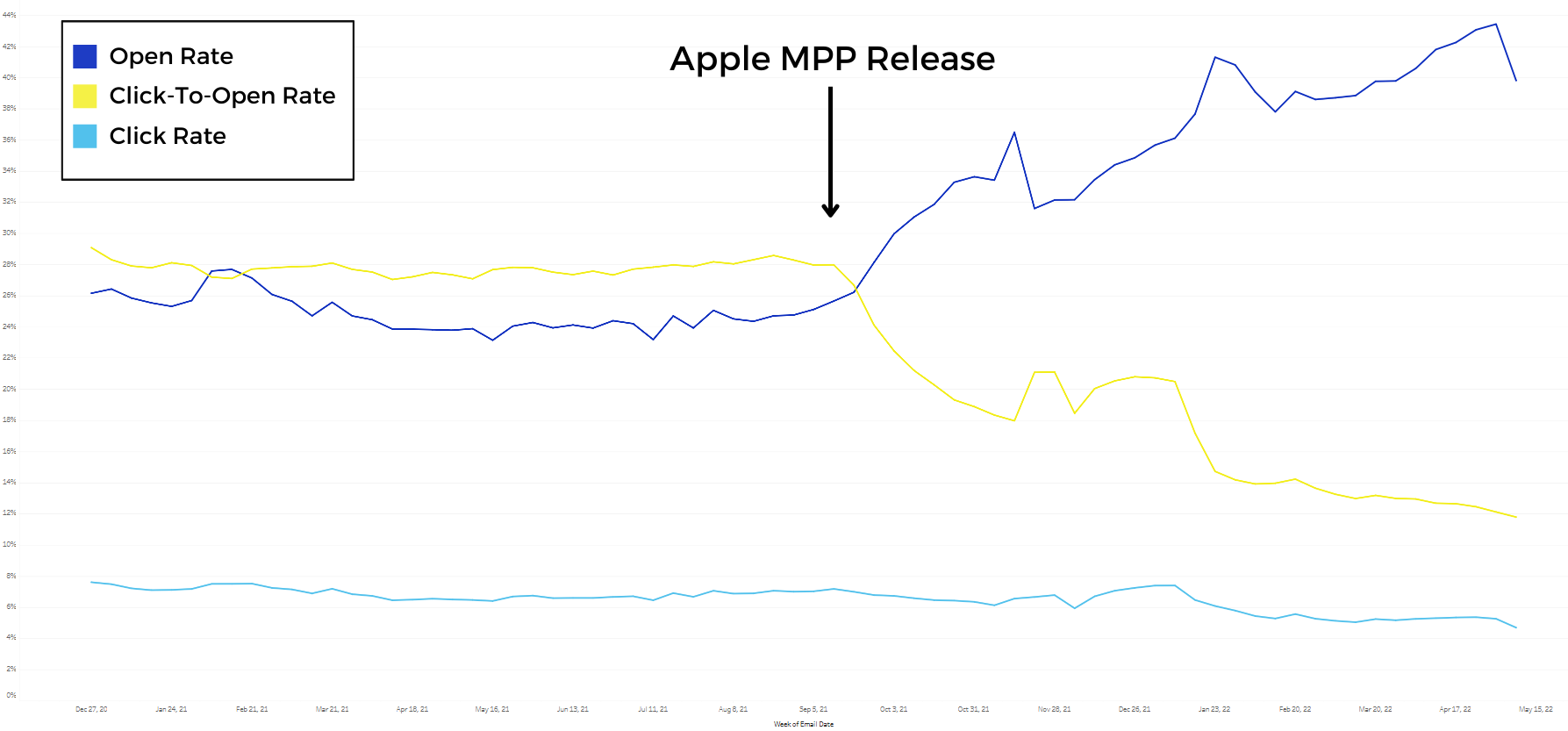
Apple’s release had a staggered launch, but there is a clear change in reported open rates – and an inverse effect on click-to-open rates – starting in fall 2021. We’ve seen the effects of this change in our own data per the graphic below. However, not all metrics are affected, including the click and click rate.
What Does This Mean For Dealers?
With approximately 52 percent of all email opens happening on Apple devices, this change has a significant impact on email marketing data and reporting. While the email marketing community has been grappling with these changes since they were initially announced, this update has flown under the radar for those managing dealership emails.
Open Rates Are Out, Click Rates Are In
Email metrics enable you to make one-to-one comparisons. You can use them to evaluate campaigns, vendors, tools, and A/B tests.
But open rates, a long-standing, primary measure of success for many brands, have suddenly become a largely unreliable and inflated metric since the release of Apple MPP. Similarly, the click-to-open rate (CTOR) metric also suffers from the same issues since it’s measuring the action of clicks against opens.
In the wake of the update, many across the email marketing space suggest that clicks and click rates should be the new de-facto standard. Email click rates remain accurate despite Apple’s changes, and have already been a key performance indicator for email marketing. They’re arguably a more reliable and insightful metric given they:
- Reflect your email’s overall performance on topic, messaging, creative, subject line, etc.
- Tell you exactly what recipients have an interest in and be especially insightful if you have multiple CTAs
Vendors Must Lead the Way
Adjusting your reporting metrics for success is an important step, but we believe the real story around Apple MPP for the auto industry is less about numbers and more about vendor relationships.
As a vendor in the email marketing space, we want to partner with our customers to navigate these changes. Too many vendors have swept the effect of the Apple changes under the rug, or worse, taken credit for the boost in open rate.
If your vendors–email providers, agencies, or other email partners–aren’t bringing these changes up to you, they’re doing you a disservice.
Data transparency relies on all vendors proactively working to provide reliable and accurate data. Beyond acknowledging known inaccuracies, we believe this promise includes openly discussing how external factors may be impacting your information, even if, and especially when, you may not be aware.
While we don’t claim to have all the answers, we do want to have open conversations with our customers to help them solve current challenges.
Where Do We Go From Here?
We know email opens are still a primary reporting metric for many dealers. While we still encourage dealers to consider shifting to other metrics like click rate, we know it’s unreasonable to do so overnight.
We believe in transparency and working alongside our customers as we navigate industry changes together. So to help, we are making changes of our own.
Filtering Out Email Opens From Bots
In response to these changes and to give more options for our customers, our email tool, Prospect Engagement, now lets users exclude all email bot activity – extending beyond just Apple email and device users. This gives you a clean view of actual human email opens for more accurate analysis, and in turn, increases your click rate and click-to-open rate.
Changes You Can Make Today
- Ensure everyone is aware of these changes. Whether you share email results in your monthly reporting or in vendor conversations, make sure anyone who sees open rate as a measure of success knows about this key update.
- Focus on click rate. Shift to this metric as a default measurement when making 1:1 comparisons, particularly when making comparisons before and after the updates were released.
- Ask questions of your vendors. While we hope vendors lead the conversation, if you're not getting the information you need, ask. We don’t expect perfection, but they should have insight into the changes they are (or aren’t) making in light of Apple MPP.
Whether you’re a Foureyes customer or not, if you use email marketing for your business, these changes affect you. While change always has some hurdles, this is also an opportunity to connect with your partners and vendors on your priorities, see who is committed to data transparency, and improve your email program as a whole.
Read More Blogs
 Data Study: How Many Leads Does it Take to Sell a Car in 2026?
The average new vehicle takes 3.3 leads to sell. EVs and performance models take far more, work trucks and mainstream crossovers far less.

 Dealership Close Rates by Metro: And Why Contact Rates Matter
Foureyes tracked 2.6 million leads from more than 1,150 dealerships across 48 U.S. markets through Q1 2026 to dig deeper into dealership close rates by metropolitan area. One surprising finding: the correlation with contact rates.
 2026 Automotive Dealer Benchmarks Report
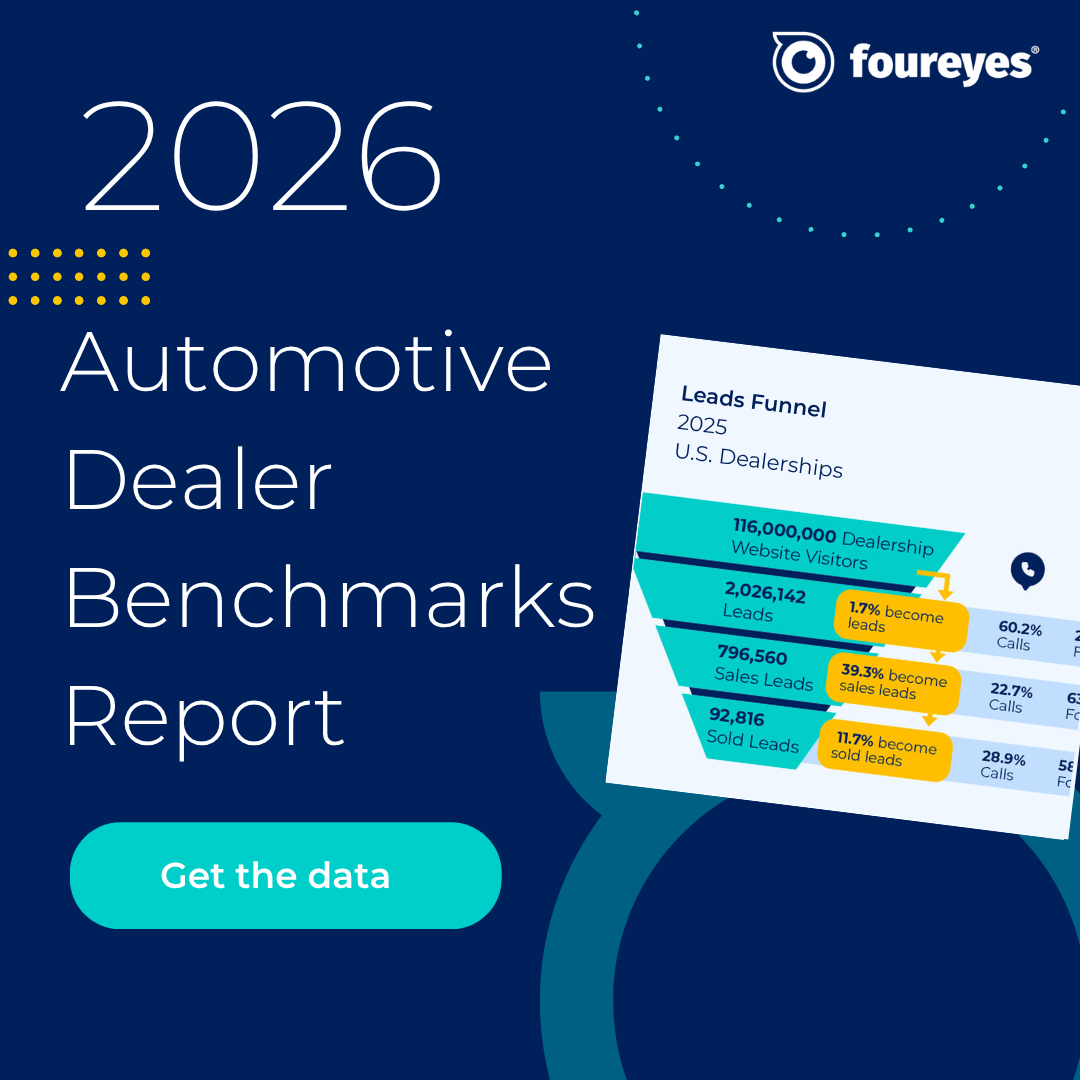
For the eighth year, Foureyes analyzed dealer website data to identify industry benchmarks, so you can compare your dealership’s performance and see what it takes to stay competitive.
 Data Warehousing for Auto Dealerships: What It Is, Why It's Hard, and Why Your CDP Makes or Breaks It
Data warehousing comes up constantly in dealer group conversations, but the actual mechanics rarely get explained clearly. This post tries to fix that. By the end you'll know what a warehouse actually does, why so many groups struggle to get it right, and why the data going in matters more than most people talk about.

 Foureyes Launches Snowflake Managed Services, Taking the Complexity Out of Data Warehouse Management for Dealer Groups
New offering gives dealer groups the warehousing expertise they need — without building and managing it themselves
.webp) Foureyes and Volie Announce New Integration Partnership to Boost BDC Performance
Foureyes and Volie Announce New Integration Partnership to Boost BDC PerformanceFoureyes and Volie announced a two-way integration partnership that connects audience-building and dealer data infrastructure with tools for dealership BDC teams.

 New Foureyes Consent Management Passes 100-Vendor Milestone, Signaling Industry Standardization Around Dealer-Controlled Consent
Foureyes today announced that more than 100 automotive retail vendors are now participating in Foureyes Consent Management, marking a major step toward standardizing how customer communication opt-out requests are managed across the industry.
.png) Introducing Foureyes Connect: A New Standard for Automotive Data
Introducing Foureyes Connect: A New Standard for Automotive DataFoureyes today announced the launch of Foureyes Connect, a different kind of data platform designed to reset how dealer groups operate and scale in an increasingly complex automotive retail landscape.
 How to Use the U.S. Auto Prices Over Time Dashboard
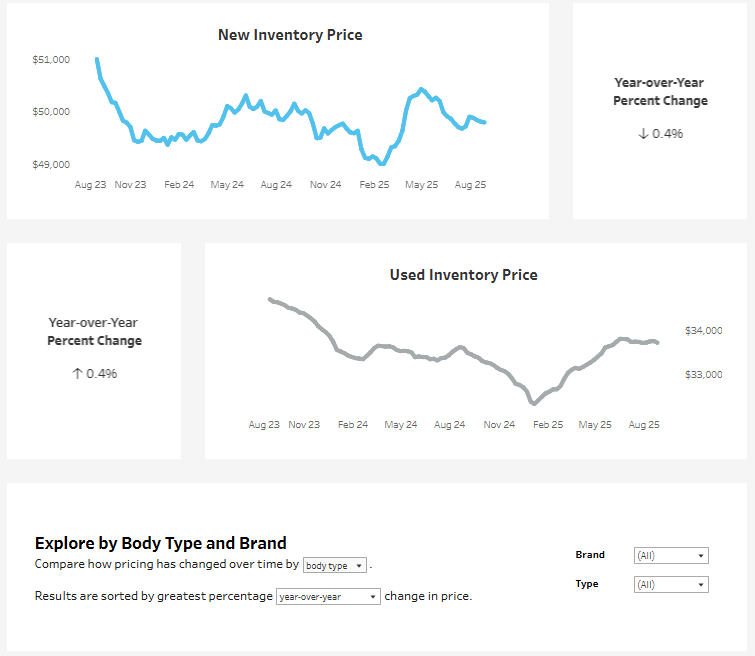
Explore weekly U.S. auto pricing trends with Foureyes’ interactive dashboard. Compare new and used prices by brand and body type, track inflation and tariff impacts, and uncover insights to guide smarter decisions.
 How to Use the U.S. Automotive Inventory Over Time Dashboard
Track how U.S. auto inventory has changed since 2021 with this interactive dashboard. from Foureyes. Compare new vs. used, explore brand and model shifts, and gain insights to guide smarter pricing, stocking, and forecasting decisions on a weekly basis.
 How to Use the U.S. Automotive New Vehicle Sales and Market Share Dashboard
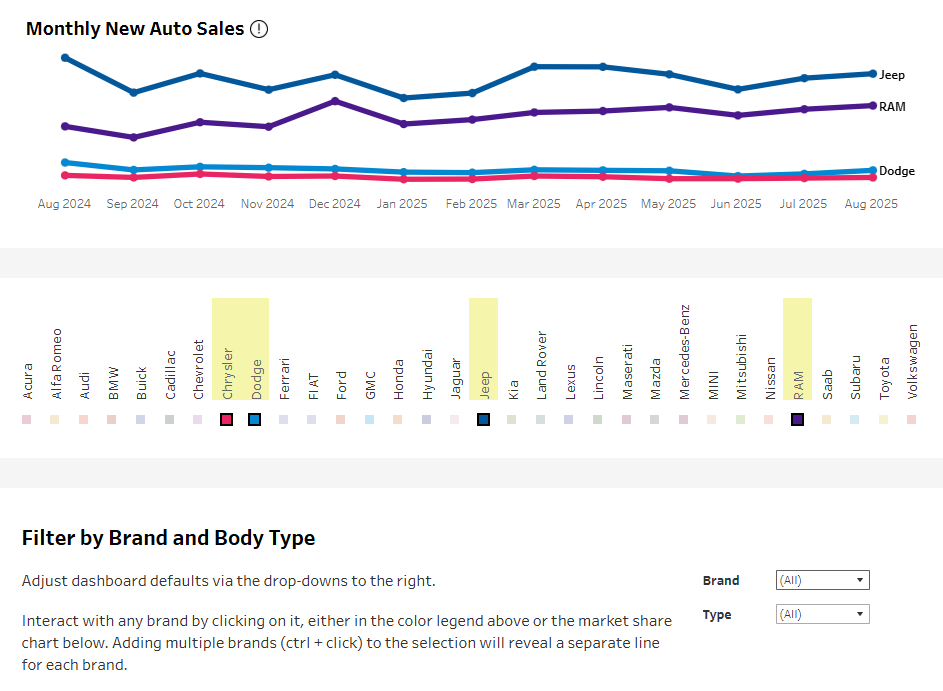
Track monthly U.S. new vehicle sales and market share with this interactive dashboard from Foureyes. Compare brands, body types, and regions to uncover sales momentum, competitive shifts, and supply dynamics—updated monthly and available for free.
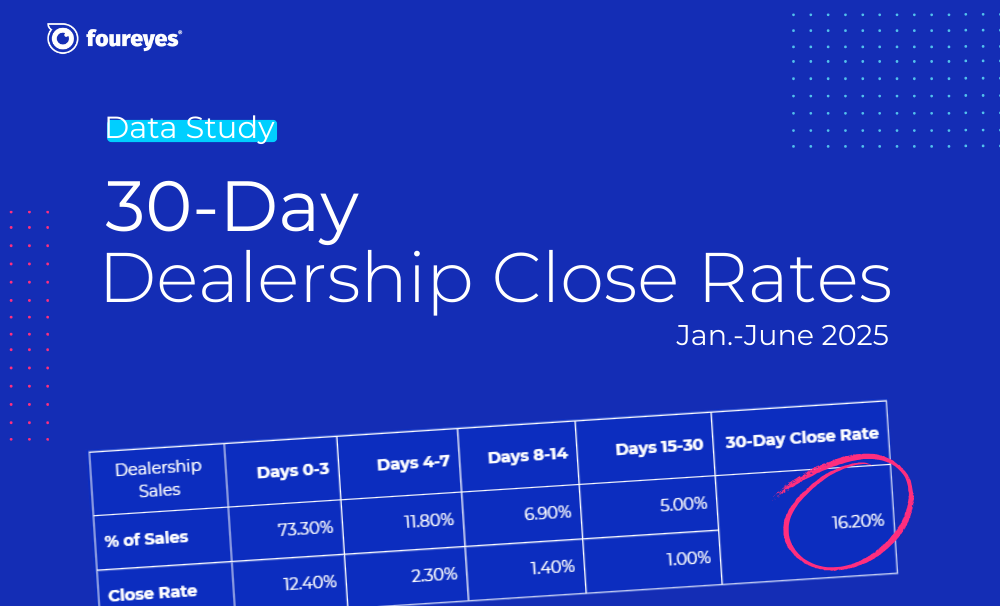
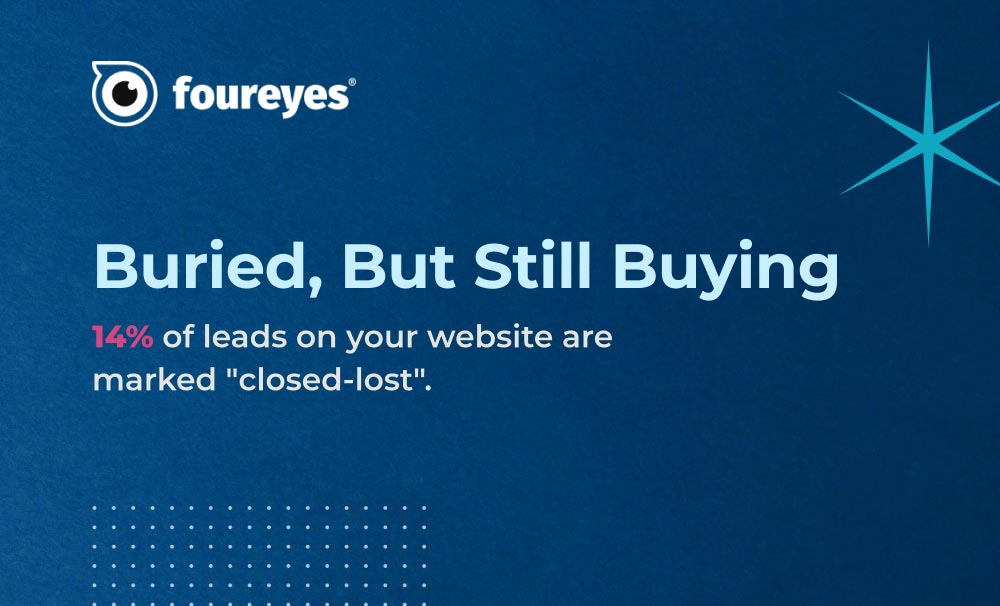 Data Study: The Leads You Marked as Lost Are Still Shopping
New Foureyes data shows why “closed-lost” doesn’t mean game over – and how dealers can win more with what they already have.
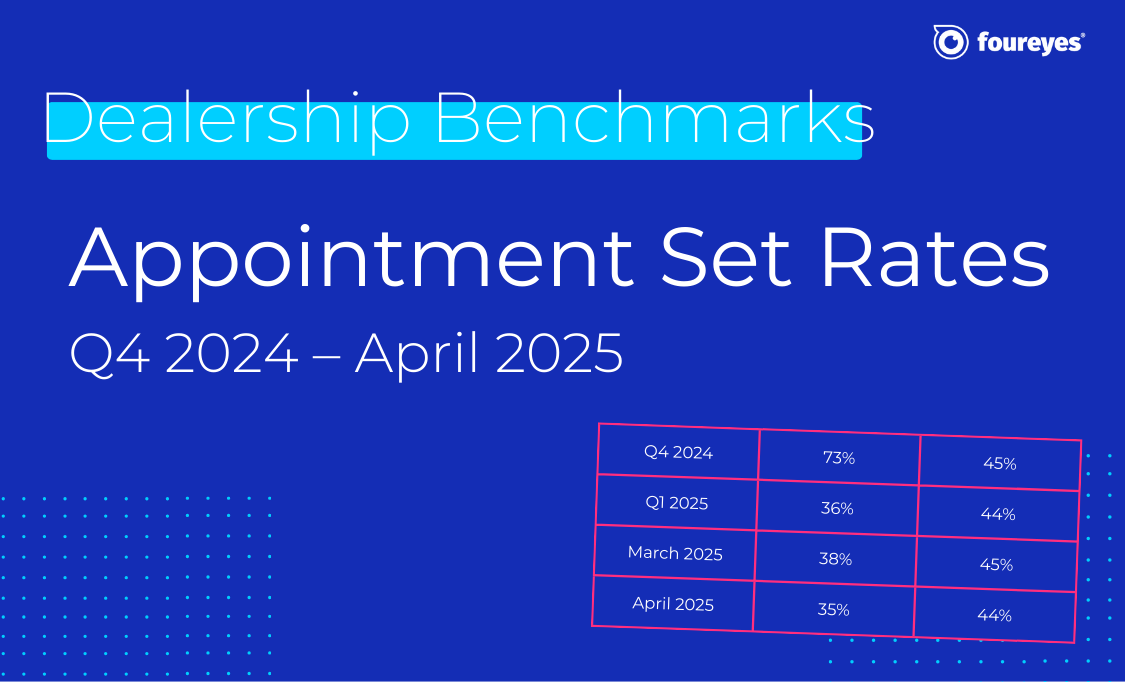 Automotive Sales Benchmarks: Appointment Set Rates for Q4 2024 to April 2025
If your dealership's appointment set rates feel like a mystery, you're not alone. But now, there's fresh data to show where you stand.
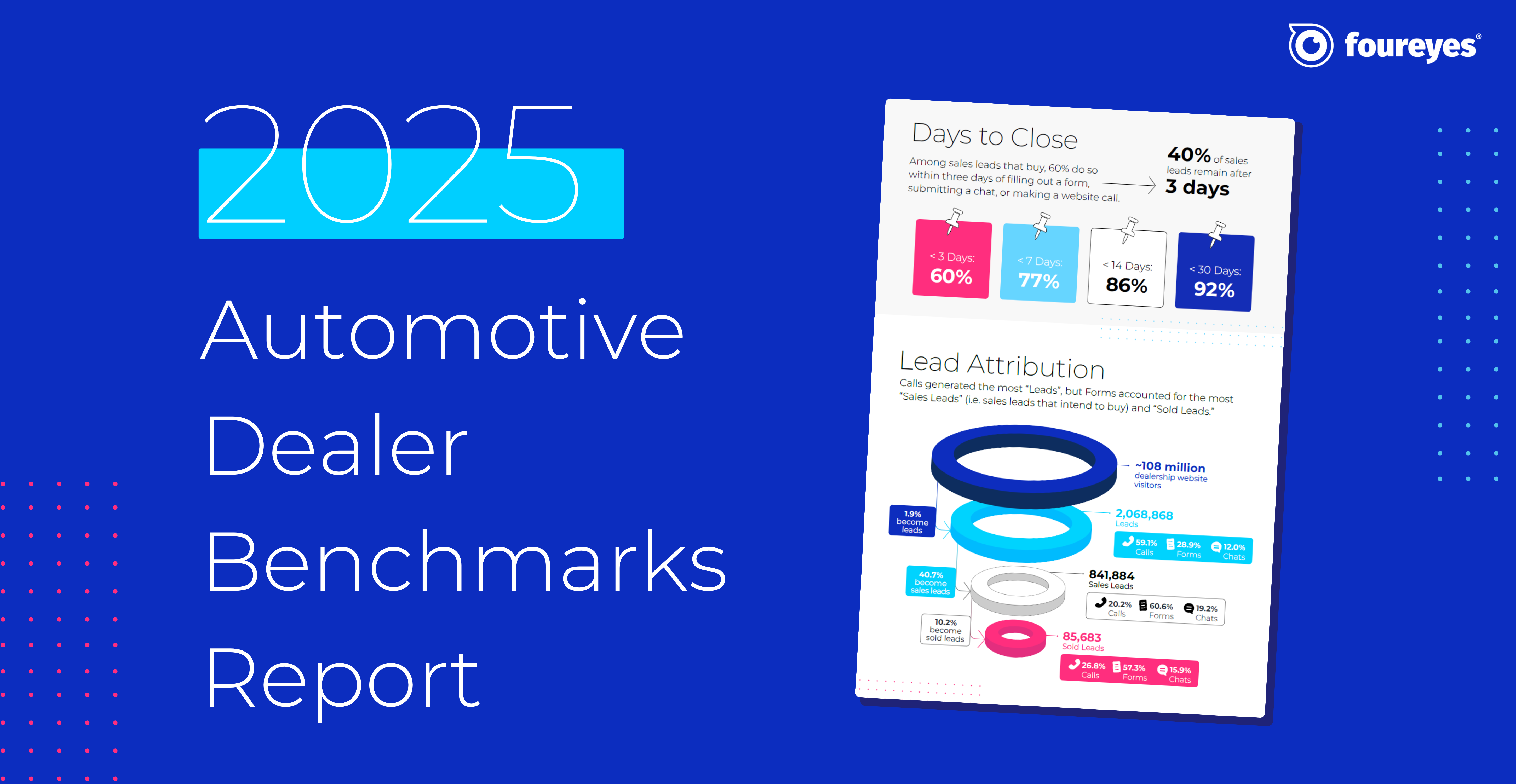 2025 Automotive Dealer Benchmarks Report
For the seventh straight year, Foureyes has dropped its Automotive Dealer Benchmark Report – pulling back the curtain on what's really happening with your leads throughout your sales process.
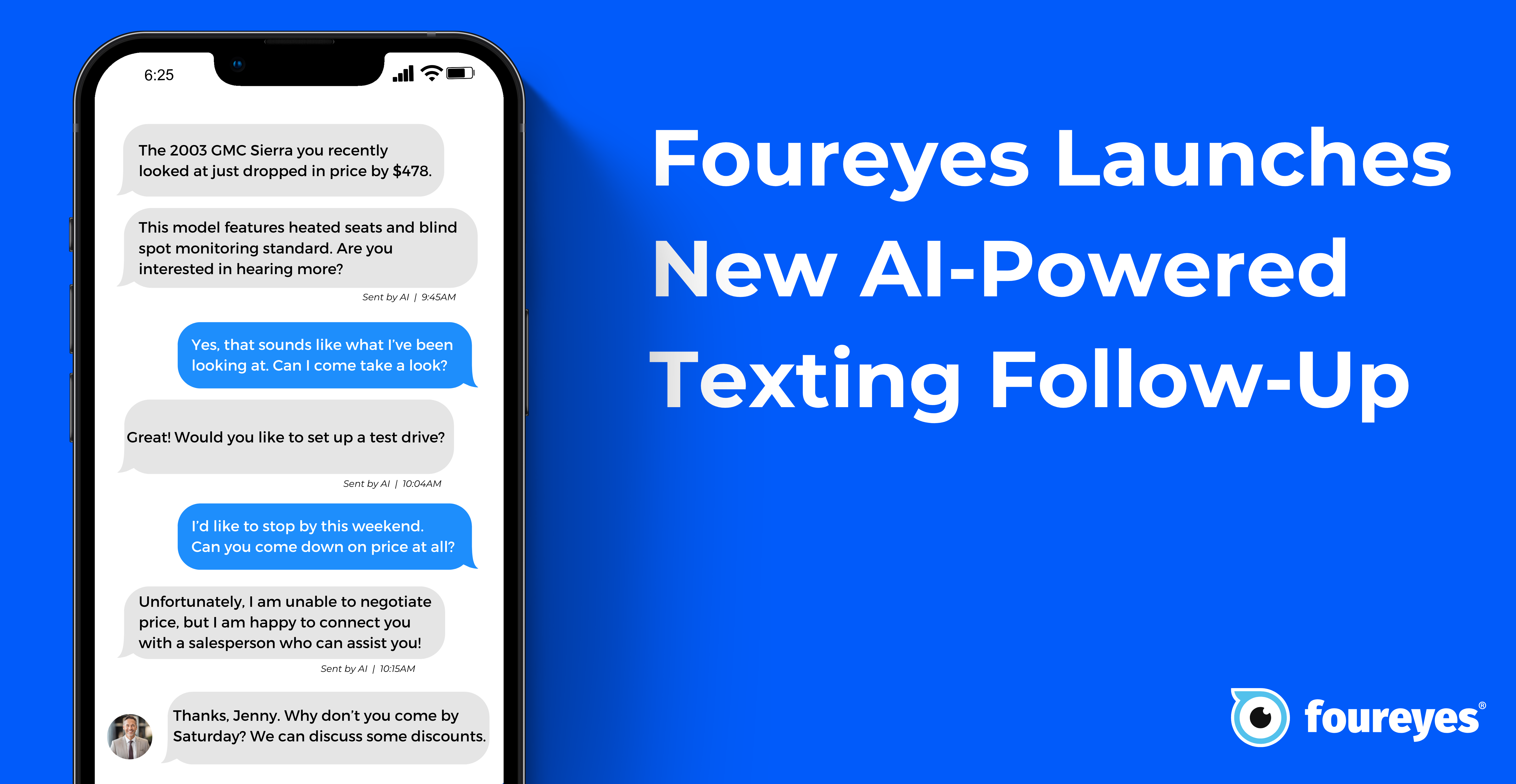 Foureyes Changing the Follow-up Game with Inventory-based Texting
See how the latest Foureyes innovation further helps dealerships match prospects to specific inventory.
 There are How Many “Hidden” Sales Leads at Automotive Dealerships?
New research of sales process data across U.S. automotive dealerships sheds light on the opportunity of “hidden” leads in dealership CRMs.
 How many leads do you actually need? And are you efficiently and effectively working them?
Which dials need to be turned, and how far, to ensure they are getting leads for inventory that actually need leads? And to ensure those leads efficiently and effectively worked?

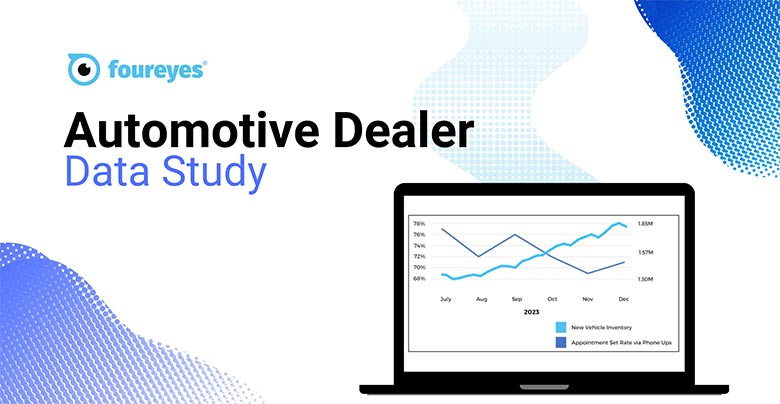
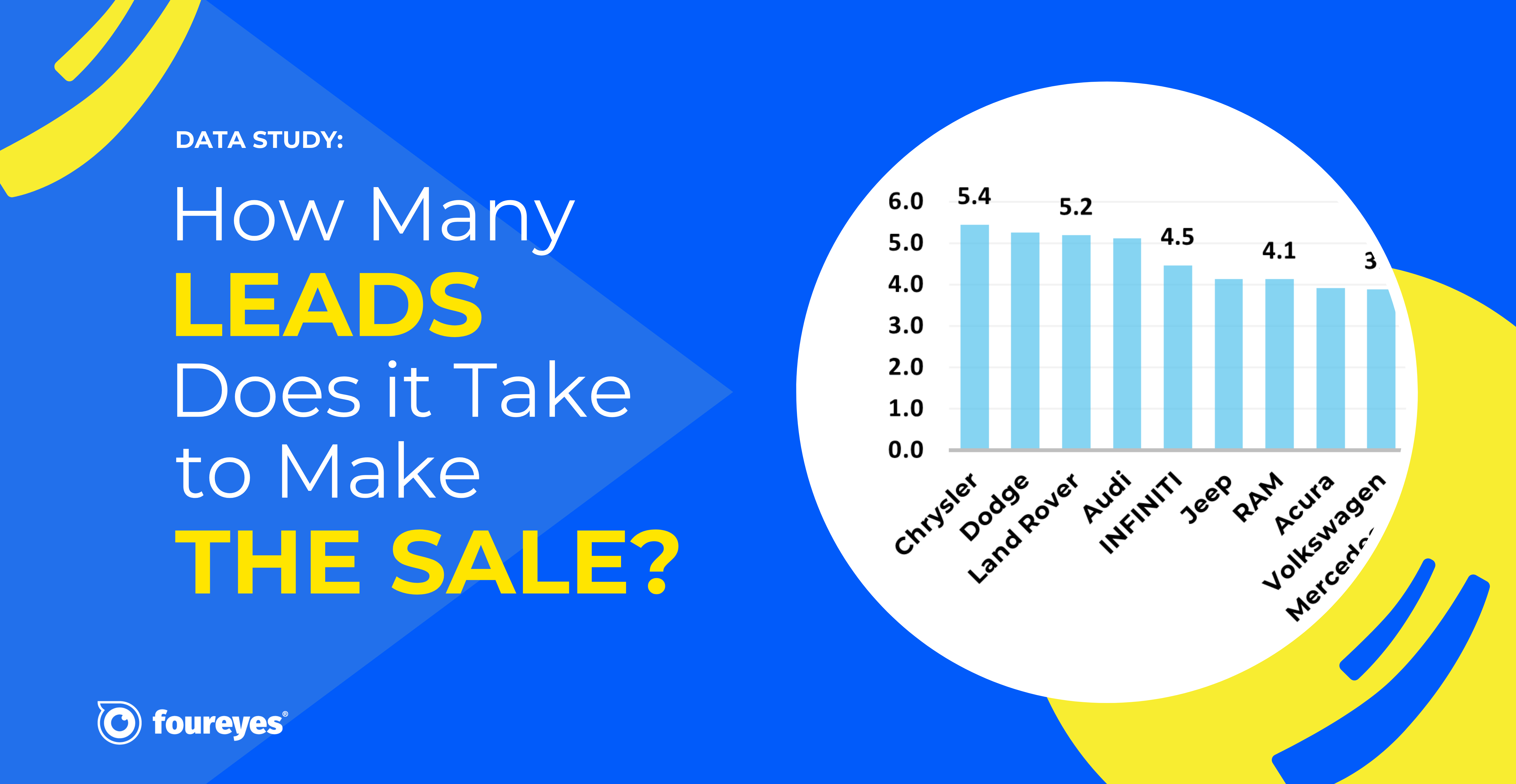 How Many Leads Does it Take for Dealerships to Sell a Car?
A Foureyes study of U.S. automotive dealerships identified the lead-to-sale “efficiency” across new vehicle inventory for Q1 2024.
 2024 Automotive Dealer Benchmarks Report
For the sixth consecutive year, Foureyes released its new automotive industry benchmarks. This data is intended to help dealers and dealer groups compare their performance against the industry and track trends in how leads behave.
.jpg)
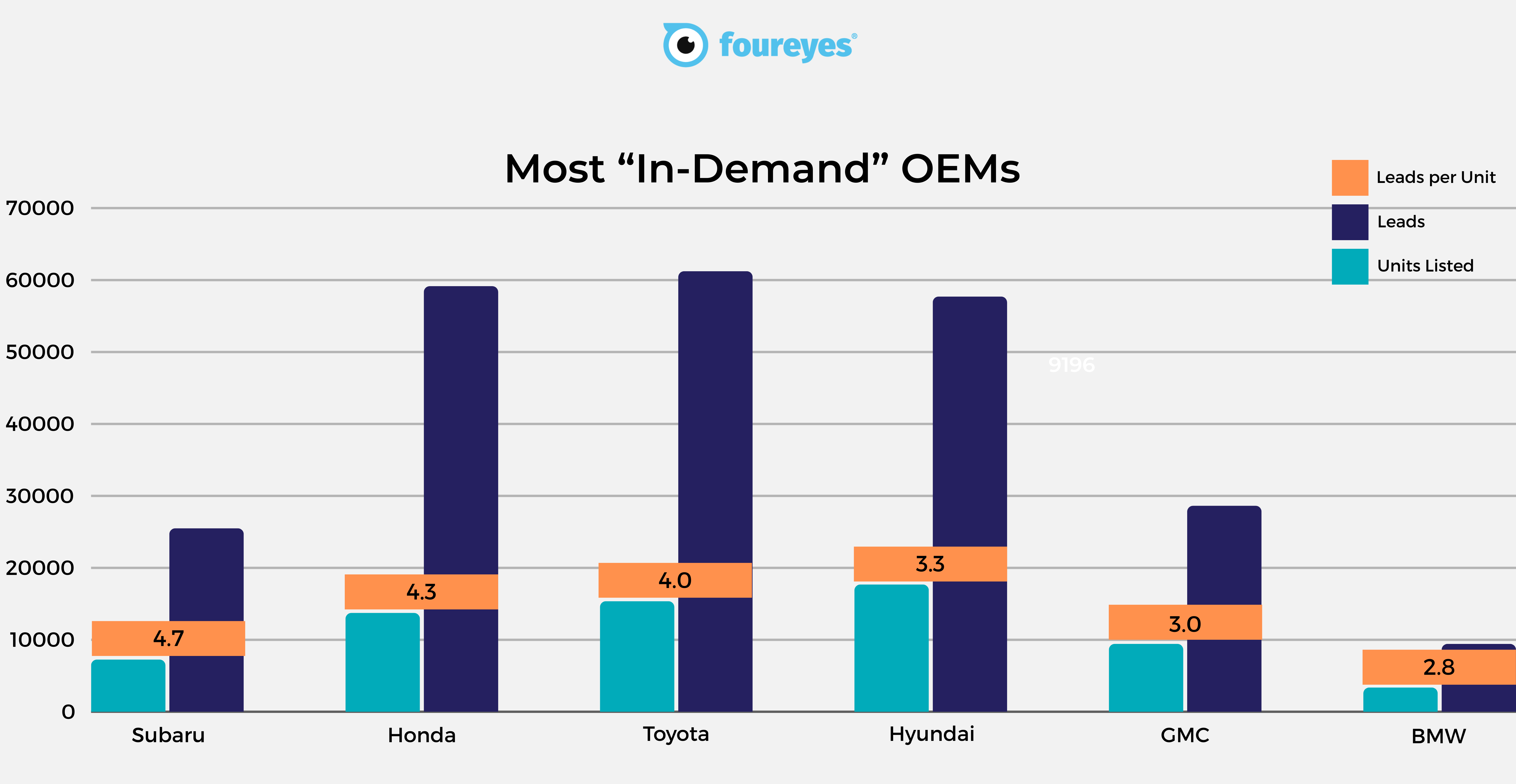 Most In-demand YMMs (2023 & 2024)
We dove into a pool of approximately 700 dealerships to scope out the most sought-after 2023 and 2024 YMMs and their OEMs over the past 3 months (min. 100 units per YMM)
.png)





 2022 Automotive Dealer Benchmarks Report
As automotive dealerships continue to adjust their strategies, tactics, and other process operations during this ongoing vehicle inventory shortage, we at Foureyes are sharing – for the fourth consecutive year – new auto industry benchmarks intended to help dealers understand the market, track trends in how leads behave, and drive sales success in 2022.


 2021 Automotive Dealer Benchmarks Report
For the third year in a row, we’re sharing auto industry benchmarks to help dealers and OEMs understand the market, track changes in customer behavior, and drive sales success in 2021.
 The 2020 Automotive Dealer Benchmarks Report
Start the new year off strong by reviewing your sales performance and creating 2020 goals. See how your dealership stacks up against the competition and use these auto industry benchmarks to develop a marketing and sales strategy for the new year.

