
Why the Auto Industry Is Always Chasing Data (And What We’re Doing About It)









When I talk about the state of data in the auto industry, I'm reminded of Moneyball.
Yes, I’m talking about the 2003 book turned Brad Pitt film chronicling the story of Oakland A’s general manager Billy Beane.
As the story goes, Beane manages the team through a difficult loss, and the team is losing star players. The A’s budget is limited, and rebuilding the team seems unattainable. Facing these challenges, Beane meets Yale economics grad Peter Brand. Brand has new ideas about how to evaluate players and uses the data available to better predict a player’s chances of success.
The rest is a storybook ending. Brand joins as the assistant general manager, and soon he and Beane are using data and their new methodology to find the undervalued players, and the A’s go on to win the American League West title.
What Does This Have to Do With Automotive Data?
Moneyball is one of the first widely-viewed examples of data as an opportunity. This opportunity is much larger than baseball or any one industry and has become an assumed fundamental business belief. If you can figure out how to use your data, you have an advantage.
Prior to the 2000s, data was expensive. As it became cheaper to store data, businesses were told to collect everything, and so we all started to hoard it. Like a stack of newspapers from 1998, we didn’t know why we needed it, but we wanted to keep it just in case.
This shift takes us to today, where we spend an unbelievable amount of time and money on data. We continue to collect immense amounts of data. And by collecting so much data from so many different sources, we’ve created the problems that we’re now trying to fix. Worse yet, we still can’t answer the basic questions.
Why Automotive Data Is Especially Tricky
While these challenges are true for all industries, there are three key reasons why using and analyzing data is particularly challenging for the automotive industry.
- Auto is federated. Dealers have some autonomy but still must report up to the dealer group and OEM. So while the freedom to make those decisions can be a distinct benefit, it also means that two dealers within a group could have different CRMs, marketing strategies, tech stacks, and sales processes. This poses a challenge when groups want to analyze success.
- Auto is legislated. It’s true that the automotive industry is heavily regulated–you only need to take a look at the news to see how quickly the rules change. But vendors use the changing legislation as an excuse to separate dealers from their data. They deny access with the excuse that they’re only protecting dealers. This is not a means of protection, and there is no reason you shouldn’t have access to your own data.
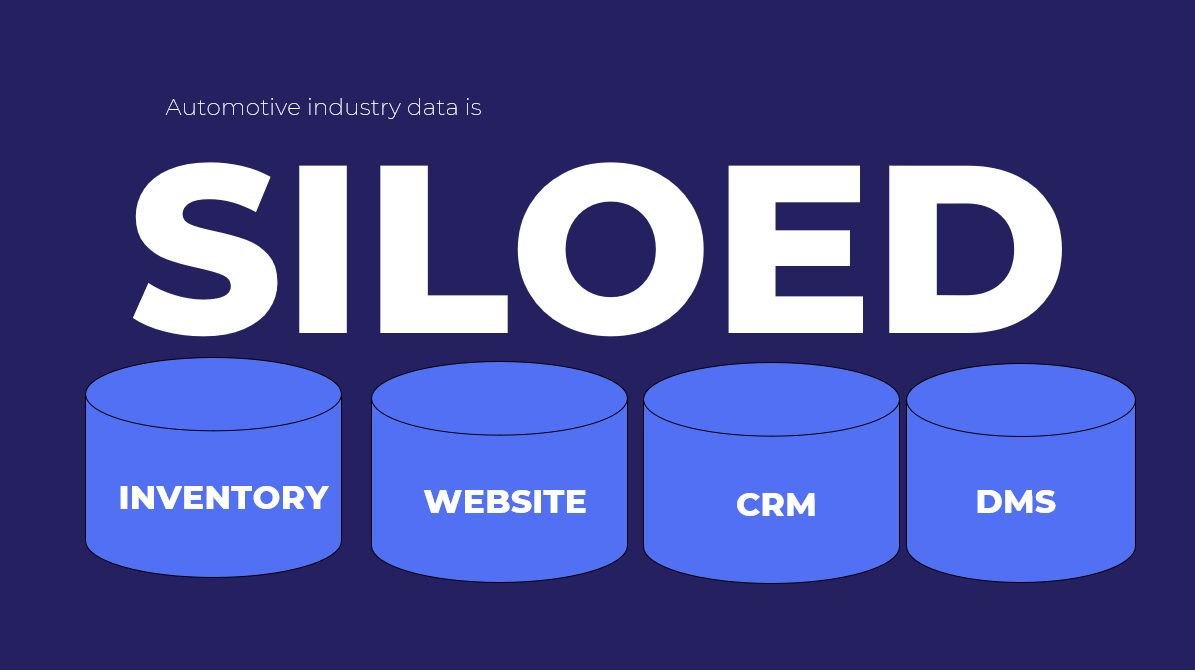
- Auto is siloed. Right now, any given dealer has data from these four systems: inventory, website, CRM, and DMS. They don’t talk to each other well, making full-picture data analysis challenging.
Considerations to Get the Most From Your Data
Improving automotive data is complicated and will only happen through collaboration between all parties, from vendor to dealer. Here are the guardrails that we believe can make meaningful change happen:
- Own your expertise. Vendors are helpful and necessary for data visualization and collection, but they don’t have the skills and insight you have into your own business. I like to say that good data doesn’t give you the answers, it helps you ask better questions. You have to combine good data with your context to get real answers. We can help you measure walk-in traffic, but only you know that there’s been a construction project for the last two weeks that’s affecting your traffic.
- Demand more from your silos. Everything you put into a system should be able to be extracted. If that’s not the case, your vendor is basically saying that they own YOUR data.
- Question the black box. If a vendor is unable to explain to you how they provide the numbers or answers that they have, then it is too good to be true. Everyone wants to deliver the answers, but not everyone can back up those answers with methodology and technical authority.
“If I was so good at selling cars, I would actually probably start my own dealership.”
- Me (David Steinberg, Foureyes Founder & CEO)
What’s Our Answer?
Foureyes views these challenges as an opportunity for auto groups. We’re not satisfied seeing these issues and ignoring them, which is why we built a tool that directly addresses these hurdles.
Our answer is the Unified Data Platform (UDP). The UDP unlocks the mountain of data you and your dealers are sitting on today – across website, inventory, and CRM data – and compiles it into a single dashboard so you can better report, optimize, manage, and make more informed marketing and sales decisions within and across rooftops. You can use it to import and own your data while also having access to pre-built and customizable reports. Combined with your context, the UDP enables you to tackle the questions that drive businesses today, like:
- Where are we getting leads from?
- How are we closing our leads?
Our latest offering is also our most ambitious, which makes it all the more exciting to share, and we even have a sneak peek into the tool below. If you or your group is interested in accessing the data needed to fuel those better questions, contact us today.
Read More Blogs
 Data Study: How Many Leads Does it Take to Sell a Car in 2026?
The average new vehicle takes 3.3 leads to sell. EVs and performance models take far more, work trucks and mainstream crossovers far less.

 Dealership Close Rates by Metro: And Why Contact Rates Matter
Foureyes tracked 2.6 million leads from more than 1,150 dealerships across 48 U.S. markets through Q1 2026 to dig deeper into dealership close rates by metropolitan area. One surprising finding: the correlation with contact rates.

 2026 Automotive Dealer Benchmarks Report
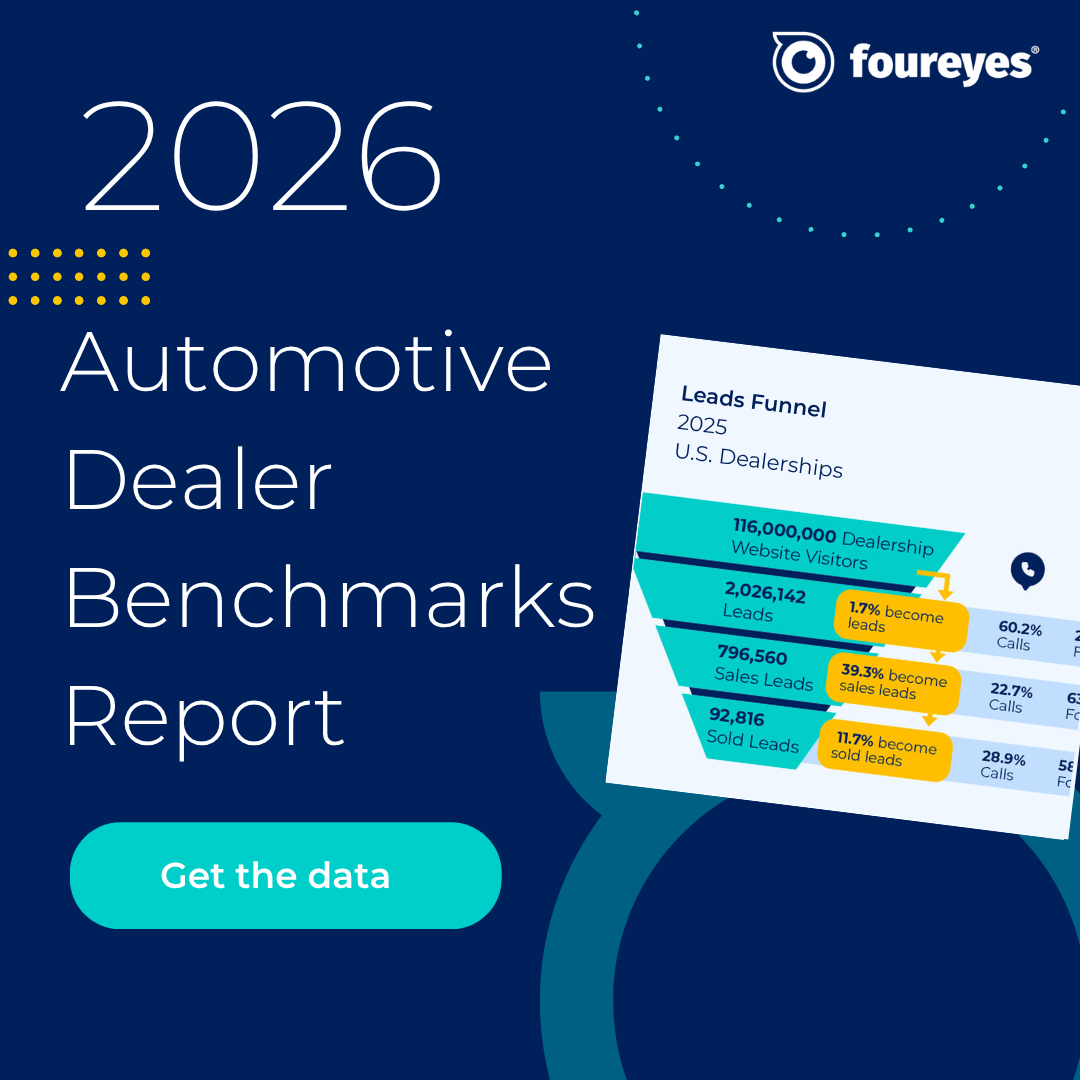
For the eighth year, Foureyes analyzed dealer website data to identify industry benchmarks, so you can compare your dealership’s performance and see what it takes to stay competitive.
 Data Warehousing for Auto Dealerships: What It Is, Why It's Hard, and Why Your CDP Makes or Breaks It
Data warehousing comes up constantly in dealer group conversations, but the actual mechanics rarely get explained clearly. This post tries to fix that. By the end you'll know what a warehouse actually does, why so many groups struggle to get it right, and why the data going in matters more than most people talk about.

 Foureyes Launches Snowflake Managed Services, Taking the Complexity Out of Data Warehouse Management for Dealer Groups
New offering gives dealer groups the warehousing expertise they need — without building and managing it themselves
.webp) Foureyes and Volie Announce New Integration Partnership to Boost BDC Performance
Foureyes and Volie Announce New Integration Partnership to Boost BDC PerformanceFoureyes and Volie announced a two-way integration partnership that connects audience-building and dealer data infrastructure with tools for dealership BDC teams.

 New Foureyes Consent Management Passes 100-Vendor Milestone, Signaling Industry Standardization Around Dealer-Controlled Consent
Foureyes today announced that more than 100 automotive retail vendors are now participating in Foureyes Consent Management, marking a major step toward standardizing how customer communication opt-out requests are managed across the industry.
.png) Introducing Foureyes Connect: A New Standard for Automotive Data
Introducing Foureyes Connect: A New Standard for Automotive DataFoureyes today announced the launch of Foureyes Connect, a different kind of data platform designed to reset how dealer groups operate and scale in an increasingly complex automotive retail landscape.
 How to Use the U.S. Auto Prices Over Time Dashboard
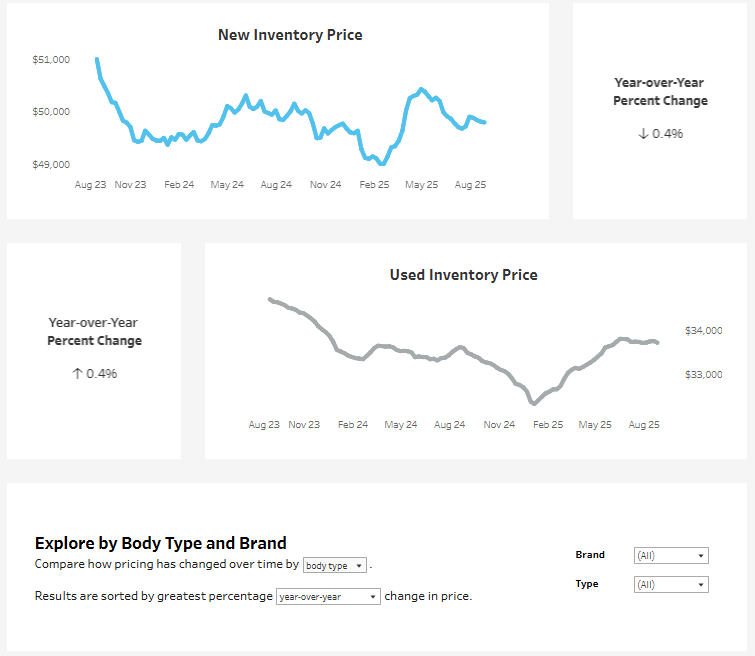
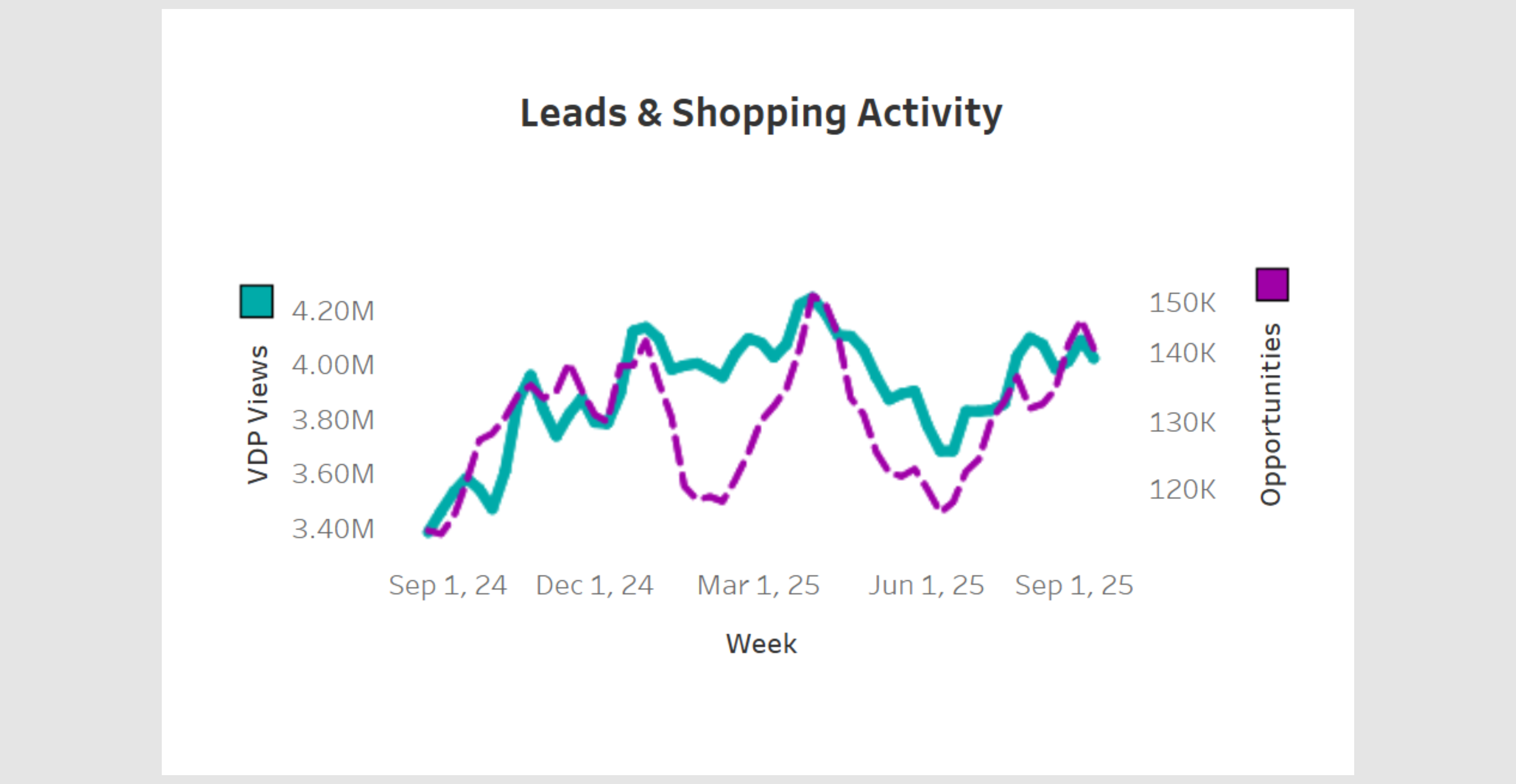
Explore weekly U.S. auto pricing trends with Foureyes’ interactive dashboard. Compare new and used prices by brand and body type, track inflation and tariff impacts, and uncover insights to guide smarter decisions.
 How to Use the U.S. Automotive Inventory Over Time Dashboard
Track how U.S. auto inventory has changed since 2021 with this interactive dashboard. from Foureyes. Compare new vs. used, explore brand and model shifts, and gain insights to guide smarter pricing, stocking, and forecasting decisions on a weekly basis.
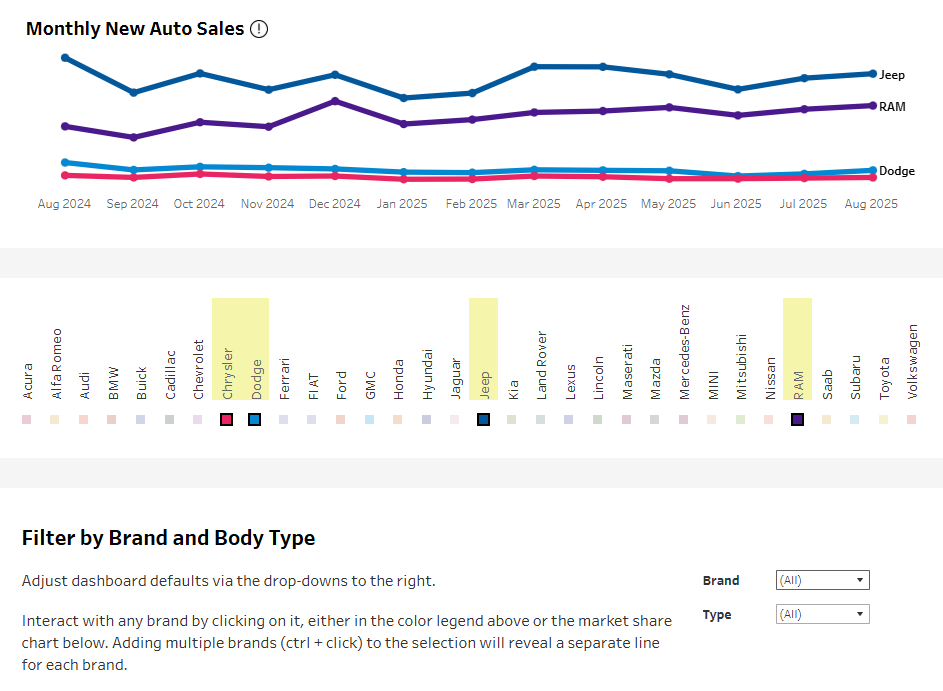 How to Use the U.S. Automotive New Vehicle Sales and Market Share Dashboard
Track monthly U.S. new vehicle sales and market share with this interactive dashboard from Foureyes. Compare brands, body types, and regions to uncover sales momentum, competitive shifts, and supply dynamics—updated monthly and available for free.
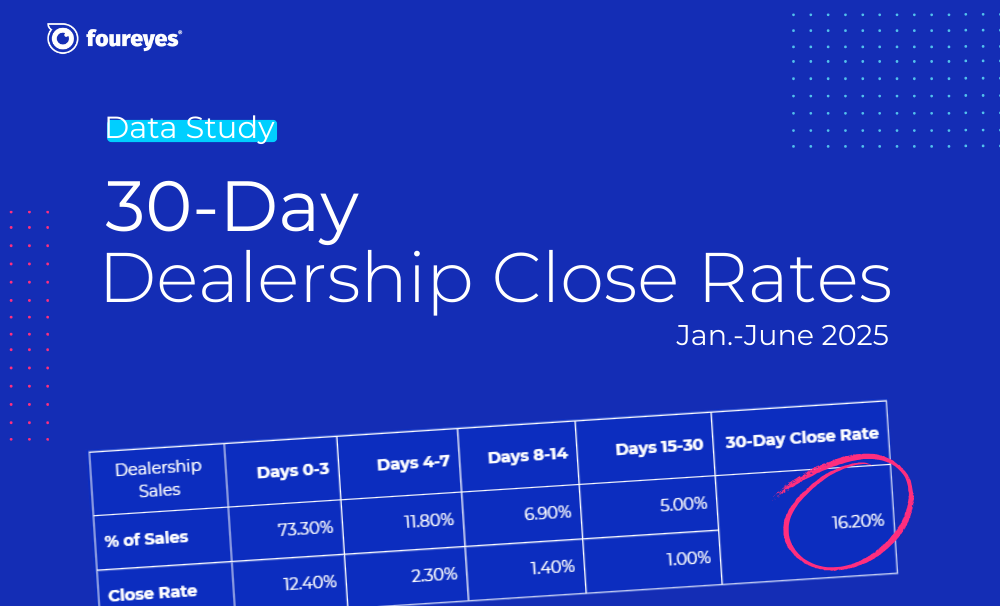
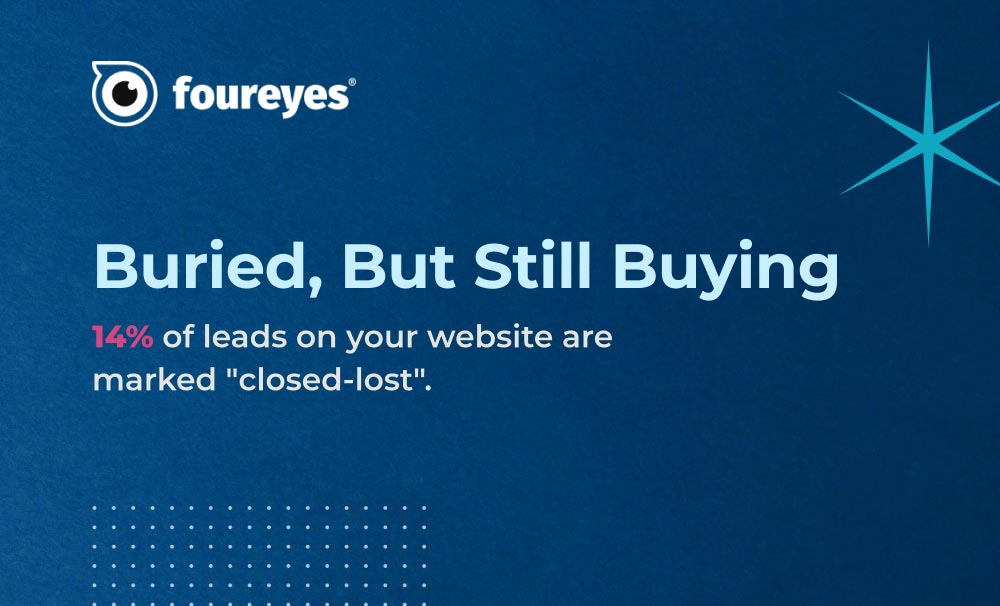 Data Study: The Leads You Marked as Lost Are Still Shopping
New Foureyes data shows why “closed-lost” doesn’t mean game over – and how dealers can win more with what they already have.
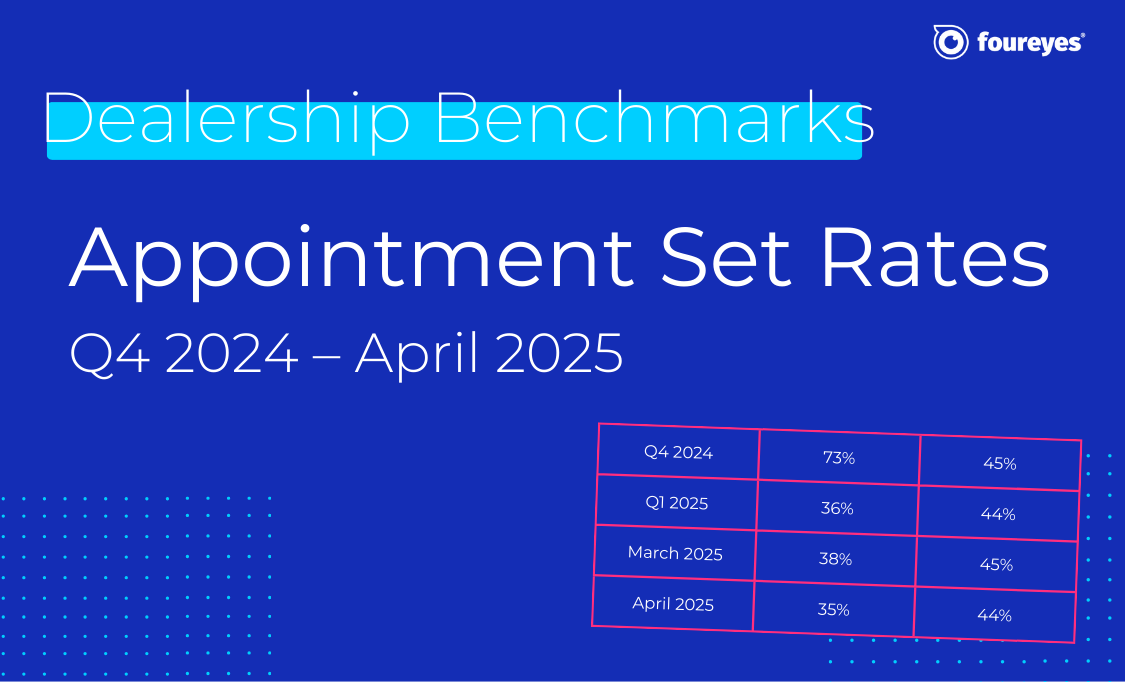 Automotive Sales Benchmarks: Appointment Set Rates for Q4 2024 to April 2025
If your dealership's appointment set rates feel like a mystery, you're not alone. But now, there's fresh data to show where you stand.
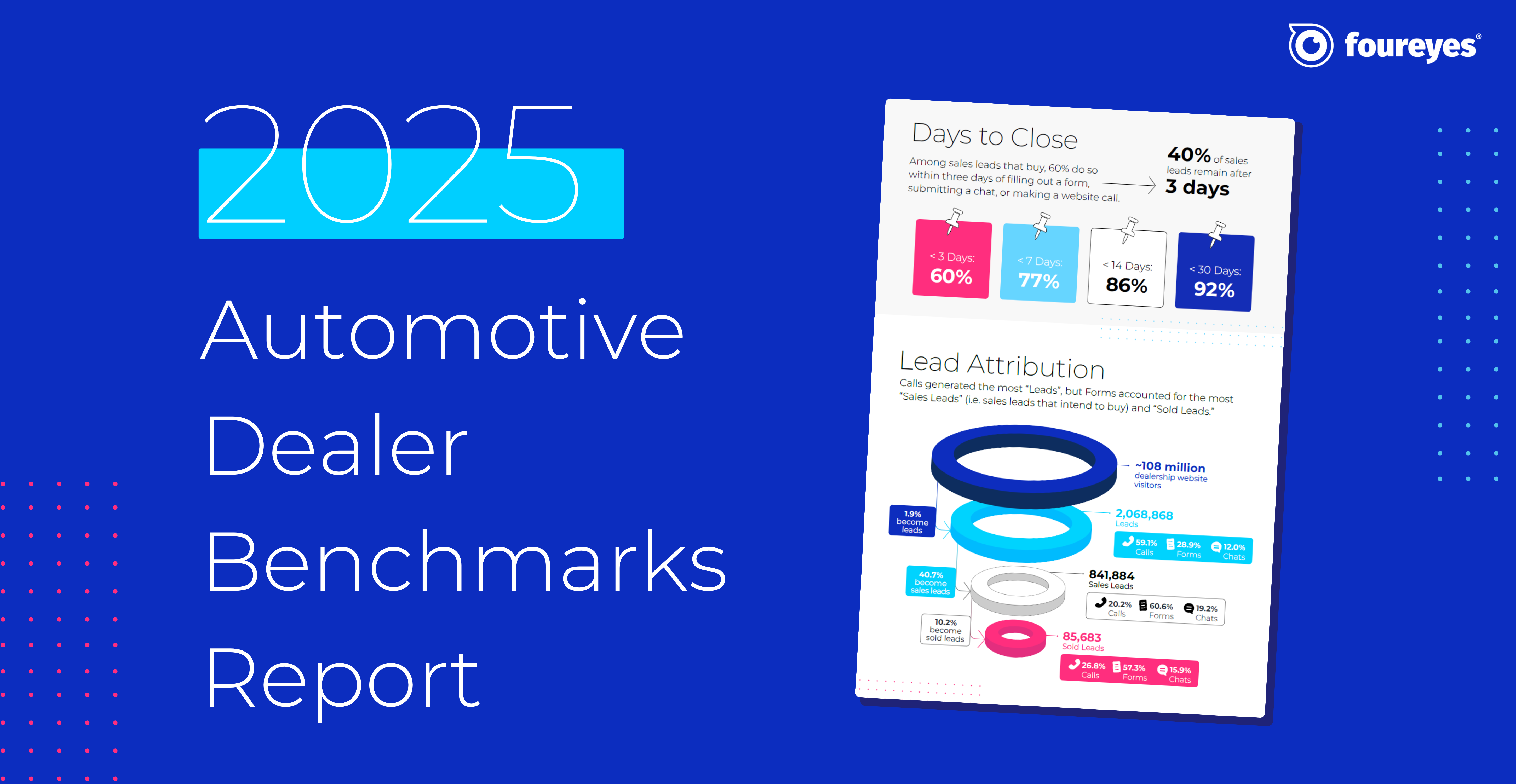 2025 Automotive Dealer Benchmarks Report
For the seventh straight year, Foureyes has dropped its Automotive Dealer Benchmark Report – pulling back the curtain on what's really happening with your leads throughout your sales process.
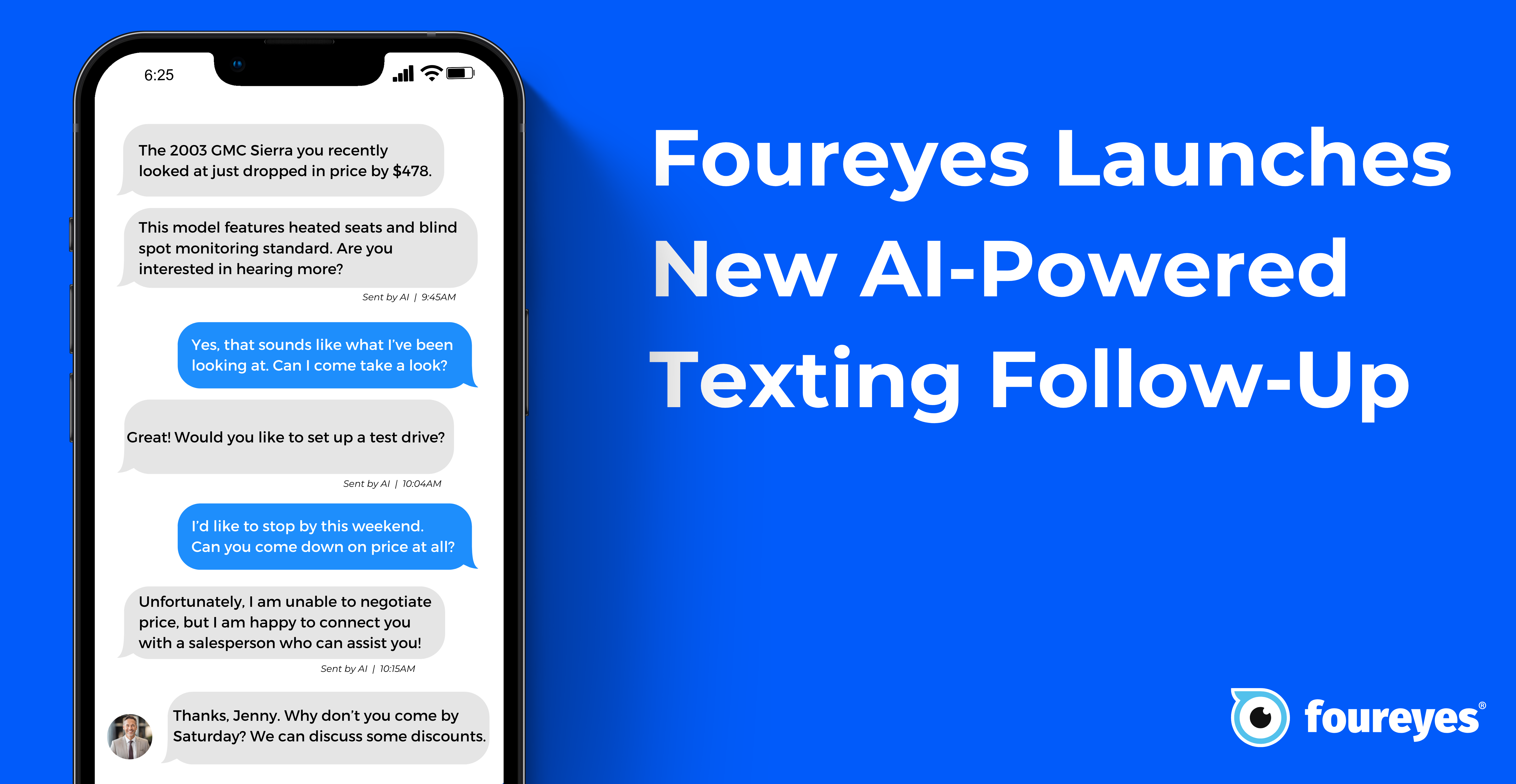 Foureyes Changing the Follow-up Game with Inventory-based Texting
See how the latest Foureyes innovation further helps dealerships match prospects to specific inventory.
 There are How Many “Hidden” Sales Leads at Automotive Dealerships?
New research of sales process data across U.S. automotive dealerships sheds light on the opportunity of “hidden” leads in dealership CRMs.
 How many leads do you actually need? And are you efficiently and effectively working them?
Which dials need to be turned, and how far, to ensure they are getting leads for inventory that actually need leads? And to ensure those leads efficiently and effectively worked?
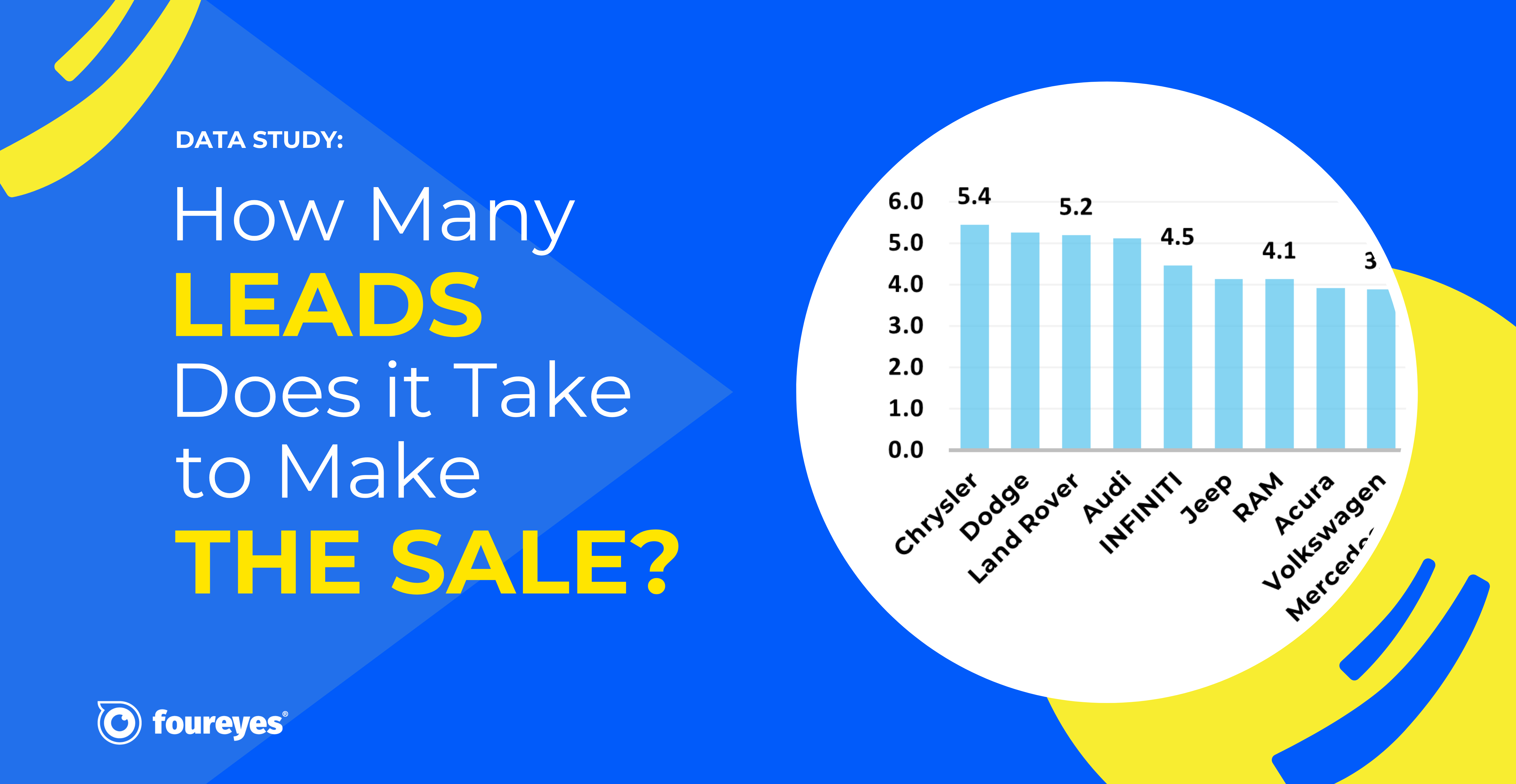 How Many Leads Does it Take for Dealerships to Sell a Car?
A Foureyes study of U.S. automotive dealerships identified the lead-to-sale “efficiency” across new vehicle inventory for Q1 2024.
 2024 Automotive Dealer Benchmarks Report
For the sixth consecutive year, Foureyes released its new automotive industry benchmarks. This data is intended to help dealers and dealer groups compare their performance against the industry and track trends in how leads behave.
.jpg)
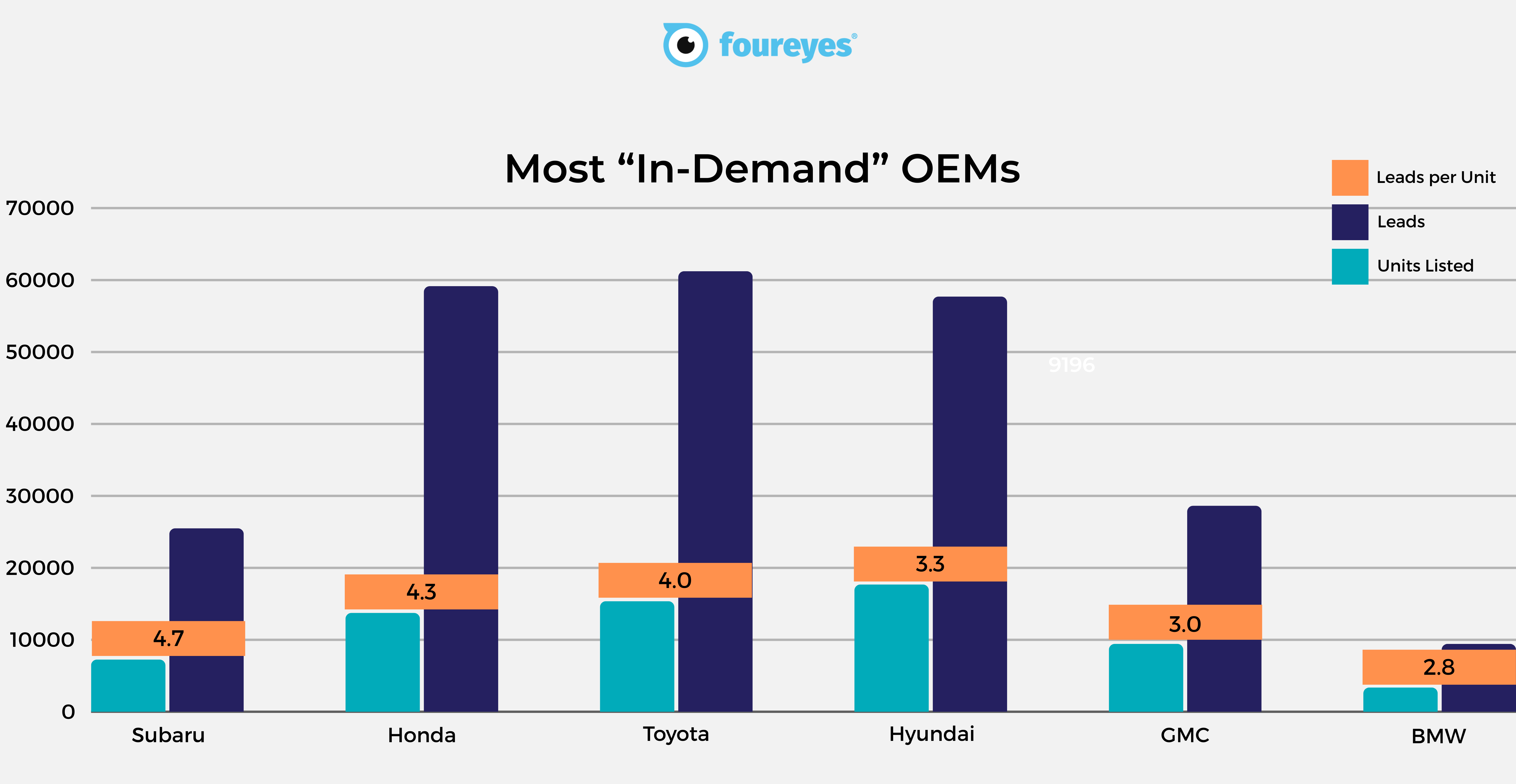 Most In-demand YMMs (2023 & 2024)
We dove into a pool of approximately 700 dealerships to scope out the most sought-after 2023 and 2024 YMMs and their OEMs over the past 3 months (min. 100 units per YMM)
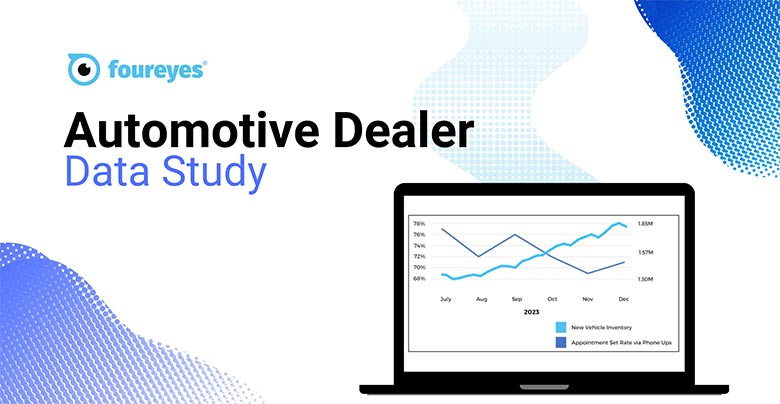
.png)





 2022 Automotive Dealer Benchmarks Report
As automotive dealerships continue to adjust their strategies, tactics, and other process operations during this ongoing vehicle inventory shortage, we at Foureyes are sharing – for the fourth consecutive year – new auto industry benchmarks intended to help dealers understand the market, track trends in how leads behave, and drive sales success in 2022.


 2021 Automotive Dealer Benchmarks Report
For the third year in a row, we’re sharing auto industry benchmarks to help dealers and OEMs understand the market, track changes in customer behavior, and drive sales success in 2021.
 The 2020 Automotive Dealer Benchmarks Report
Start the new year off strong by reviewing your sales performance and creating 2020 goals. See how your dealership stacks up against the competition and use these auto industry benchmarks to develop a marketing and sales strategy for the new year.

