
Data Warehousing for Auto Dealerships: What It Is, Why It's Hard, and Why Your CDP Makes or Breaks It
Data warehousing comes up constantly in dealer group conversations, but the actual mechanics rarely get explained clearly. This post tries to fix that. By the end you'll know what a warehouse actually does, why so many groups struggle to get it right, and why the data going in matters more than most people talk about.









Two terms worth separating before we go further
These get conflated constantly, but solve very different problems.
Data warehouse: A centralized place where clean, structured data lives for reporting and historical analysis. You build this for builders: data teams, BI analysts, and ops leaders who want to query data, build reports, and understand business performance over time. It stores and organizes. It does not send campaigns.
Data is loaded via an ETL process, and usually, you want to use cloud-based storage options for this that can easily scale up or down (for example, Snowflake, Amazon RedShift, Azure).
CDP (Customer Data Platform): Collects and unifies customer data from key sources, and then activates it for marketing. Things like audience building, campaign triggering, and personalization. The interface, the workflows, the outputs are all oriented toward marketing campaign execution.
Often people will use a CDP to feed data into a data warehouse, or you can hook a CDP up to a data warehouse so you’re activating off a unified data source. Other times, you might hear someone call their whole system “their CDP”, even if the marketing automation is happening in a separate platform.
Used together, a CDP collects, cleans, and activates the data – then feeds clean records into the warehouse, where they are structured for analysis. Each does its job. Neither replaces the other.
What a data warehouse actually does for a dealer group
Having a complete data warehouse is how you can actually own your data. A warehouse takes data from the systems a dealership already runs (DMS, CRM, website, inventory, digital retailing tools) and houses it in a structured environment. It organizes that data into a consistent, queryable format that lives in one place – ready for hooking up to a BI tool or querying directly for cross-rooftop reporting and performance analysis.
That is the point. Raw data from a CRM or DMS is messy, inconsistent, and hard to analyze at scale. A warehouse imposes order on it. Clean schemas. One source of truth. Never having to worry about how the data got there, just what it says.
The warehouse doesn't do any data enrichment on its own. Instead, it is responsive to whatever data is loaded into it, taking that clean, structured data and making it reliably queryable at scale.
Why it matters now
Most dealership data ends up inside platforms and systems you don't control, filtered through reporting you didn't build. DMS providers have long warehoused and resold dealer data, often without dealers fully understanding what they agreed to. A warehouse is how groups start to change that – by owning the infrastructure where their data lives.
The rapid growth of today’s AI-driven marketing, predictive analytics, automated lead routing – none of it works without clean, structured data. Groups building that foundation now will be the ones who can actually use those tools. Everyone else is still waiting on a vendor to do it for them.
The thing nobody talks about enough: what goes in
Here's where most warehouse projects quietly fail.
Rohrman Auto Group cleaned 2.5 million customer records and found that 48% were outdated, incomplete, or entirely unusable. From placeholder emails customers used to dodge marketing. Physical addresses that hadn't been updated in years. Data that looked fine sitting in a CRM but was worthless for anything downstream.
The reason is simple: email and physical addresses get entered once at the point of sale and never touched again. Customers move. They change jobs. They abandon email accounts. Nobody updates the record.
Put that data into a warehouse uncleaned and you don't have a data problem anymore. You have a confident-looking analysis problem. Dashboards that look authoritative but are built on records that stopped being accurate years ago. A warehouse can't fix that – it can only structure what it receives.
Cleaning data can look like a lot of different things:
- Leveraging the National Change of Address registry to mark if a customer has moved
- Running emails against a validity checker to ensure they are deliverable
- Scrubbing phone numbers against DNC registry data
- Matching VINs vs DMV data to ensure that vehicle hasn’t been sold since you last saw it
There are a lot of ways to solve this problem, but mostly dealers get lost in the details. The most important thing is to know what cleaning you’re doing, and what you aren’t doing. That’s how you avoid ending up with something that technically exists but nobody trusts.
Why most dealer groups haven't gotten there
The barrier isn't motivation. It's execution.
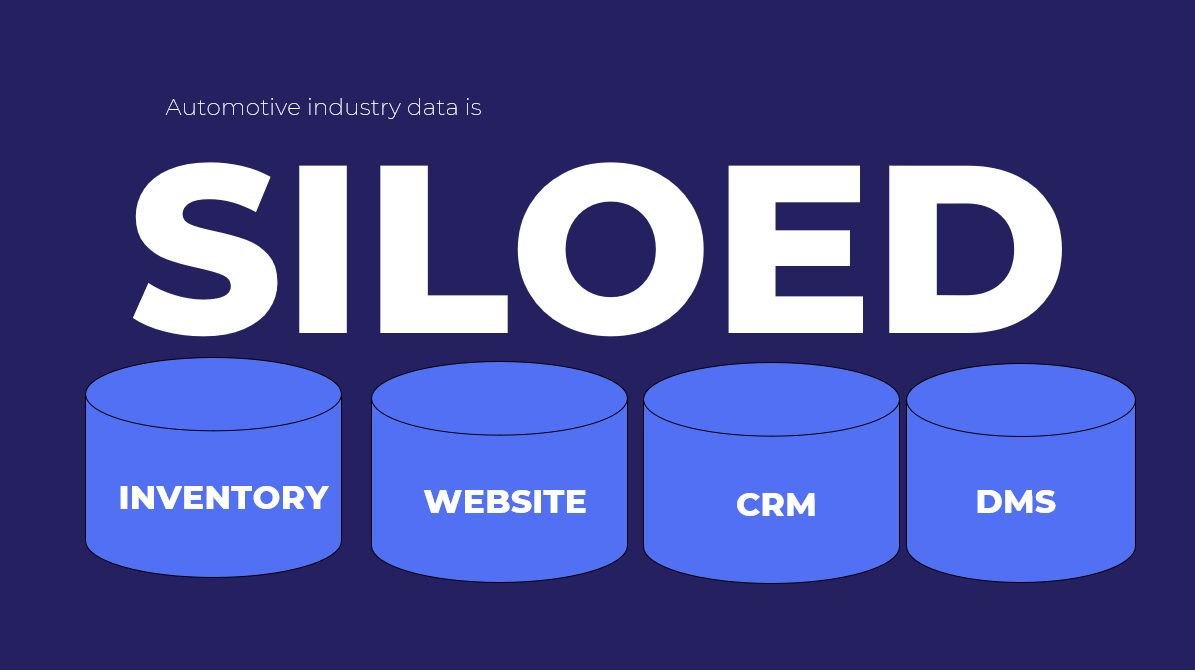
A typical group runs DMS, CRM, website, and digital retailing tools that rarely talk to each other. Getting all of that into a warehouse and keeping it flowing is ongoing technical work – and that's before accounting for a hygiene layer and additional enrichments.
Integrations break. Data stops flowing. A field change in one system ripples downstream. Without someone who understands both the architecture and the quirks of automotive data, what starts as a working warehouse can quietly fall apart.
Most groups aren't going to hire a dedicated data engineer for this. It rarely makes financial sense, and finding someone with both data engineering skills and automotive-specific experience is genuinely hard.
Not to say it can’t be done. Dealer groups are hiring for this expertise. And even in some cases, building their own warehouse from scratch for a four-rooftop group.
Takeaway: it's achievable, but only with the right approach and infrastructure from the start. The groups that skip that often end up mid-build with something that sounds cool but doesn't actually work.
What to look for when evaluating options
A few things determine whether a warehouse actually delivers.
Clean data upstream. A warehouse is only as trustworthy as what feeds it. Make sure there's a layer collecting, cleaning, and unifying data before it hits the warehouse – whether that's a CDP, a data pipeline, or a managed service.
Full source coverage. Everything the group runs needs to be represented: DMS, CRM, website, inventory, digital retailing, phone data. Partial coverage means partial truth.
Ongoing maintenance. Setup is the easy part. What happens when an integration breaks six months in?
Automotive-specific expertise. Generic data engineers can build warehouses. Building one that handles automotive data formats and vendor relationships is a different problem.
The bottom line
Data warehousing has moved from a long-term ambition to something dealer groups are actively building right now. The ones getting the most out of it aren't just the ones with the best warehouse infrastructure. They're the ones who got their tech stack right first – so what flows into the warehouse is actually trustworthy.
Foureyes Connect is here to help. We manage collecting data from across your dealership systems, connecting it, activating it for marketing, and routing those unified records into your data warehouse. Foureyes' Snowflake Managed Services handles the setup, configuration, and ongoing maintenance of that data warehouse in a secure Snowflake environment – so the warehouse works the way it's supposed to without your team having to manage it.
The question isn't whether you need a data warehouse. It's how can you get a data warehouse stood up and built on a foundation without wasting months of time and tens of thousands in spend.
Frequently asked questions
What is the difference between a data warehouse and a CDP for dealerships? A warehouse stores clean, structured data for reporting and historical analysis. A CDP collects, cleans, and activates data for marketing — and can also feed clean records into the warehouse for analysis. They're different tools with different jobs, working in sequence. The CDP handles connecting, cleaning and activation. The warehouse handles the storage and structure.
What do dealer groups actually need before a data warehouse makes sense? A reliable way to collect and clean data before it goes in. A warehouse is only as trustworthy as what feeds it — which is why most groups need a CDP in place first. Without that upstream layer handling cleaning, deduplication, and unification, the warehouse ends up full of the same messy, inconsistent data that was already causing problems. Get the CDP right first. The warehouse is what you build on top of it.
Do smaller dealer groups need a data warehouse? It's not just for large groups. With the right approach and modern cloud infrastructure, groups of any size can build reliable data capabilities. The real question is whether you have the technical resources to manage both the CDP and warehouse layers correctly, or whether outside support makes more sense.
Read More Blogs
 Data Ownership Sounds Simple. It Isn't.
Every automotive vendor will tell you that you own your data. It's practically a line item in the sales pitch at this point. But the details underneath the promise vary wildly from vendor to vendor. And it’s an issue that has led to almost $1 billion in legal settlements, just in automotive retail.

 Consent Management for Dealerships: 5 Questions to Ask Before You Buy
Once your dealership decides to take control of consent management, you want to select the right vendor that will meet your needs and make it easy.
 Data Study: How Many Leads Does it Take to Sell a Car in 2026?
The average new vehicle takes 3.3 leads to sell. EVs and performance models take far more, work trucks and mainstream crossovers far less.

 Dealership Close Rates by Metro: And Why Contact Rates Matter
Foureyes tracked 2.6 million leads from more than 1,150 dealerships across 48 U.S. markets through Q1 2026 to dig deeper into dealership close rates by metropolitan area. One surprising finding: the correlation with contact rates.

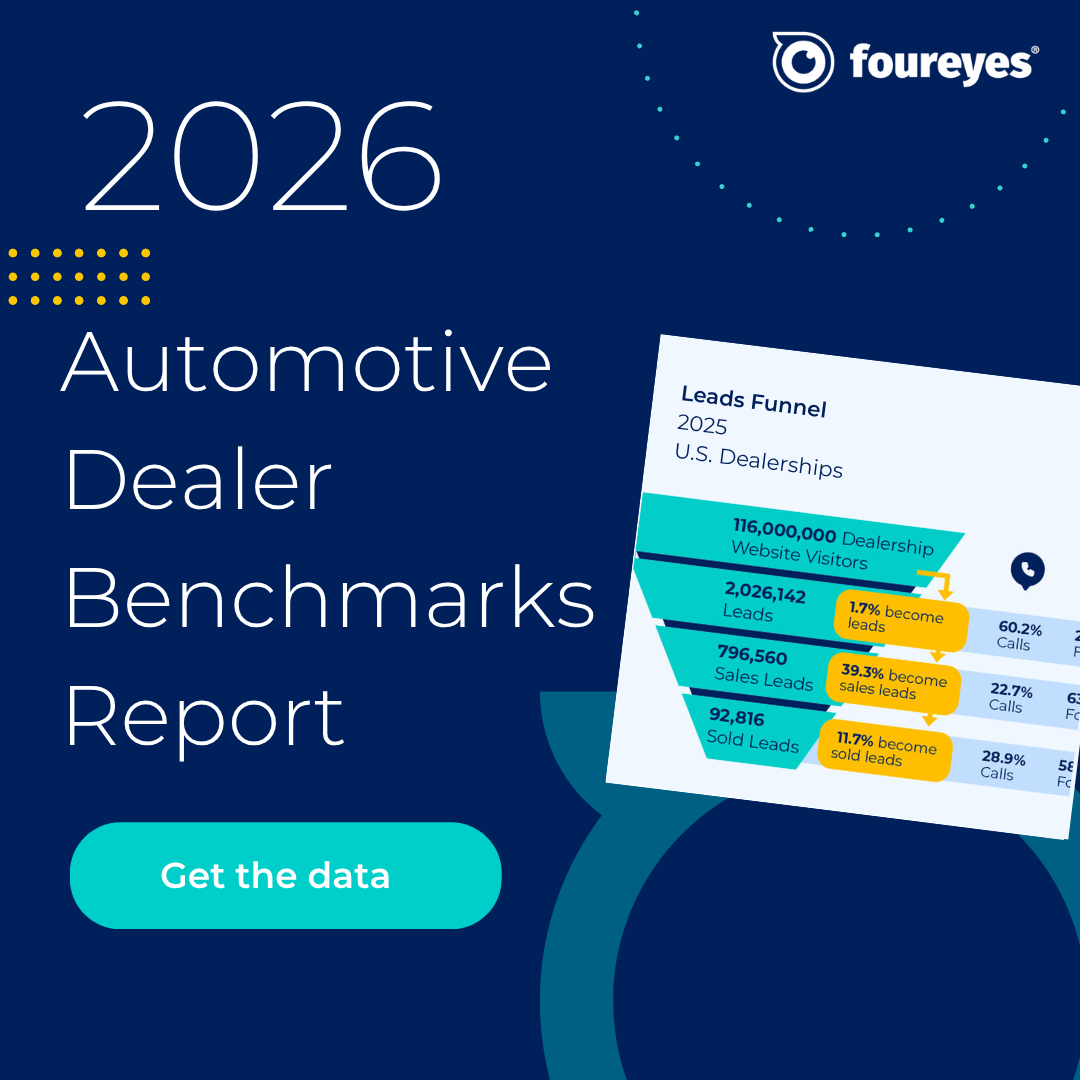 2026 Automotive Dealer Benchmarks Report
For the eighth year, Foureyes analyzed dealer website data to identify industry benchmarks, so you can compare your dealership’s performance and see what it takes to stay competitive.
Data Warehousing for Auto Dealerships: What It Is, Why It's Hard, and Why Your CDP Makes or Breaks ItData warehousing comes up constantly in dealer group conversations, but the actual mechanics rarely get explained clearly. This post tries to fix that. By the end you'll know what a warehouse actually does, why so many groups struggle to get it right, and why the data going in matters more than most people talk about.
 Foureyes Launches Snowflake Managed Services, Taking the Complexity Out of Data Warehouse Management for Dealer Groups
New offering gives dealer groups the warehousing expertise they need — without building and managing it themselves
.webp) Foureyes and Volie Announce New Integration Partnership to Boost BDC Performance
Foureyes and Volie Announce New Integration Partnership to Boost BDC PerformanceFoureyes and Volie announced a two-way integration partnership that connects audience-building and dealer data infrastructure with tools for dealership BDC teams.
 New Foureyes Consent Management Passes 100-Vendor Milestone, Signaling Industry Standardization Around Dealer-Controlled Consent
Foureyes today announced that more than 100 automotive retail vendors are now participating in Foureyes Consent Management, marking a major step toward standardizing how customer communication opt-out requests are managed across the industry.
.png) Introducing Foureyes Connect: A New Standard for Automotive Data
Introducing Foureyes Connect: A New Standard for Automotive DataFoureyes today announced the launch of Foureyes Connect, a different kind of data platform designed to reset how dealer groups operate and scale in an increasingly complex automotive retail landscape.
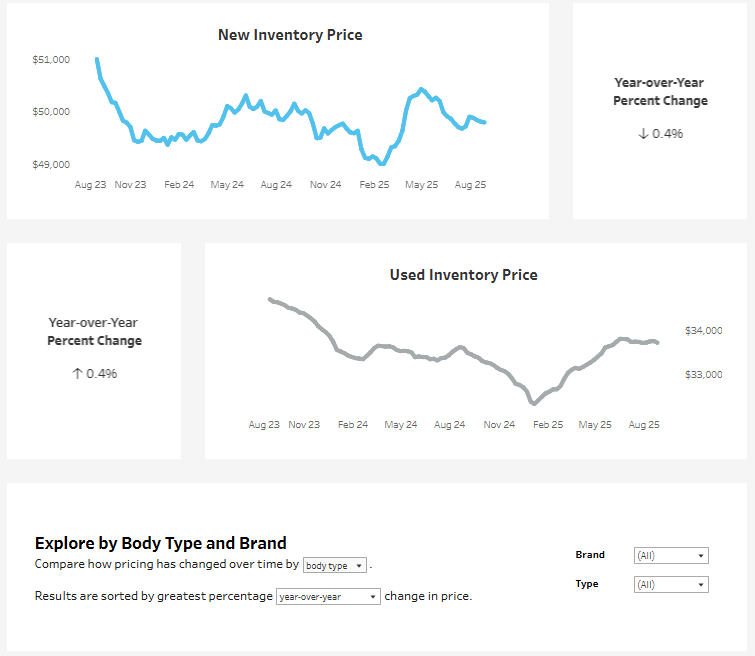 How to Use the U.S. Auto Prices Over Time Dashboard
Explore weekly U.S. auto pricing trends with Foureyes’ interactive dashboard. Compare new and used prices by brand and body type, track inflation and tariff impacts, and uncover insights to guide smarter decisions.
 How to Use the U.S. Automotive Inventory Over Time Dashboard
Track how U.S. auto inventory has changed since 2021 with this interactive dashboard. from Foureyes. Compare new vs. used, explore brand and model shifts, and gain insights to guide smarter pricing, stocking, and forecasting decisions on a weekly basis.
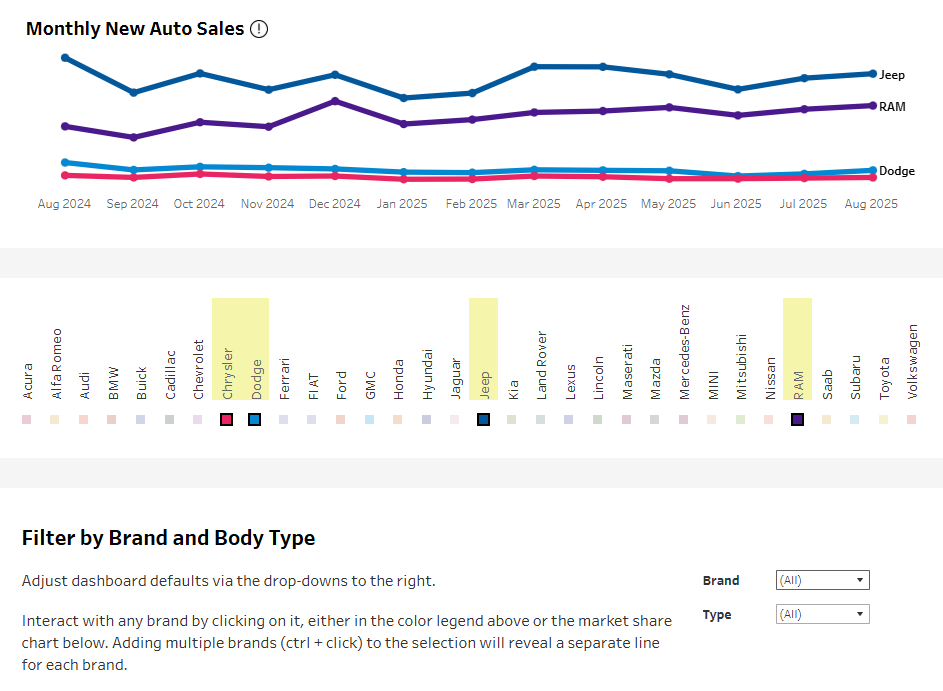 How to Use the U.S. Automotive New Vehicle Sales and Market Share Dashboard
Track monthly U.S. new vehicle sales and market share with this interactive dashboard from Foureyes. Compare brands, body types, and regions to uncover sales momentum, competitive shifts, and supply dynamics—updated monthly and available for free.
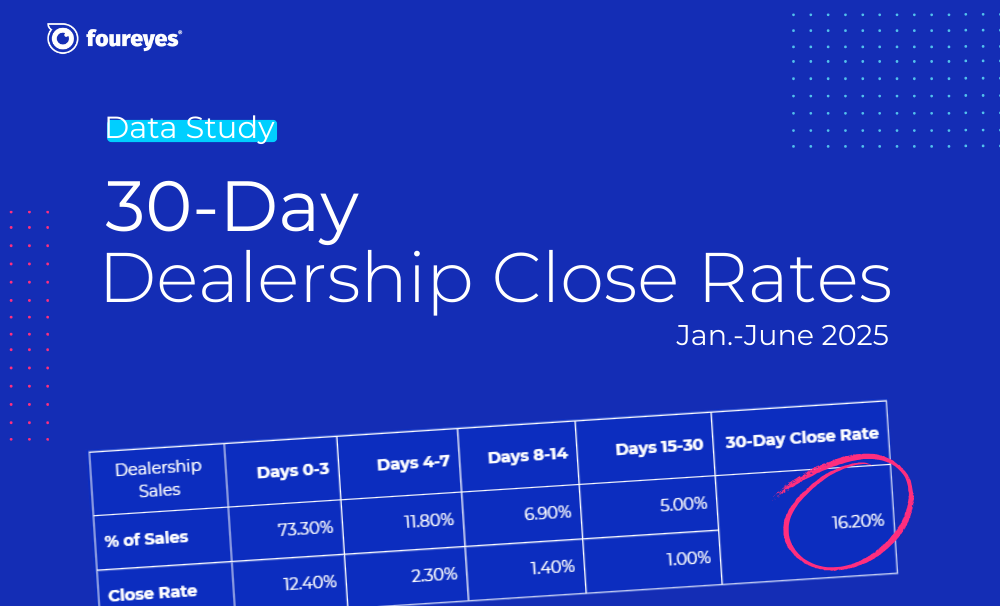
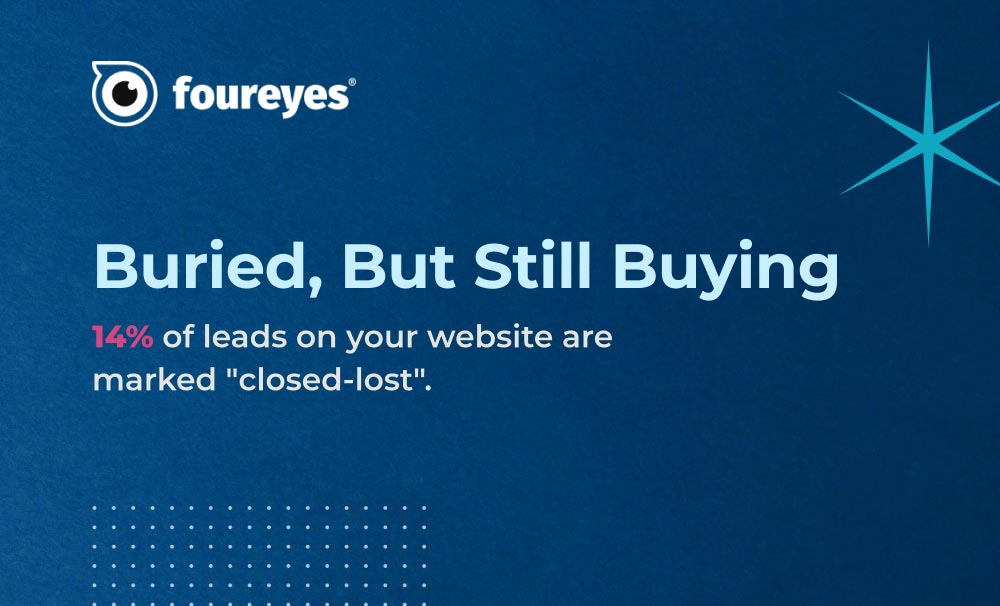 Data Study: The Leads You Marked as Lost Are Still Shopping
New Foureyes data shows why “closed-lost” doesn’t mean game over – and how dealers can win more with what they already have.
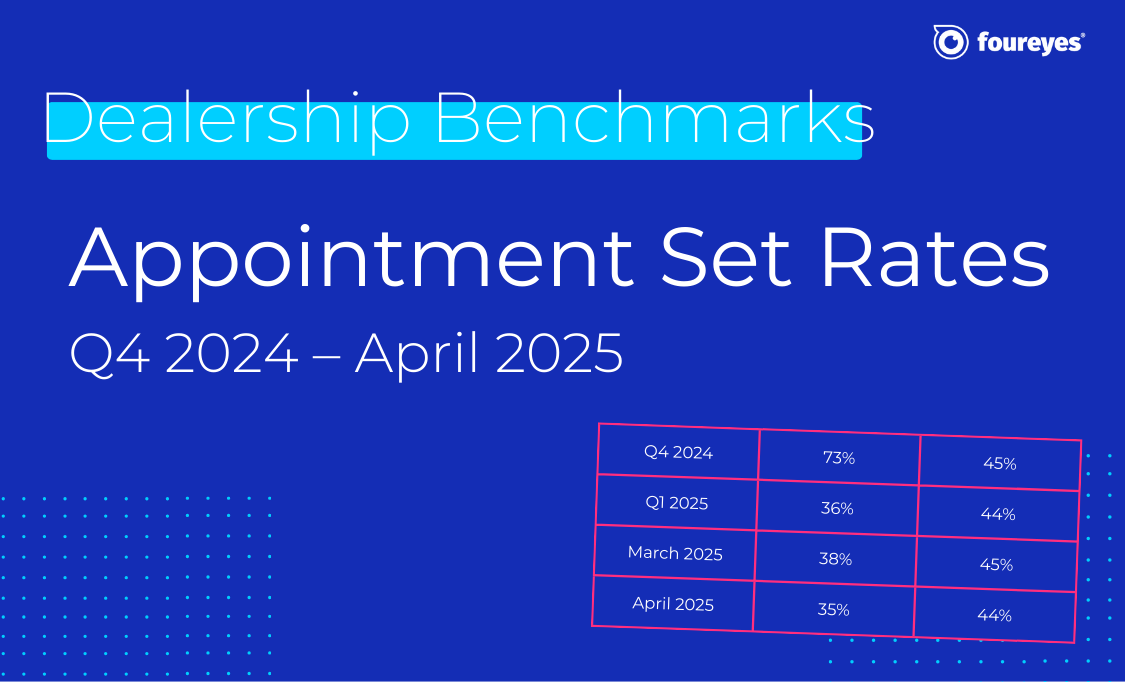 Automotive Sales Benchmarks: Appointment Set Rates for Q4 2024 to April 2025
If your dealership's appointment set rates feel like a mystery, you're not alone. But now, there's fresh data to show where you stand.
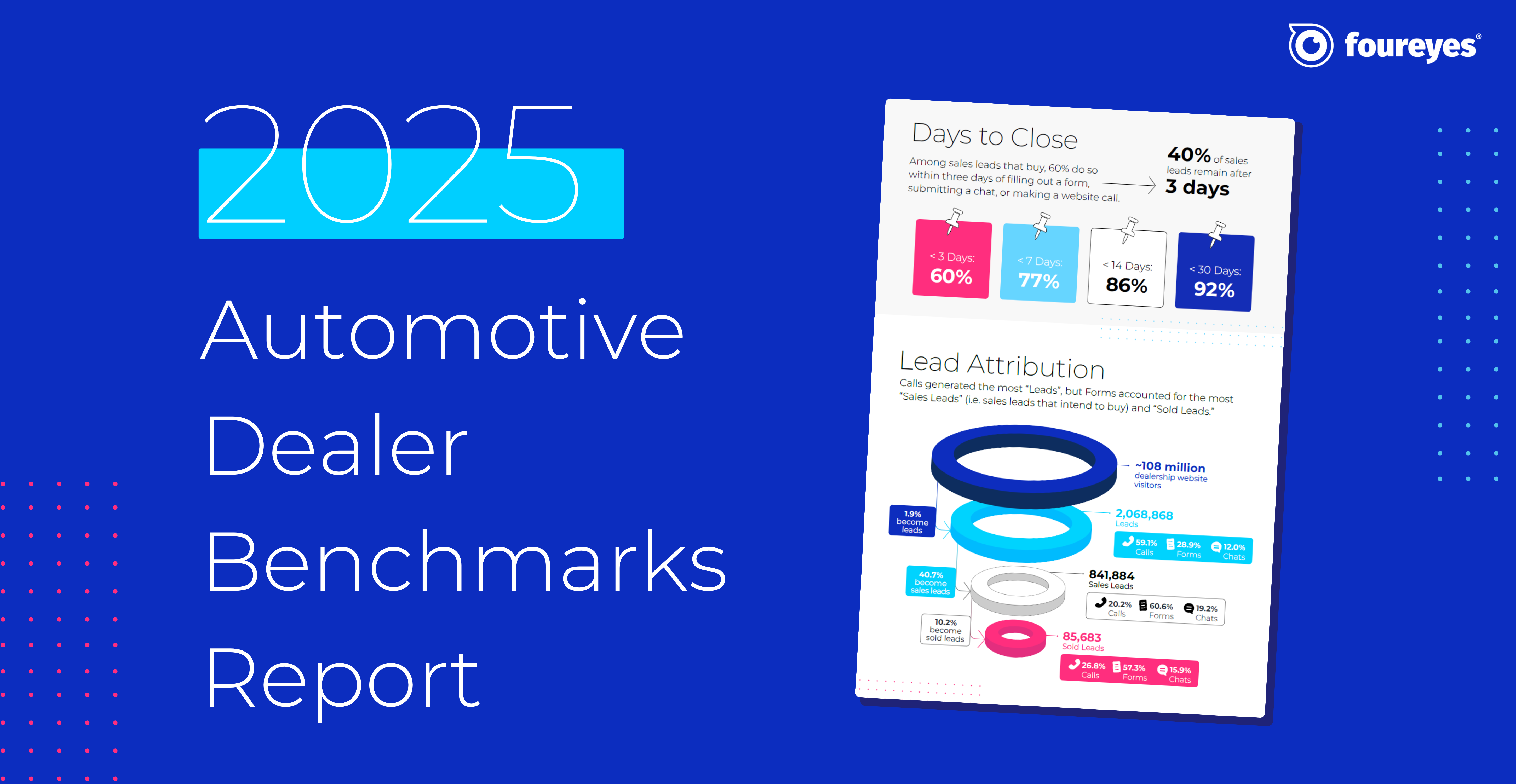 2025 Automotive Dealer Benchmarks Report
For the seventh straight year, Foureyes has dropped its Automotive Dealer Benchmark Report – pulling back the curtain on what's really happening with your leads throughout your sales process.
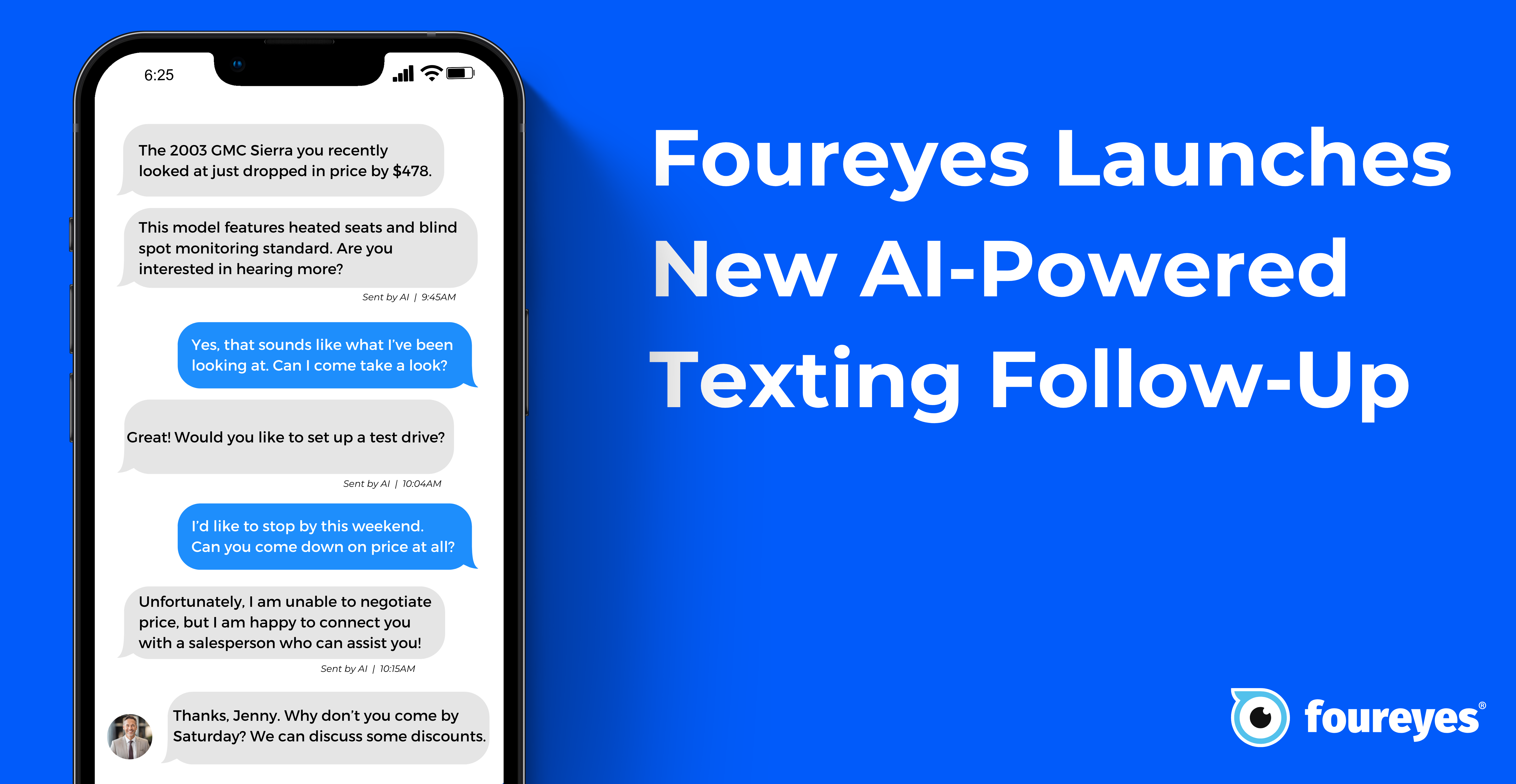 Foureyes Changing the Follow-up Game with Inventory-based Texting
See how the latest Foureyes innovation further helps dealerships match prospects to specific inventory.
 There are How Many “Hidden” Sales Leads at Automotive Dealerships?
New research of sales process data across U.S. automotive dealerships sheds light on the opportunity of “hidden” leads in dealership CRMs.
 How many leads do you actually need? And are you efficiently and effectively working them?
Which dials need to be turned, and how far, to ensure they are getting leads for inventory that actually need leads? And to ensure those leads efficiently and effectively worked?

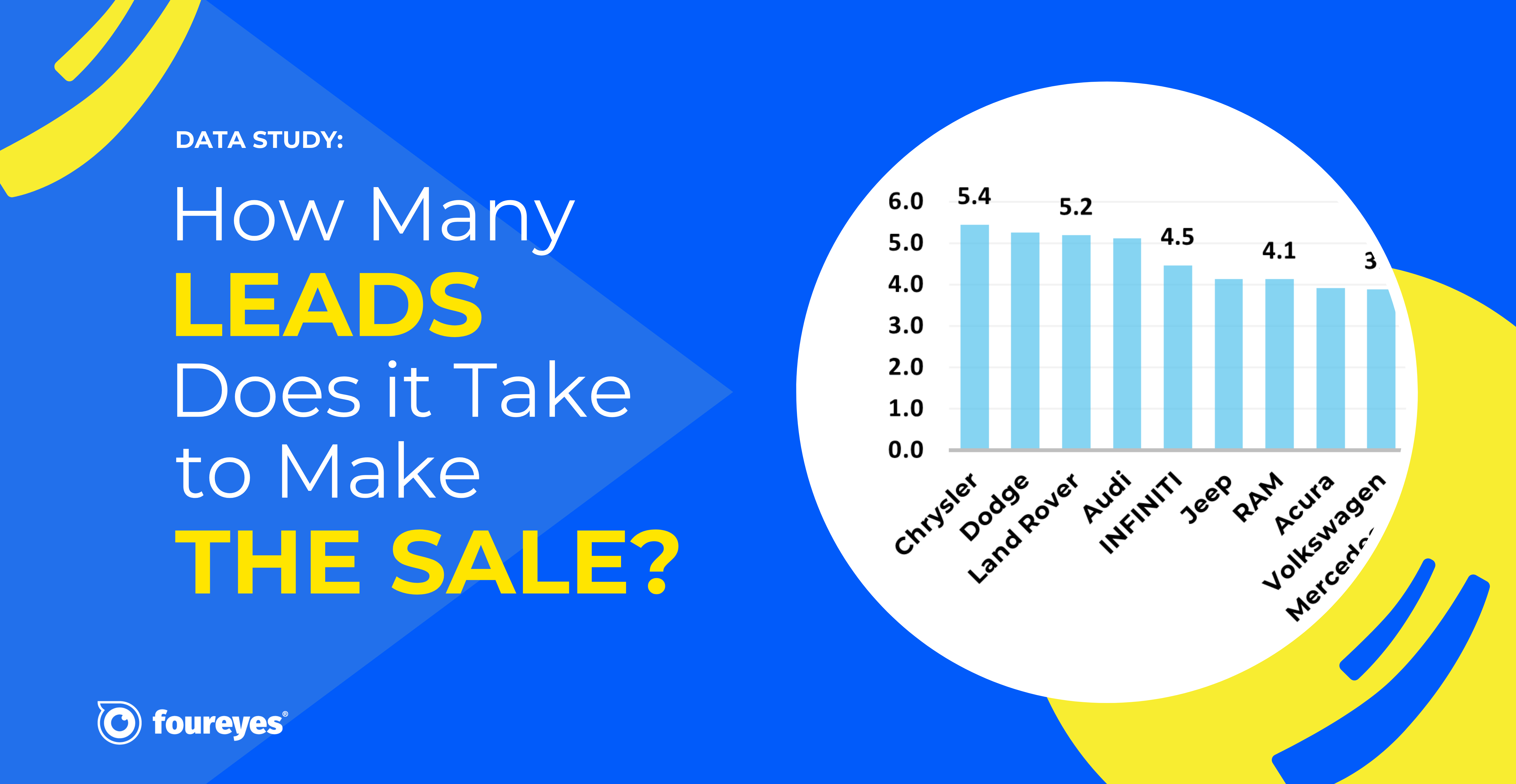 How Many Leads Does it Take for Dealerships to Sell a Car?
A Foureyes study of U.S. automotive dealerships identified the lead-to-sale “efficiency” across new vehicle inventory for Q1 2024.
 2024 Automotive Dealer Benchmarks Report
For the sixth consecutive year, Foureyes released its new automotive industry benchmarks. This data is intended to help dealers and dealer groups compare their performance against the industry and track trends in how leads behave.
.jpg)
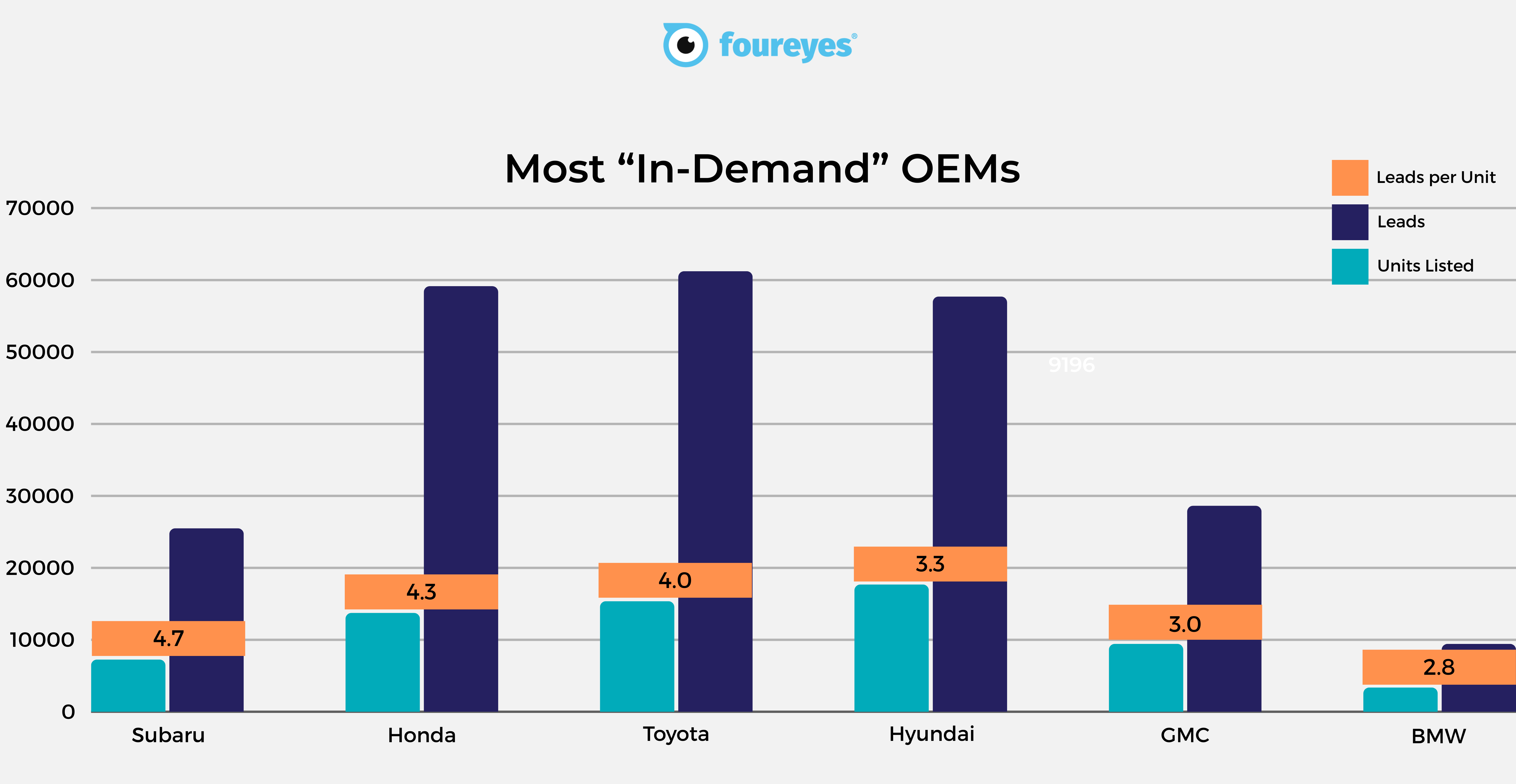 Most In-demand YMMs (2023 & 2024)
We dove into a pool of approximately 700 dealerships to scope out the most sought-after 2023 and 2024 YMMs and their OEMs over the past 3 months (min. 100 units per YMM)

.png)






 2022 Automotive Dealer Benchmarks Report
As automotive dealerships continue to adjust their strategies, tactics, and other process operations during this ongoing vehicle inventory shortage, we at Foureyes are sharing – for the fourth consecutive year – new auto industry benchmarks intended to help dealers understand the market, track trends in how leads behave, and drive sales success in 2022.


 2021 Automotive Dealer Benchmarks Report
For the third year in a row, we’re sharing auto industry benchmarks to help dealers and OEMs understand the market, track changes in customer behavior, and drive sales success in 2021.
 The 2020 Automotive Dealer Benchmarks Report
Start the new year off strong by reviewing your sales performance and creating 2020 goals. See how your dealership stacks up against the competition and use these auto industry benchmarks to develop a marketing and sales strategy for the new year.

