
Consent Management for Dealerships: 5 Questions to Ask Before You Buy
Once your dealership decides to take control of consent management, you want to select the right vendor that will meet your needs and make it easy.










Every system works a little differently, so what are the questions to ask when comparing solutions? How do you ensure a true coordination layer between all the software, service, and AI providers calling, texting, or emailing your customers? You know you need something that collects opt-in and opt-out events from every vendor you authorize and keeps clean, timestamped records for every customer, but what else is important?
Here is what to ask to get the information you need.
1. Which vendors are already integrated with your consent management platform, and can I see the list?
Getting vendors to prioritize, build, and maintain an integration can take years, so understanding the list of available vendors is the most important question to ask before signing up.
Check the list and see how many of your vendors are reflected. Look for your 3rd-party lead providers, website providers, sales and service email, text, and call providers, service schedulers, and anyone else contacting your customers as your dealership.
In our experience, most automotive vendors are excellent at honoring opt-out requests that come to them directly. However, very few vendors log the information back to your CRM, even if that’s where they get opt-in data to start with. In fact, fewer than a handful of the 100+ vendors we've talked to log the information back to your CRM, even if that’s where they get opt-in data to start with. This puts you at risk if you are only relying on CRM data and don’t have integrations with the vendors calling, texting, or emailing on your behalf.
2. What does a vendor have to do to integrate with your consent platform, and what does it cost them?
If few vendors are integrated and you’re still interested, it’s worth learning about their consent management design and how it may affect you and your current processes.
- “Do you have a team pursuing vendor integrations? Who is responsible for getting vendors integrated?”
- “Do you charge vendors to access your consent management tool?”
- “How will this integration change the send process for vendors? For example, once integrated, how long will it take to process consent data prior to running their normal processes?”
Few consent management solutions have a dedicated vendor support team. Some use vendor integrations as an additional income stream, charging each of your vendors for access. Some offer a real-time webhook to stream data, while others have rate-limited lookup processes that would require vendors to call the system prior to sending messages, delaying messages to your customers. Any of these details may be acceptable to you, but it’s important to understand upfront.
3. How does your consent management tool work with my CRM?
You want your CRM to have the most up-to-date information possible. Drill into the specifics of how the consent management tool interacts with your CRM by asking:
- “Does your tool write opt-out back into CRMs?”
- “What happens if someone shows ‘opted-in’ in your system, but ‘opted-out’ in the CRM?”
The wrong answers will rely on dealer workflows and manual processes.
4. What consent data gets collected?
Table stakes for any consent management system is collecting opt-outs and opt-ins.
Additionally, they need to be collected as consent events (not statuses). An event is traceable and includes:
- Who
- What
- When
- How
Events matter because consent is dynamic. Someone can opt-in and then opt-out only to opt-in again. Timestamps and sources -- which statuses don’t have -- are key to track this information.
Better systems will also collect communications data, so you can audit your vendors and validate that they are accurately applying consent preferences and spot problems before you get a demand letter.
5. What can I actually see in the consent dashboard?
Being able to see and act on the data collected by your consent management tool is key:
“Show me what the experience looks like in your platform”
- “What kind of reporting is included with your consent management tool?”
If the answer to any of these is a roadmap date, you are buying a plan, not a tool.
One thing no tool will do for you
No consent platform removes your exposure. Compliance ownership stays with the dealership. Anyone who tells you otherwise is selling you something they cannot deliver.
A good coordination layer narrows your exposure. It makes one opt-out visible to every vendor you have authorized, keeps the audit trail in one place, and puts the write-back rules in your hands instead of theirs.
"Before Foureyes, all our vendor communication felt a bit Wild West, no visibility, everyone doing their own thing, even with opt-outs. Now everyone's playing off the same sheet of music." – Jeremy Nowling, Sales and Digital Retailing Director, Rohrman Auto Group
More than 100 automotive vendors are integrated with the Foureyes consent standard. See who is participating and how it works.
Read More Blogs
 Consent Management for Dealerships: 5 Questions to Ask Before You Buy
Once your dealership decides to take control of consent management, you want to select the right vendor that will meet your needs and make it easy.
 Data Study: How Many Leads Does it Take to Sell a Car in 2026?
The average new vehicle takes 3.3 leads to sell. EVs and performance models take far more, work trucks and mainstream crossovers far less.

 Dealership Close Rates by Metro: And Why Contact Rates Matter
Foureyes tracked 2.6 million leads from more than 1,150 dealerships across 48 U.S. markets through Q1 2026 to dig deeper into dealership close rates by metropolitan area. One surprising finding: the correlation with contact rates.

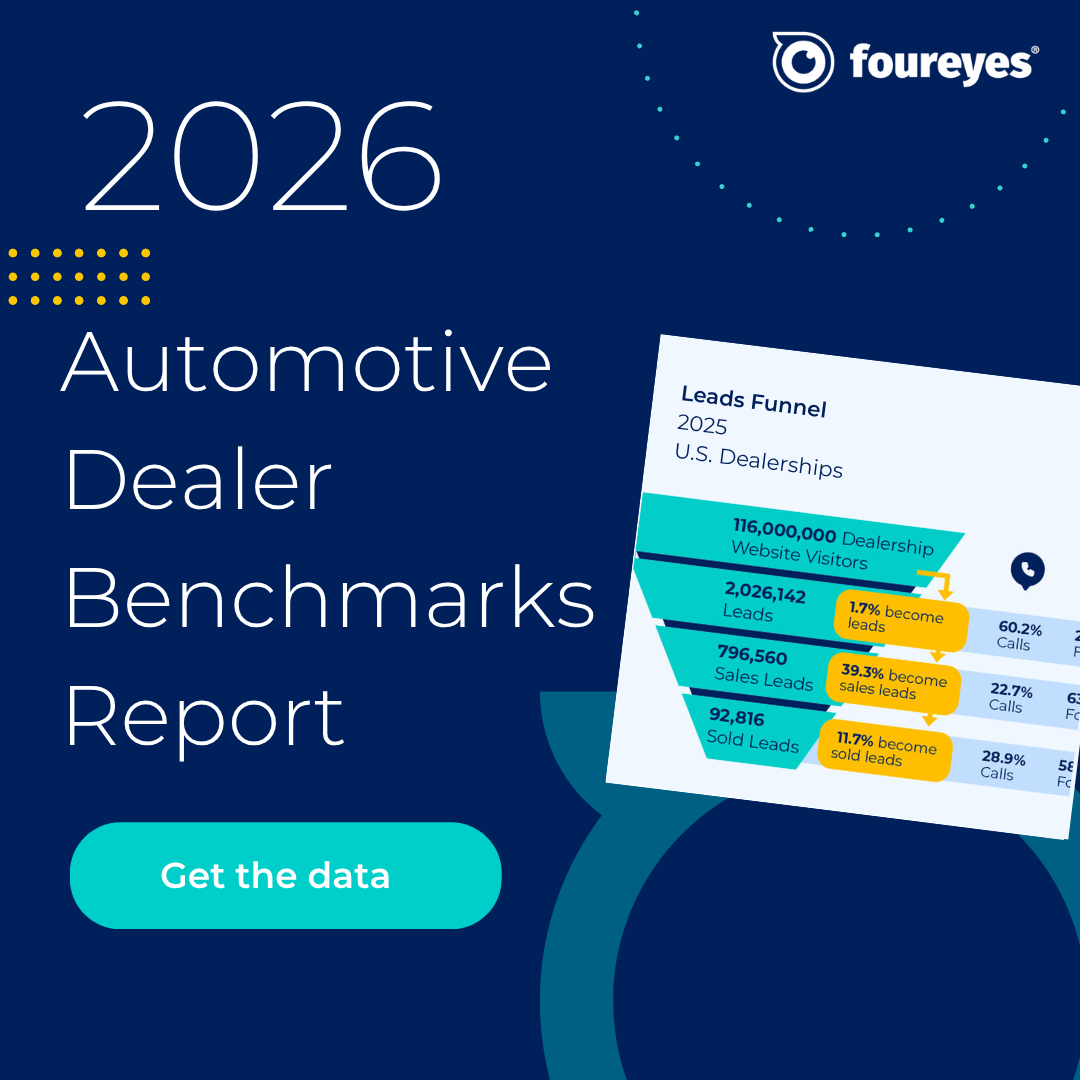 2026 Automotive Dealer Benchmarks Report
For the eighth year, Foureyes analyzed dealer website data to identify industry benchmarks, so you can compare your dealership’s performance and see what it takes to stay competitive.
 Data Warehousing for Auto Dealerships: What It Is, Why It's Hard, and Why Your CDP Makes or Breaks It
Data warehousing comes up constantly in dealer group conversations, but the actual mechanics rarely get explained clearly. This post tries to fix that. By the end you'll know what a warehouse actually does, why so many groups struggle to get it right, and why the data going in matters more than most people talk about.

 Foureyes Launches Snowflake Managed Services, Taking the Complexity Out of Data Warehouse Management for Dealer Groups
New offering gives dealer groups the warehousing expertise they need — without building and managing it themselves
.webp) Foureyes and Volie Announce New Integration Partnership to Boost BDC Performance
Foureyes and Volie Announce New Integration Partnership to Boost BDC PerformanceFoureyes and Volie announced a two-way integration partnership that connects audience-building and dealer data infrastructure with tools for dealership BDC teams.
 New Foureyes Consent Management Passes 100-Vendor Milestone, Signaling Industry Standardization Around Dealer-Controlled Consent
Foureyes today announced that more than 100 automotive retail vendors are now participating in Foureyes Consent Management, marking a major step toward standardizing how customer communication opt-out requests are managed across the industry.
.png) Introducing Foureyes Connect: A New Standard for Automotive Data
Introducing Foureyes Connect: A New Standard for Automotive DataFoureyes today announced the launch of Foureyes Connect, a different kind of data platform designed to reset how dealer groups operate and scale in an increasingly complex automotive retail landscape.
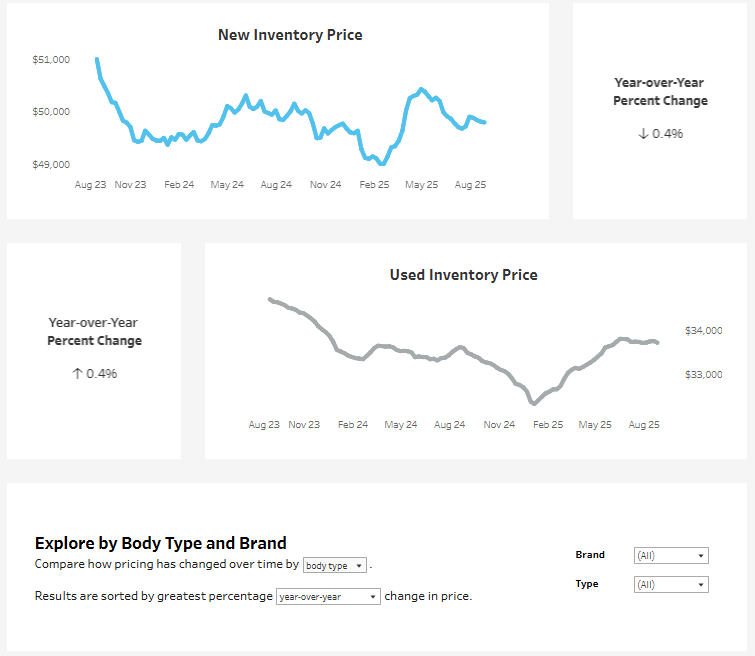 How to Use the U.S. Auto Prices Over Time Dashboard
Explore weekly U.S. auto pricing trends with Foureyes’ interactive dashboard. Compare new and used prices by brand and body type, track inflation and tariff impacts, and uncover insights to guide smarter decisions.
 How to Use the U.S. Automotive Inventory Over Time Dashboard
Track how U.S. auto inventory has changed since 2021 with this interactive dashboard. from Foureyes. Compare new vs. used, explore brand and model shifts, and gain insights to guide smarter pricing, stocking, and forecasting decisions on a weekly basis.
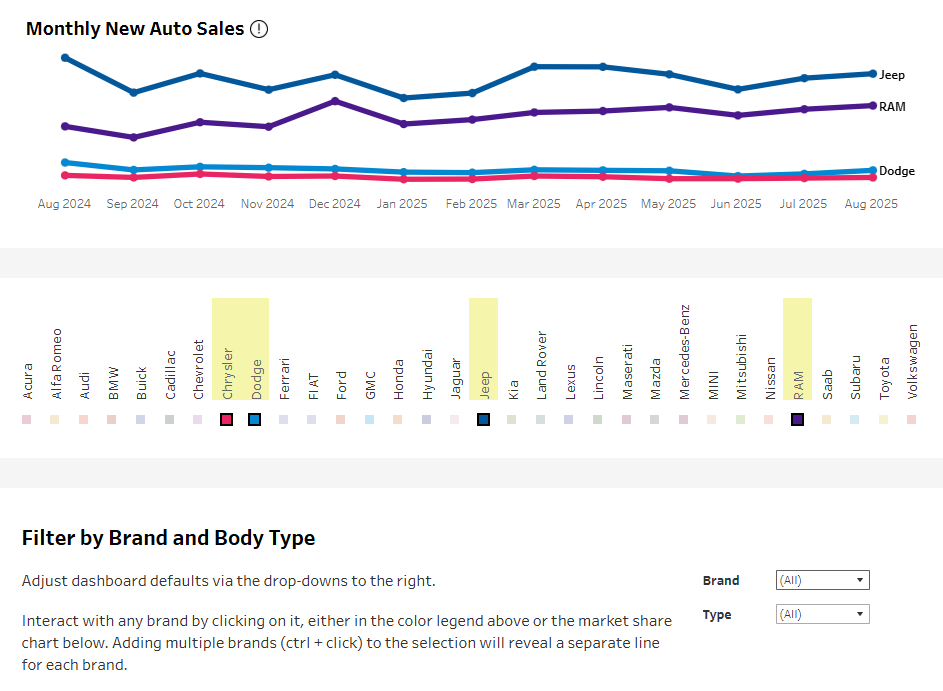 How to Use the U.S. Automotive New Vehicle Sales and Market Share Dashboard
Track monthly U.S. new vehicle sales and market share with this interactive dashboard from Foureyes. Compare brands, body types, and regions to uncover sales momentum, competitive shifts, and supply dynamics—updated monthly and available for free.
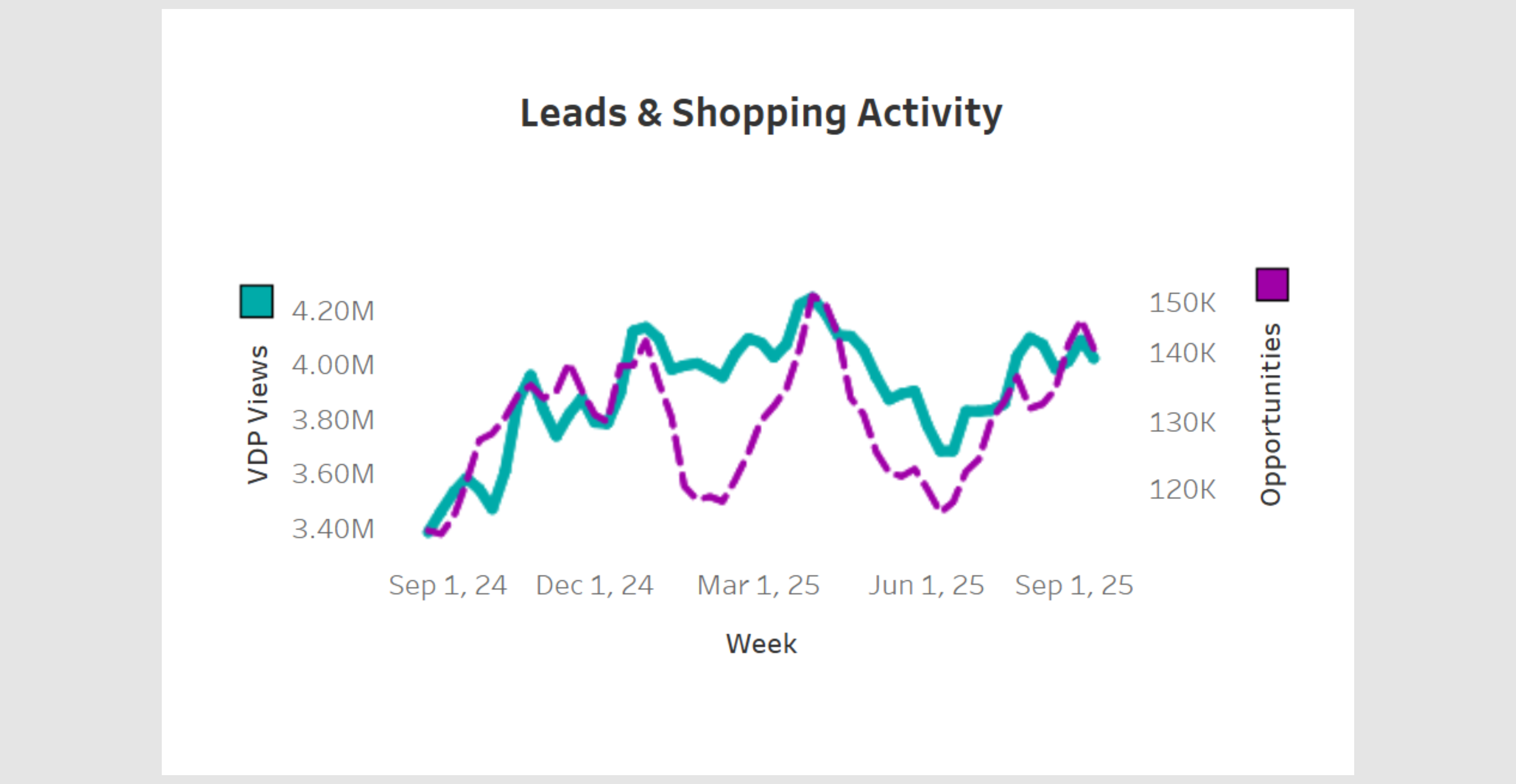
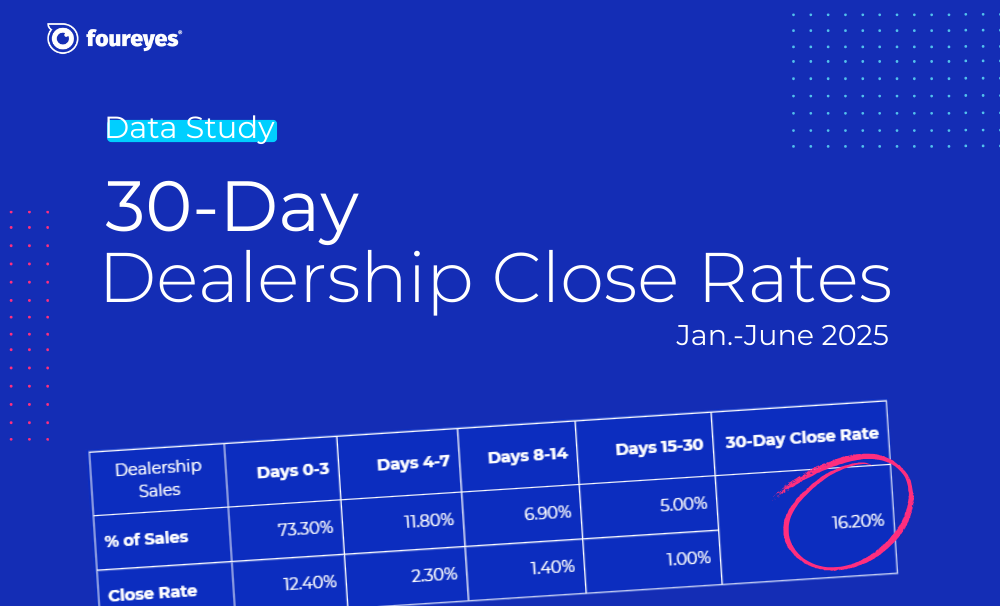
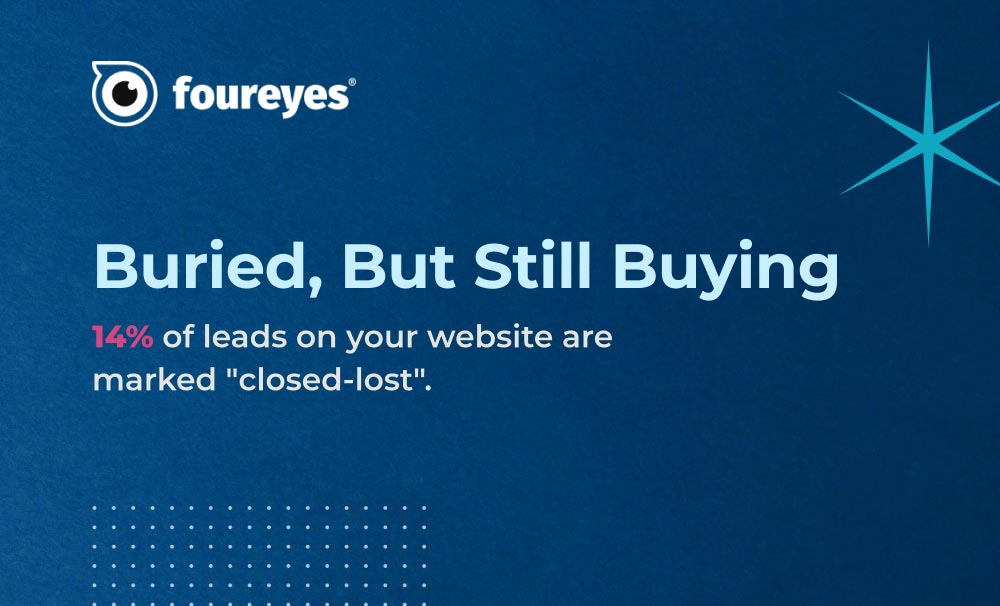 Data Study: The Leads You Marked as Lost Are Still Shopping
New Foureyes data shows why “closed-lost” doesn’t mean game over – and how dealers can win more with what they already have.
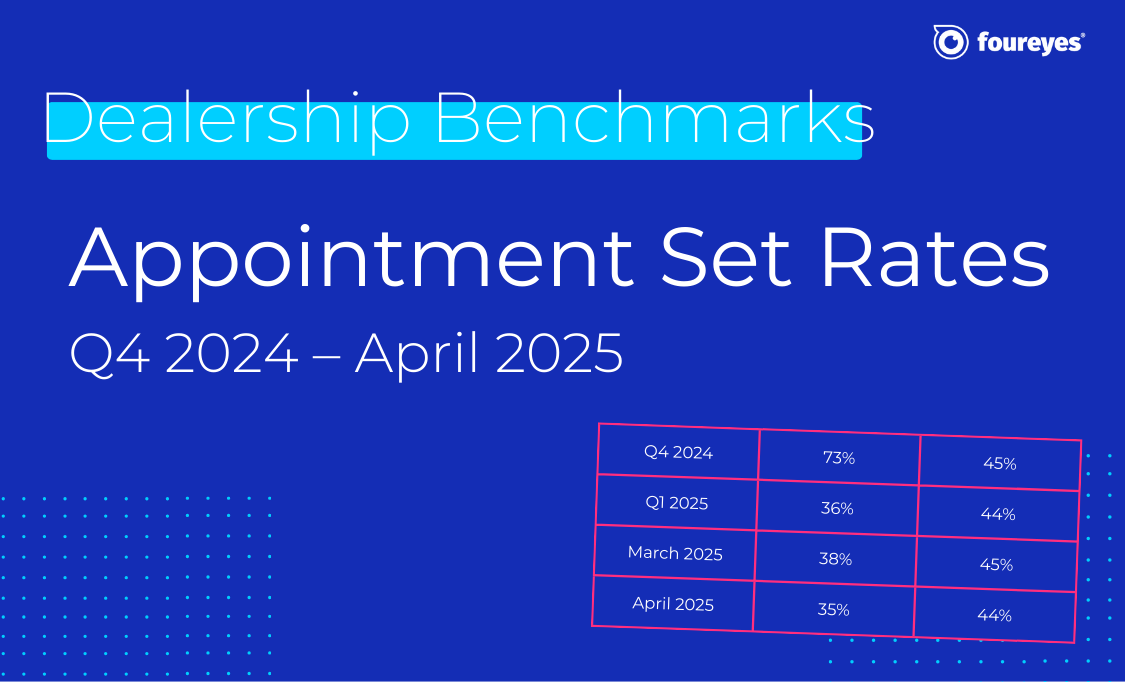 Automotive Sales Benchmarks: Appointment Set Rates for Q4 2024 to April 2025
If your dealership's appointment set rates feel like a mystery, you're not alone. But now, there's fresh data to show where you stand.
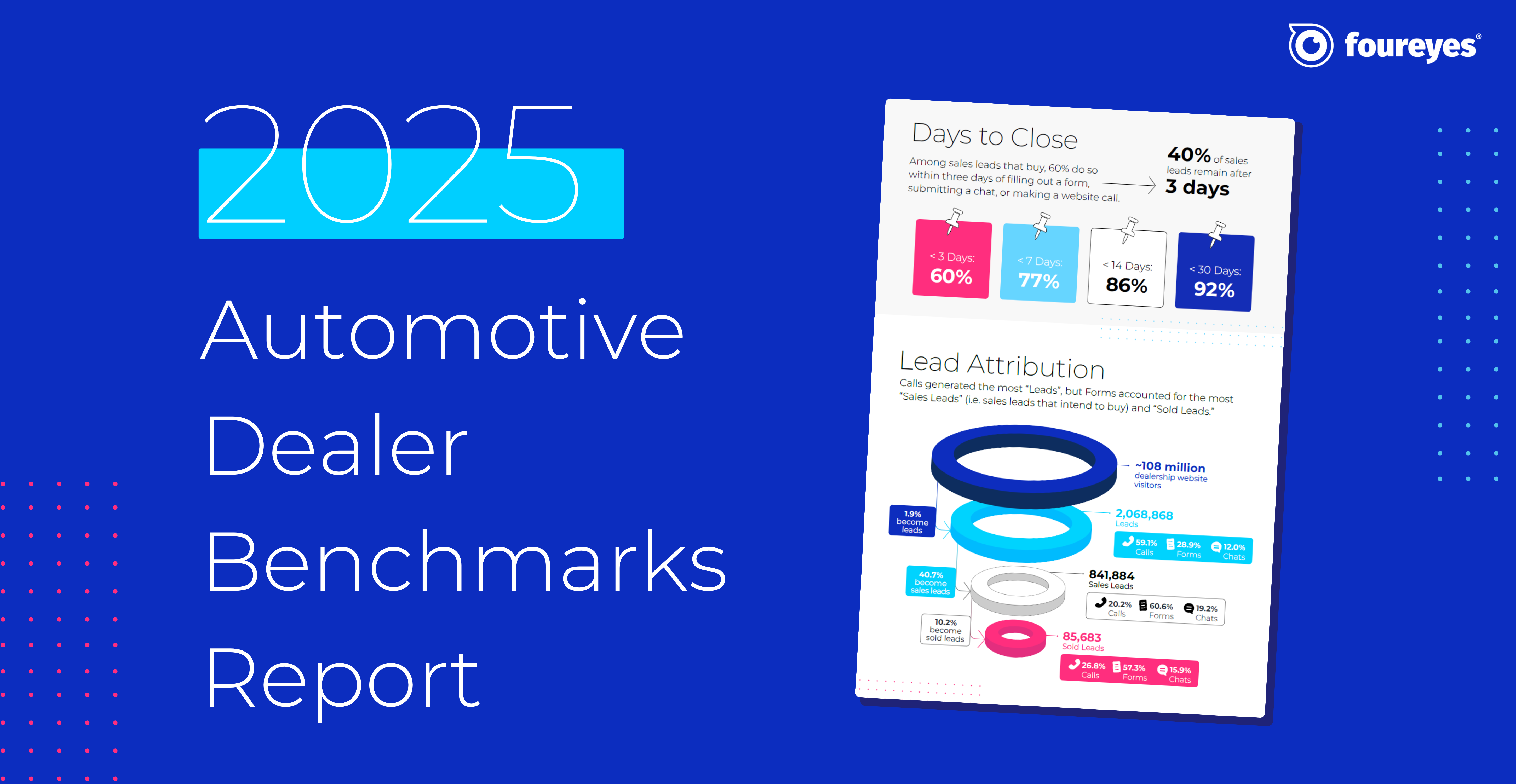 2025 Automotive Dealer Benchmarks Report
For the seventh straight year, Foureyes has dropped its Automotive Dealer Benchmark Report – pulling back the curtain on what's really happening with your leads throughout your sales process.
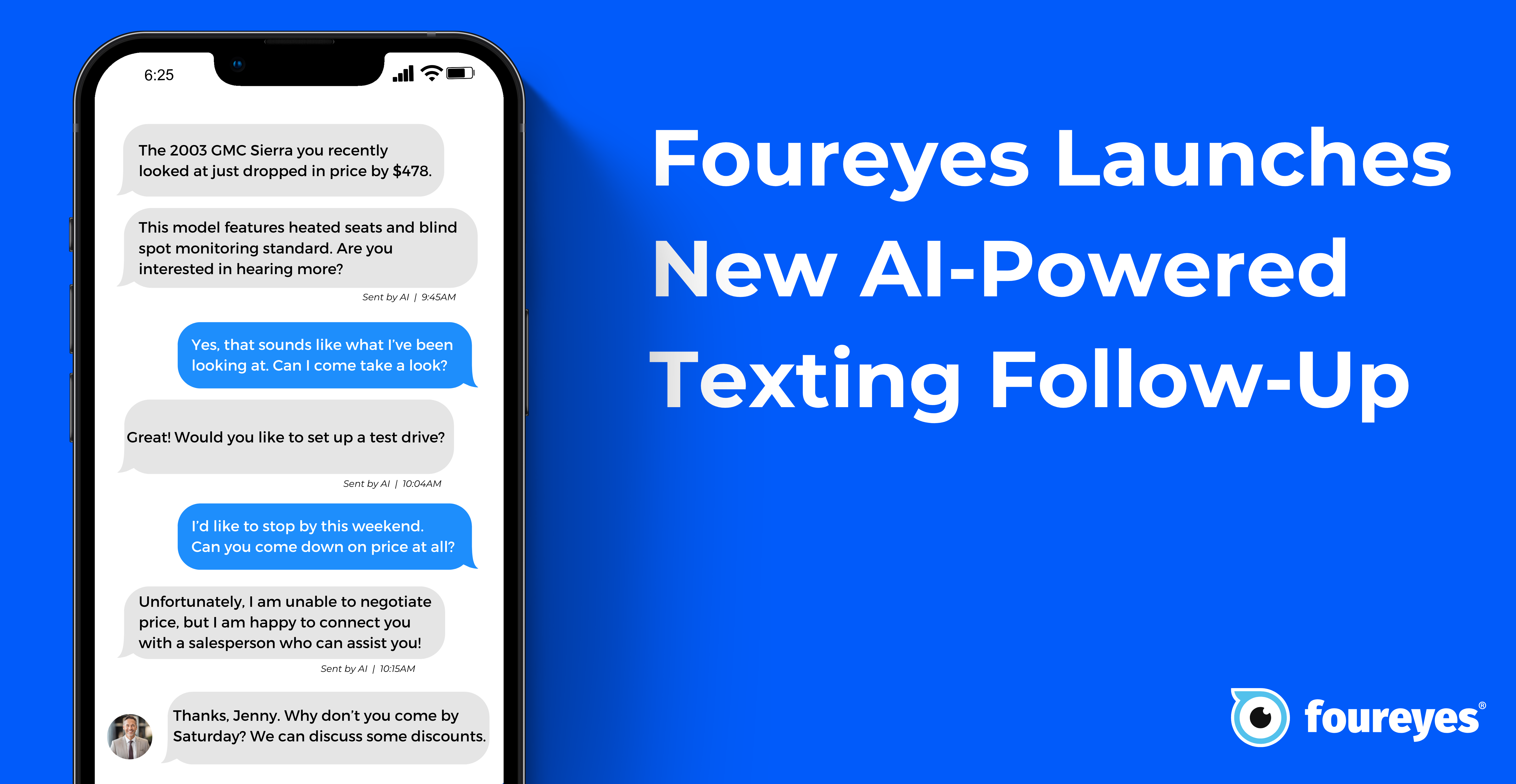 Foureyes Changing the Follow-up Game with Inventory-based Texting
See how the latest Foureyes innovation further helps dealerships match prospects to specific inventory.
 There are How Many “Hidden” Sales Leads at Automotive Dealerships?
New research of sales process data across U.S. automotive dealerships sheds light on the opportunity of “hidden” leads in dealership CRMs.
 How many leads do you actually need? And are you efficiently and effectively working them?
Which dials need to be turned, and how far, to ensure they are getting leads for inventory that actually need leads? And to ensure those leads efficiently and effectively worked?

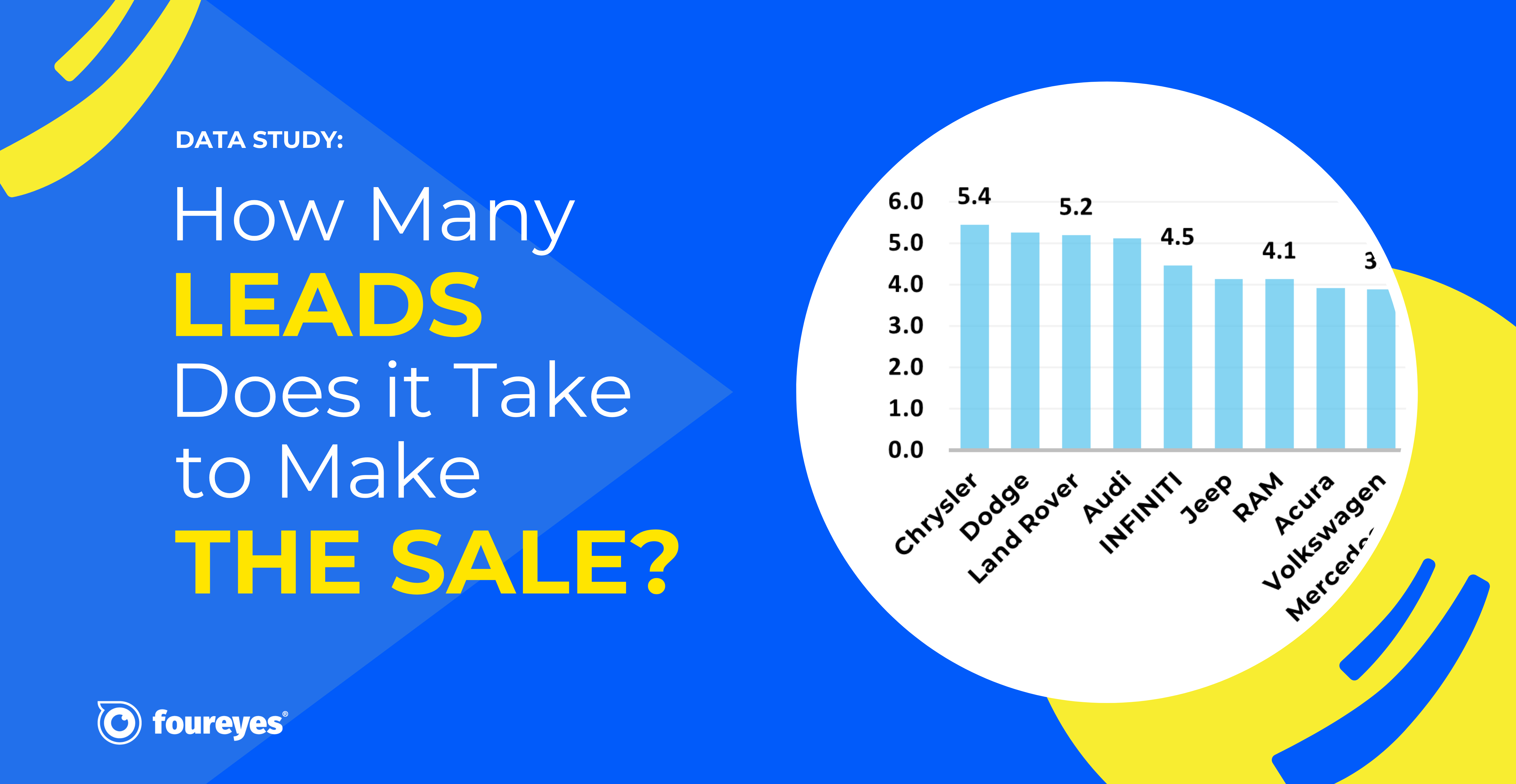 How Many Leads Does it Take for Dealerships to Sell a Car?
A Foureyes study of U.S. automotive dealerships identified the lead-to-sale “efficiency” across new vehicle inventory for Q1 2024.
 2024 Automotive Dealer Benchmarks Report
For the sixth consecutive year, Foureyes released its new automotive industry benchmarks. This data is intended to help dealers and dealer groups compare their performance against the industry and track trends in how leads behave.
.jpg)
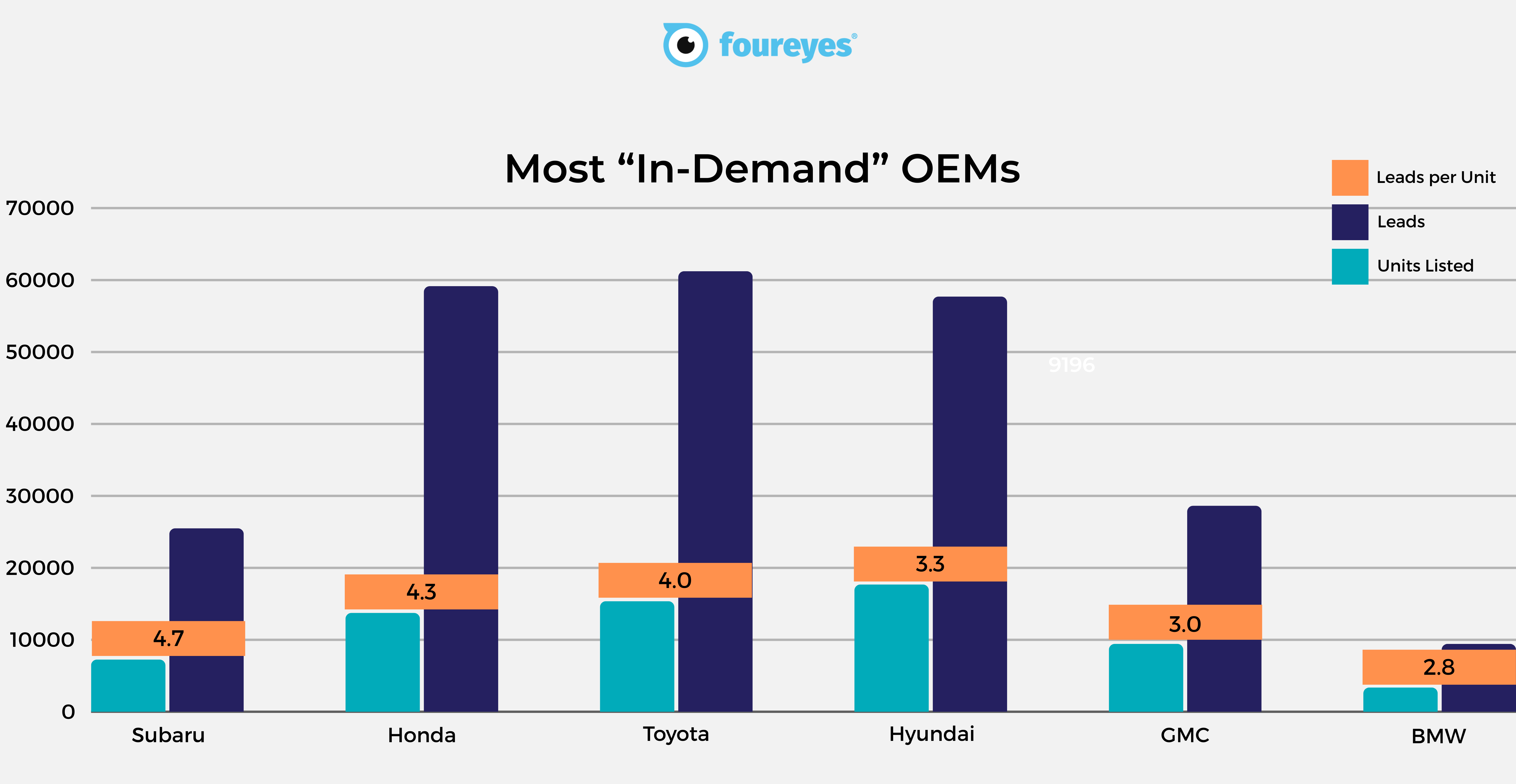 Most In-demand YMMs (2023 & 2024)
We dove into a pool of approximately 700 dealerships to scope out the most sought-after 2023 and 2024 YMMs and their OEMs over the past 3 months (min. 100 units per YMM)

.png)






 2022 Automotive Dealer Benchmarks Report
As automotive dealerships continue to adjust their strategies, tactics, and other process operations during this ongoing vehicle inventory shortage, we at Foureyes are sharing – for the fourth consecutive year – new auto industry benchmarks intended to help dealers understand the market, track trends in how leads behave, and drive sales success in 2022.


 2021 Automotive Dealer Benchmarks Report
For the third year in a row, we’re sharing auto industry benchmarks to help dealers and OEMs understand the market, track changes in customer behavior, and drive sales success in 2021.
 The 2020 Automotive Dealer Benchmarks Report
Start the new year off strong by reviewing your sales performance and creating 2020 goals. See how your dealership stacks up against the competition and use these auto industry benchmarks to develop a marketing and sales strategy for the new year.

