
Your Data Was Never the Problem. Reaching It Was.
Ask which of your stores had the lowest lead-to-appointment rate last month and the answer comes back in seconds, drawn from your CRM, DMS, website, inventory and phones at once.




Then ask why. Then which salespeople. Then ask which of the leads you wrote off are back on your website this week, looking at a car still sitting on your lot.
That last one matters most. No CRM report can answer it, because your CRM doesn’t know who’s on your website, your website doesn’t know what’s on your lot, and getting an answer takes all three systems matched to the same shopper.
That’s Foureyes Connect MCP. It’s live, and it puts a dealership’s own unified data inside Claude, ChatGPT and other AI assistants, where anyone at the store can work with it.
It builds, too
Last week I asked it for this:
Build me an app that finds inventory on the lot 45 or more days with leads that went cold, meaning no activity in 14 days. For each car, show who asked about it, and recommend other unsold shoppers who submitted a lead on the same make and model, with the reason we picked each one. Let me filter by store.
What came back was a working application with a URL, running on unified dealership data, and somebody on a sales floor could have opened it the next morning and started calling.
It took about as long to build as it took to describe.
Jeff Ramsey, CMO of Ourisman Automotive Group, did his own version of this:
“We were looking at a solution to score our customer engagement, which would have been $3,000 a month per store. Instead, I built it myself in Claude. Our Foureyes-unified data helped me figure out and fine-tune the metrics that actually matter, and most of what we measure now, I never would have thought to track.”
Why this couldn’t happen until now
In 1999 I watched a talk by Douglas Engelbart that I’ve been chewing on ever since, and the part that stuck was his claim that technology moves along two dimensions. Access is whether you can get to the information. Connectivity is whether it can move. One of them is always the thing holding you back.
Put that next to the theory of constraints and you get the idea behind everything we’ve built, which is that the only work that matters is work on the constraint.
In most dealerships the constraint isn’t people and it isn’t tools. It’s access to your own data. Walk into a store running with remarkable efficiency and those people aren’t smarter than you, they’re operating closer to the ceiling of what their access allows.
AI made writing software nearly free, and that part isn’t news anymore. What was missing is that the model had nothing worth connecting to, and a model with nothing to connect to is a yappy intern. It will write you a beautiful application about no data whatsoever.
Which is where most dealership AI runs aground. The demo looks great. Then a dealer points it at their own store and gets an answer that’s confident and wrong.
The model isn’t the problem.
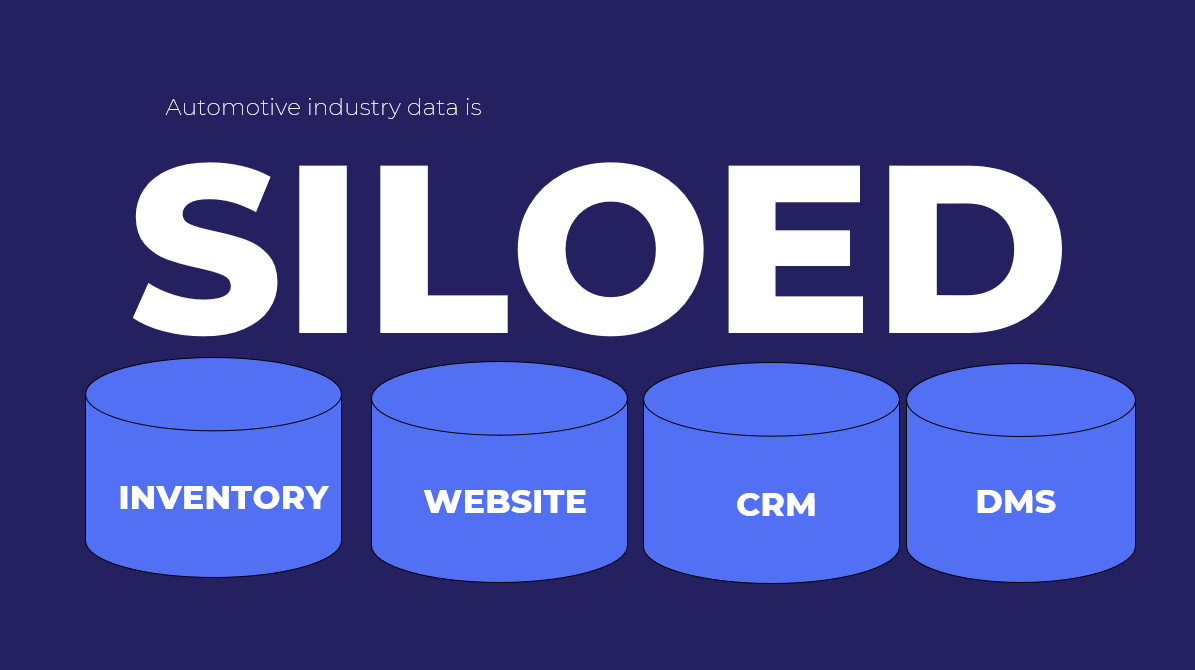
Underneath it sit four systems that disagree with each other, and this is what we’ve measured at dealers connected to Foureyes.
Point anything at that, however smart it is, and you get nonsense delivered with total confidence.
How automotive got here
In the mid-2010s nearly every industry did the same unglamorous thing, moving data out of the systems that created it and into consolidated cloud platforms like Snowflake, BigQuery and Redshift. Retailers, banks, airlines, software companies, all of them. A whole class of company showed up to do the plumbing, pulling data out of point-of-sale systems, ledgers and CRMs, cleaning it and keeping it flowing.
Nobody knew it at the time, but that was the groundwork for AI. When the models arrived, those industries had data ready for them.
In automotive, that work was effectively banished.
In 2017 Authenticom, one of the independent companies pulling data out of dealer systems, and the two largest DMS providers, CDK Global and Reynolds and Reynolds, got tied up in litigation over who could access dealer data and on what terms. The plumbers left. The capital that funds that kind of infrastructure went to industries where building it didn’t come with a lawsuit attached.
So everyone else spent a decade laying pipe and automotive spent it running like a closed economy. You’ve got plenty of software and very little connecting it, your CRM, DMS, website, inventory and phones each hold a piece of the same customer, none of them agree, and every question about your own business turns into a purchase order.
You’ve been renting answers about your own data.
We stayed and built the plumbing. Website behavior, leads, CRM, DMS, inventory, phone calls and consent records, stitched together one customer at a time across roughly 3,000 US dealerships. We match anonymous website sessions to known shoppers, so a return visit from somebody you wrote off shows up under their name, and we link every phone call to the customer record, including the ones nobody logged, which is where that missing 24% of phone leads goes.
And it stays yours. The same data reaches you in our app, in your own Snowflake, through our API, or inside Claude. We never lock it in.
Consent management is the clearest example of what it costs when nothing connects. The average dealership has nine vendors talking to its customers, so when a customer says stop to one of them, the other eight never hear it.
TCPA class-action filings went from 239 in Q1 2024 to 507 in Q1 2025.
Fewer vendors was never going to fix that. Coordination was, so we built consent as its own product, and it now has more than 100 vendor partners integrated.
That’s also why Connect MCP can act on your data and not just answer questions about it. When it builds a list or sends a message, it goes through the same opt-out gate as every other vendor. Underneath it is our public API, the same one vendors build on, so you can ask a question, build an audience from the answer, check it against consent, and deploy the tool you just made, all through one authenticated connection instead of nine.
MCP is a generic term and anyone can spin up a connector in ten minutes, so ask any connector three things. How many of your systems does it reach? Does it know what counts as sold at your store? Can it act without blowing past an opt-out?
What to build first
For as long as dealership software has existed, somebody else decided what it did. They built for a generic store and sold it finished, because there’s no business in something you can only sell once.
So a whole category of problem never got solved. Anything too small to sell 5,000 times. The odd one, the one that’s yours alone, the one that eats four hours of somebody’s Tuesday afternoon, every Tuesday, forever.
That category just opened, because software got nearly free to write and the data a model needs finally exists in a form it can reach.
When dealers get their hands on this, the instinct is to build something impressive, a dashboard with everything on it, or something to show off at a conference. Build the ugly, specific thing that annoys you every Tuesday afternoon instead. The list somebody rebuilds by hand every morning, the report you gave up asking for. Those are the ones nobody was ever coming to build for you.
Connect MCP is live, and dealers on Foureyes Connect are building with it now. See what it does at foureyes.io/mcp, or get a Connect demo.
Read More Blogs
Your Data Was Never the Problem. Reaching It Was.Ask which of your stores had the lowest lead-to-appointment rate last month and the answer comes back in seconds, drawn from your CRM, DMS, website, inventory and phones at once.
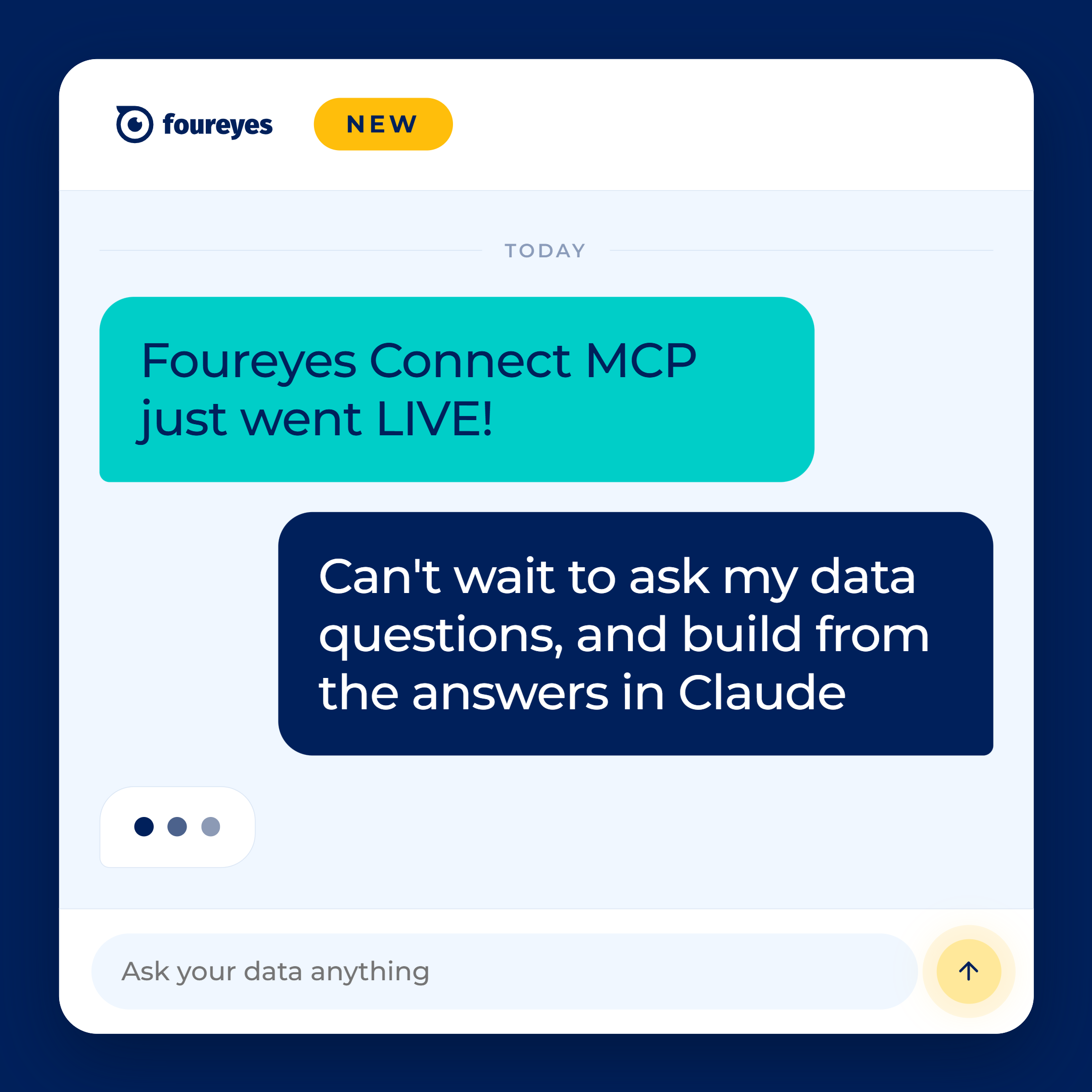 Foureyes Connect MCP Lets Dealerships Talk To Their Unified Data and Build Their Own Apps
Comprised of nearly 100 tools inside Claude, ChatGPT, and other AI assistants, Connect MCP let dealers get the work done themselves

 Data Ownership Sounds Simple. It Isn't.
Every automotive vendor will tell you that you own your data. It's practically a line item in the sales pitch at this point. But the details underneath the promise vary wildly from vendor to vendor. And it’s an issue that has led to almost $1 billion in legal settlements, just in automotive retail.

 Consent Management for Dealerships: 5 Questions to Ask Before You Buy
Once your dealership decides to take control of consent management, you want to select the right vendor that will meet your needs and make it easy.
 Data Study: How Many Leads Does it Take to Sell a Car in 2026?
The average new vehicle takes 3.3 leads to sell. EVs and performance models take far more, work trucks and mainstream crossovers far less.

 Dealership Close Rates by Metro: And Why Contact Rates Matter
Foureyes tracked 2.6 million leads from more than 1,150 dealerships across 48 U.S. markets through Q1 2026 to dig deeper into dealership close rates by metropolitan area. One surprising finding: the correlation with contact rates.
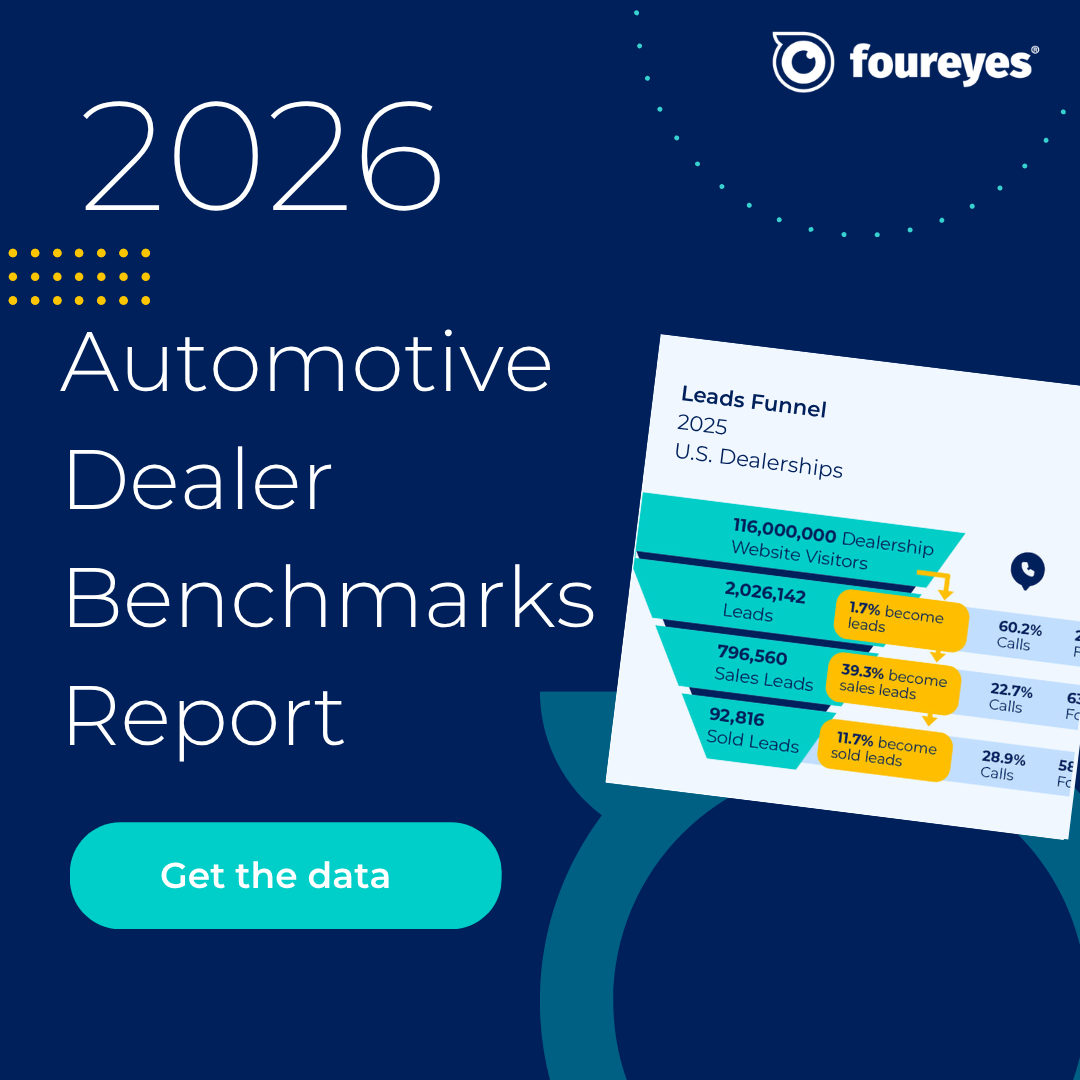 2026 Automotive Dealer Benchmarks Report
For the eighth year, Foureyes analyzed dealer website data to identify industry benchmarks, so you can compare your dealership’s performance and see what it takes to stay competitive.
 Data Warehousing for Auto Dealerships: What It Is, Why It's Hard, and Why Your CDP Makes or Breaks It
Data warehousing comes up constantly in dealer group conversations, but the actual mechanics rarely get explained clearly. This post tries to fix that. By the end you'll know what a warehouse actually does, why so many groups struggle to get it right, and why the data going in matters more than most people talk about.

 Foureyes Launches Snowflake Managed Services, Taking the Complexity Out of Data Warehouse Management for Dealer Groups
New offering gives dealer groups the warehousing expertise they need — without building and managing it themselves
 Foureyes and Volie Announce New Integration Partnership to Boost BDC Performance
Foureyes and Volie announced a two-way integration partnership that connects audience-building and dealer data infrastructure with tools for dealership BDC teams.
 New Foureyes Consent Management Passes 100-Vendor Milestone, Signaling Industry Standardization Around Dealer-Controlled Consent
Foureyes today announced that more than 100 automotive retail vendors are now participating in Foureyes Consent Management, marking a major step toward standardizing how customer communication opt-out requests are managed across the industry.
 Introducing Foureyes Connect: A New Standard for Automotive Data
Foureyes today announced the launch of Foureyes Connect, a different kind of data platform designed to reset how dealer groups operate and scale in an increasingly complex automotive retail landscape.
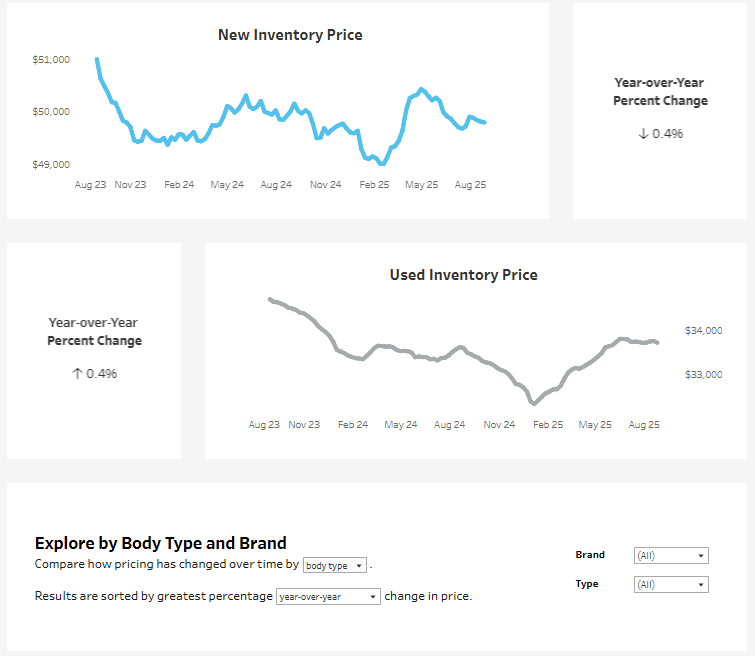 How to Use the U.S. Auto Prices Over Time Dashboard
Explore weekly U.S. auto pricing trends with Foureyes’ interactive dashboard. Compare new and used prices by brand and body type, track inflation and tariff impacts, and uncover insights to guide smarter decisions.
 How to Use the U.S. Automotive Inventory Over Time Dashboard
Track how U.S. auto inventory has changed since 2021 with this interactive dashboard. from Foureyes. Compare new vs. used, explore brand and model shifts, and gain insights to guide smarter pricing, stocking, and forecasting decisions on a weekly basis.
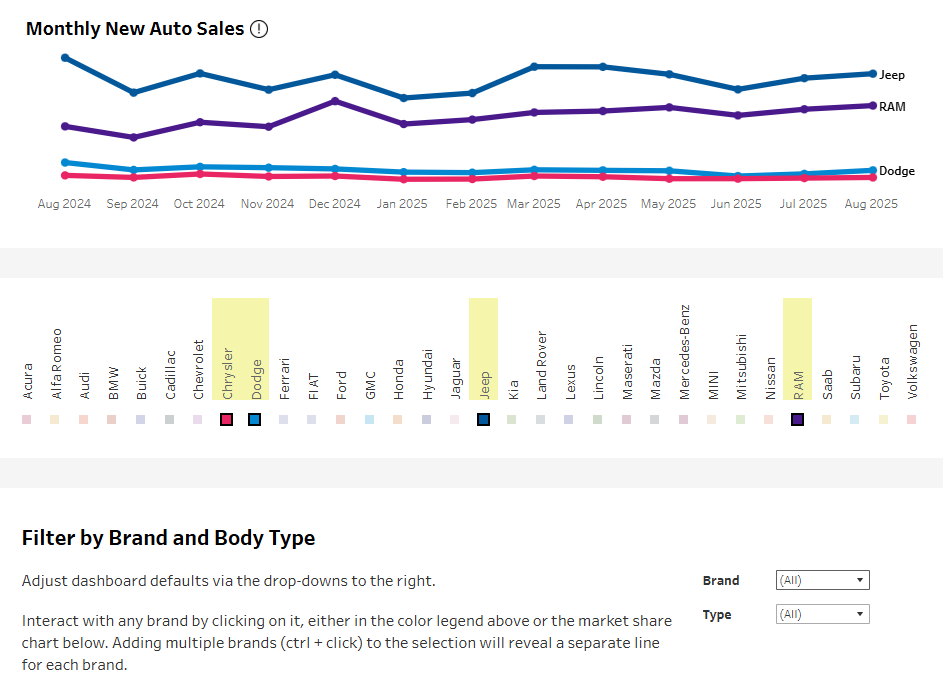 How to Use the U.S. Automotive New Vehicle Sales and Market Share Dashboard
Track monthly U.S. new vehicle sales and market share with this interactive dashboard from Foureyes. Compare brands, body types, and regions to uncover sales momentum, competitive shifts, and supply dynamics—updated monthly and available for free.
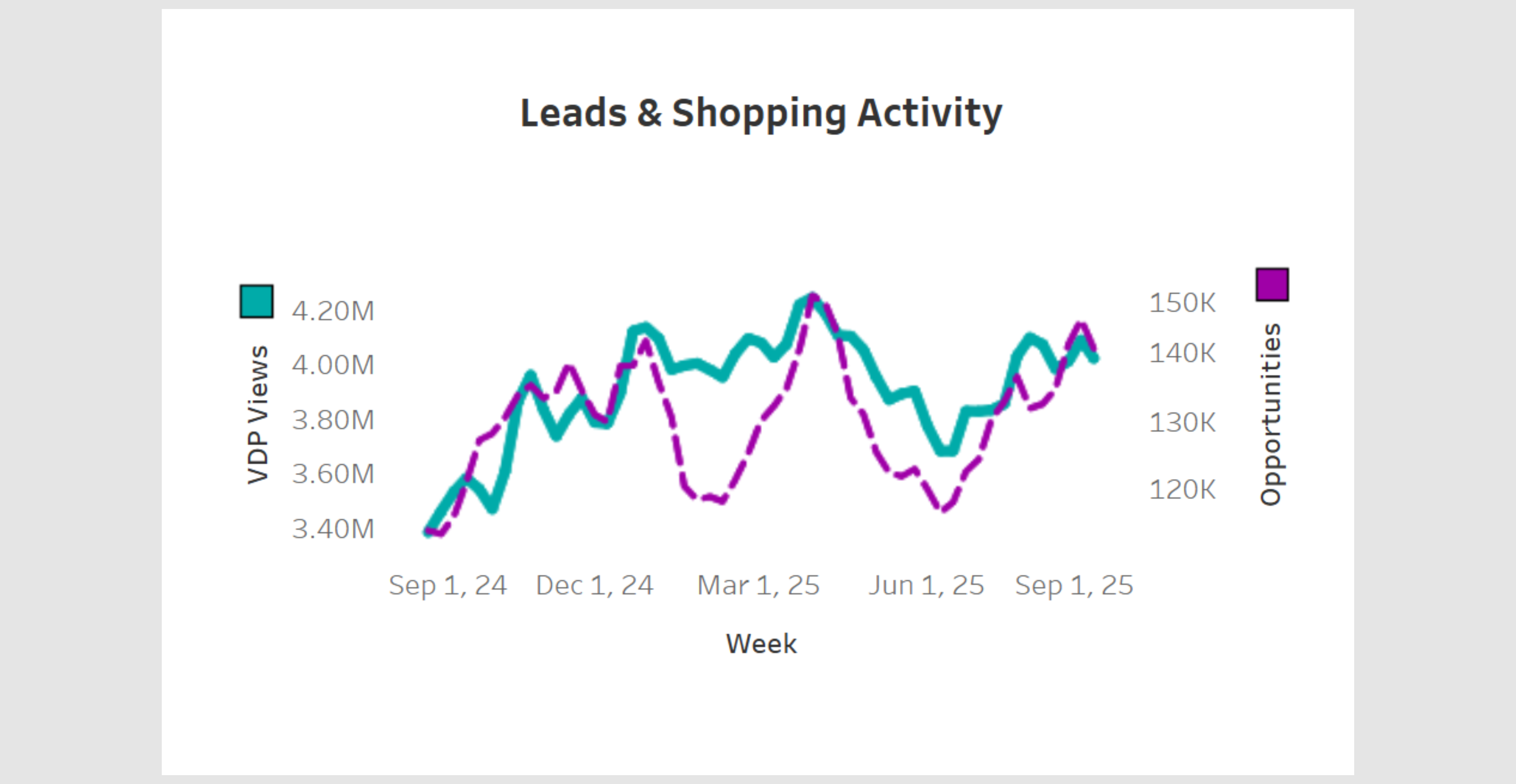
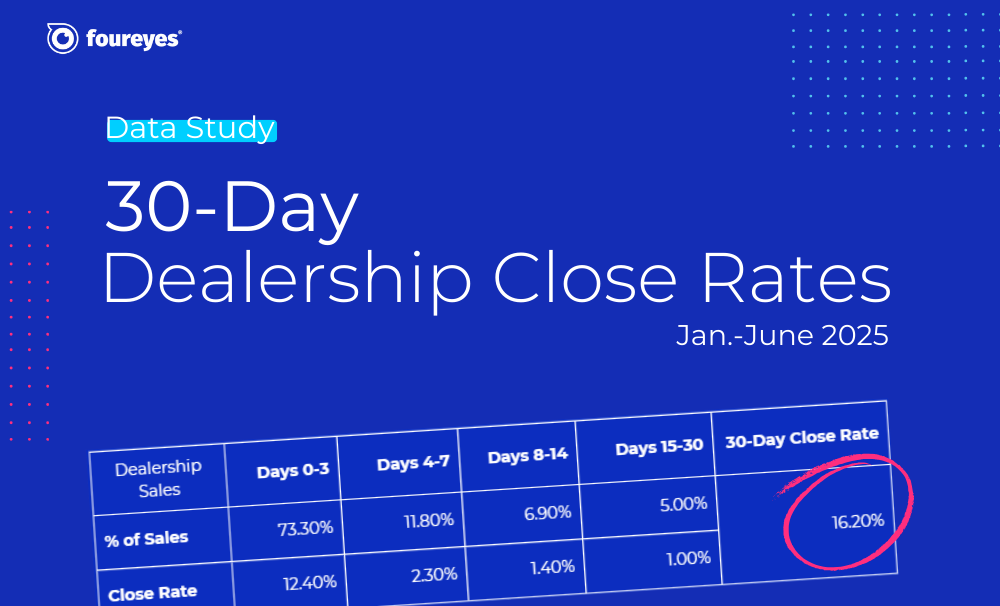
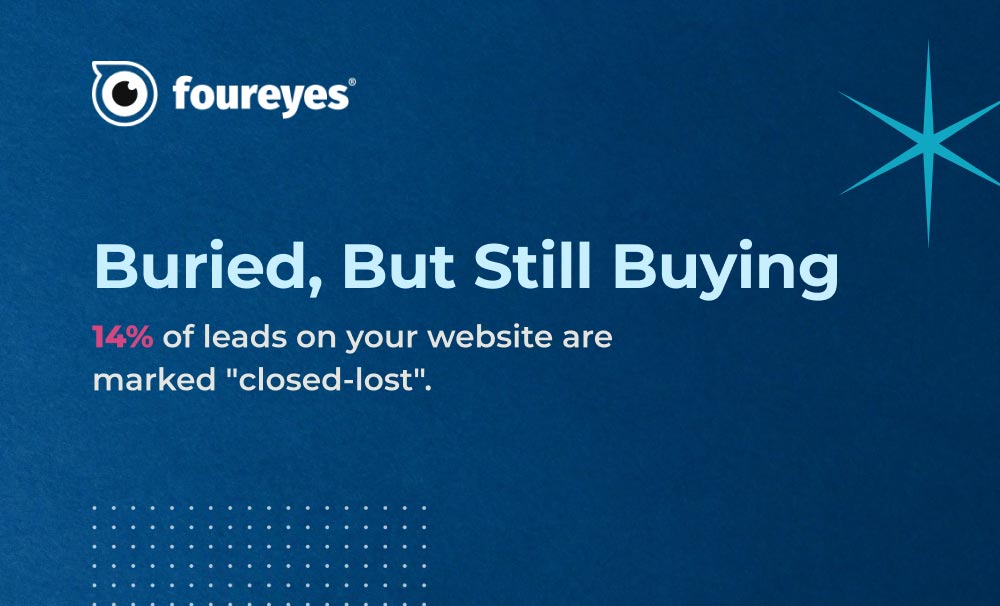 Data Study: The Leads You Marked as Lost Are Still Shopping
New Foureyes data shows why “closed-lost” doesn’t mean game over – and how dealers can win more with what they already have.
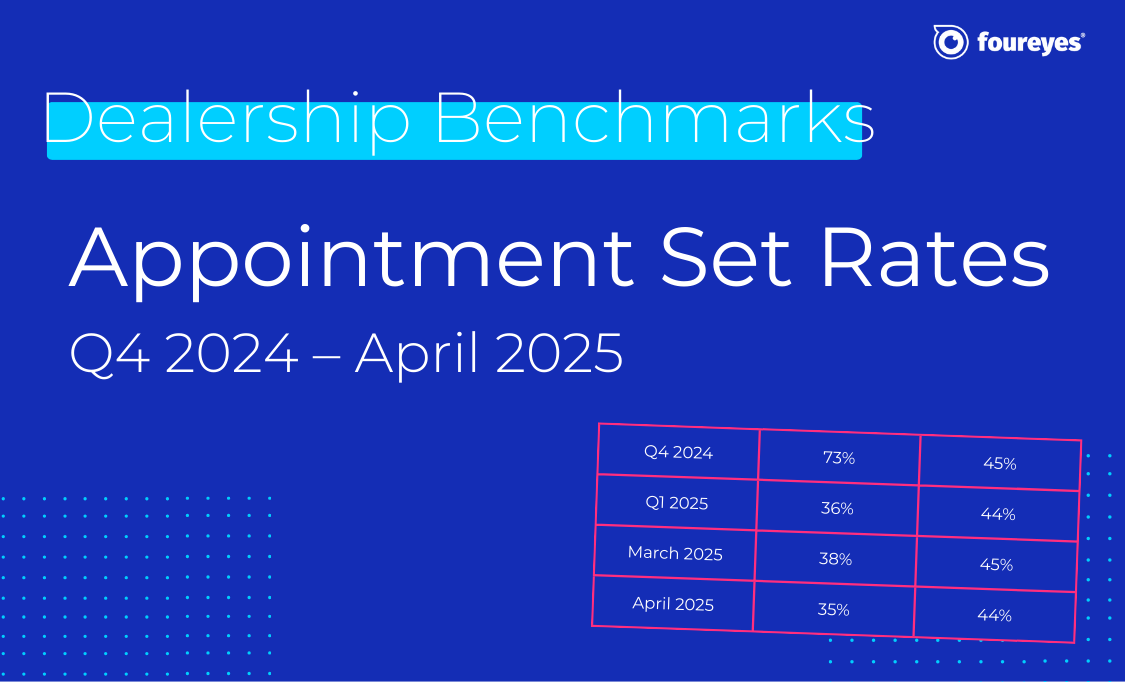 Automotive Sales Benchmarks: Appointment Set Rates for Q4 2024 to April 2025
If your dealership's appointment set rates feel like a mystery, you're not alone. But now, there's fresh data to show where you stand.
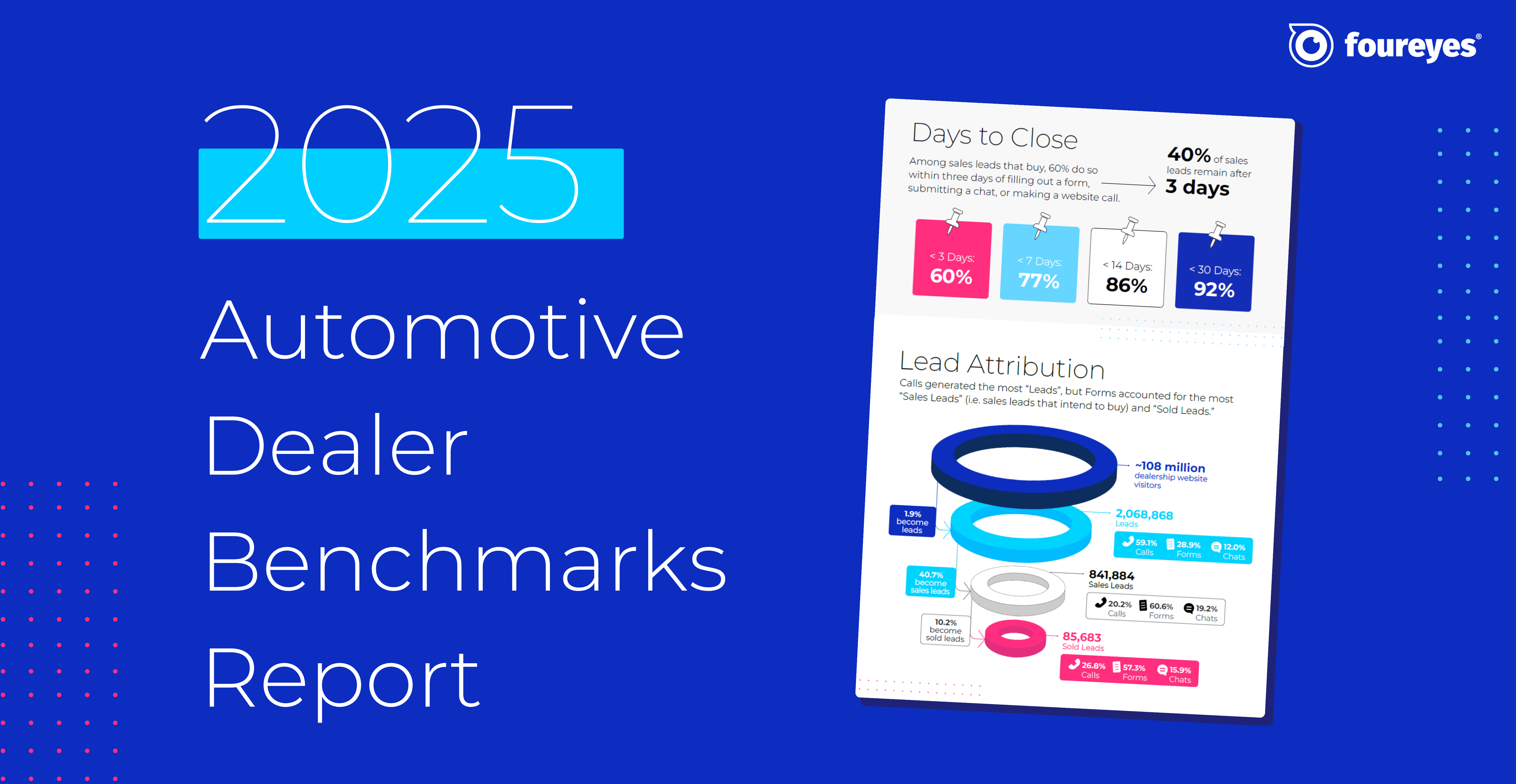 2025 Automotive Dealer Benchmarks Report
For the seventh straight year, Foureyes has dropped its Automotive Dealer Benchmark Report – pulling back the curtain on what's really happening with your leads throughout your sales process.
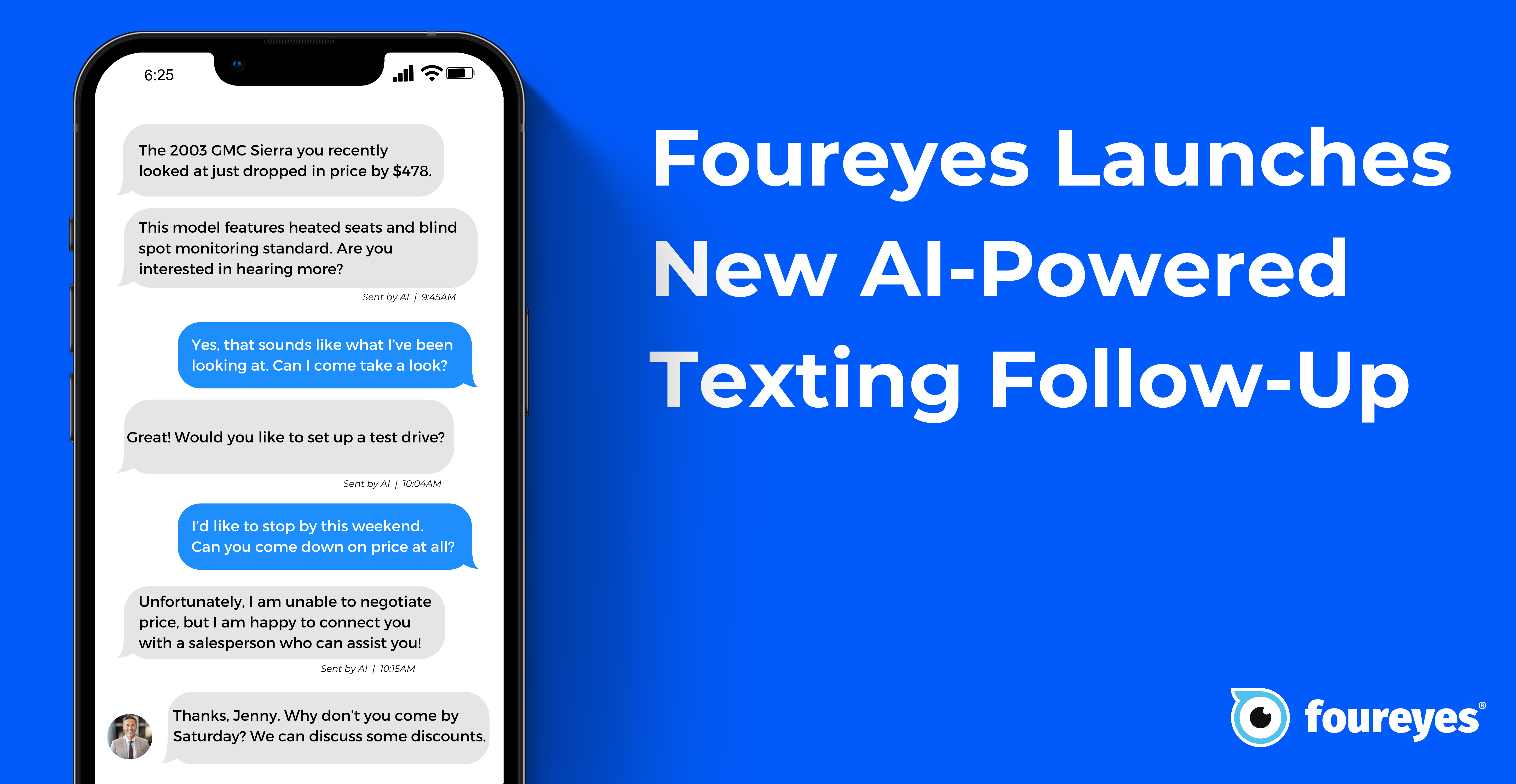 Foureyes Changing the Follow-up Game with Inventory-based Texting
See how the latest Foureyes innovation further helps dealerships match prospects to specific inventory.
 There are How Many “Hidden” Sales Leads at Automotive Dealerships?
New research of sales process data across U.S. automotive dealerships sheds light on the opportunity of “hidden” leads in dealership CRMs.
 How many leads do you actually need? And are you efficiently and effectively working them?
Which dials need to be turned, and how far, to ensure they are getting leads for inventory that actually need leads? And to ensure those leads efficiently and effectively worked?
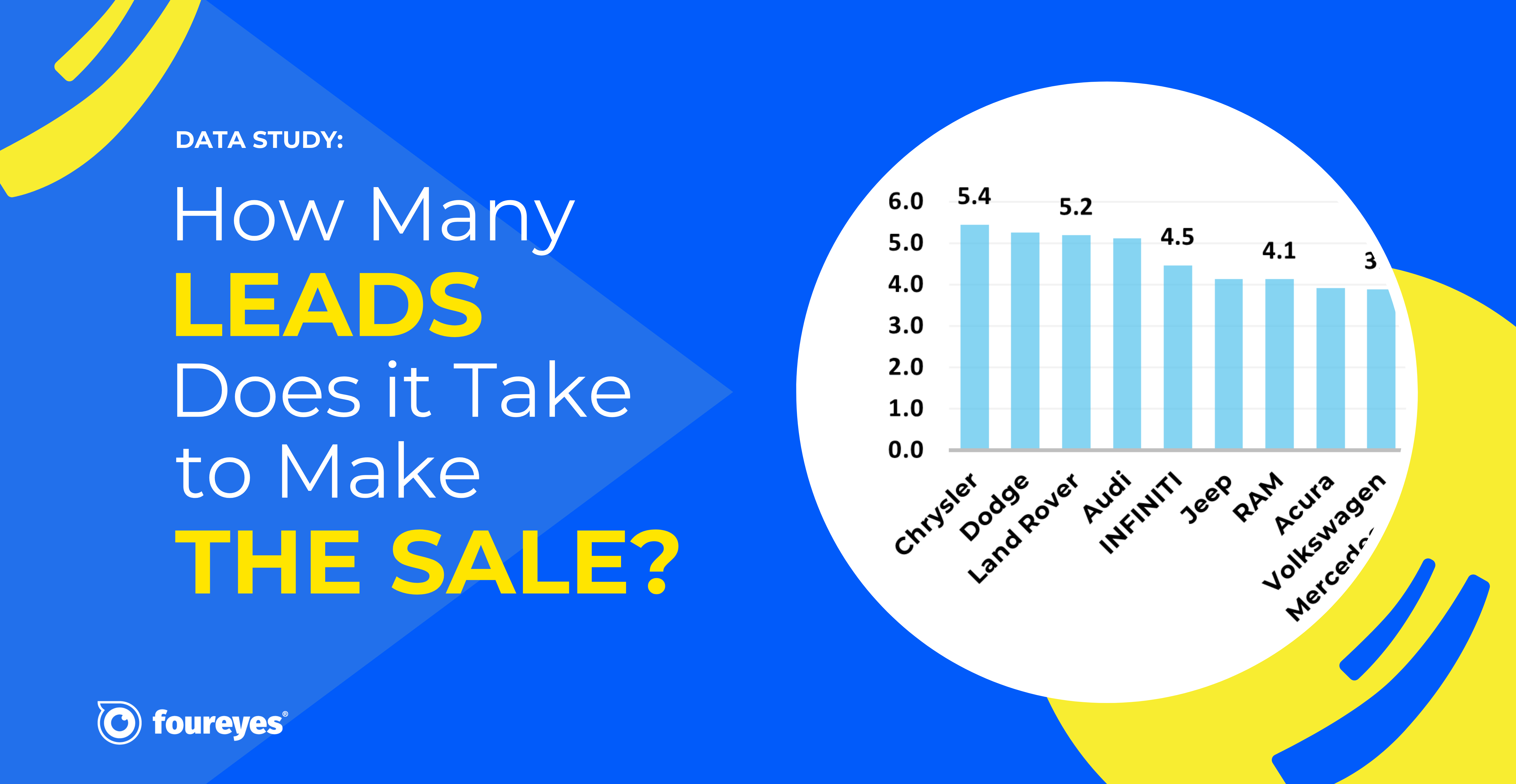 How Many Leads Does it Take for Dealerships to Sell a Car?
A Foureyes study of U.S. automotive dealerships identified the lead-to-sale “efficiency” across new vehicle inventory for Q1 2024.
 2024 Automotive Dealer Benchmarks Report
For the sixth consecutive year, Foureyes released its new automotive industry benchmarks. This data is intended to help dealers and dealer groups compare their performance against the industry and track trends in how leads behave.

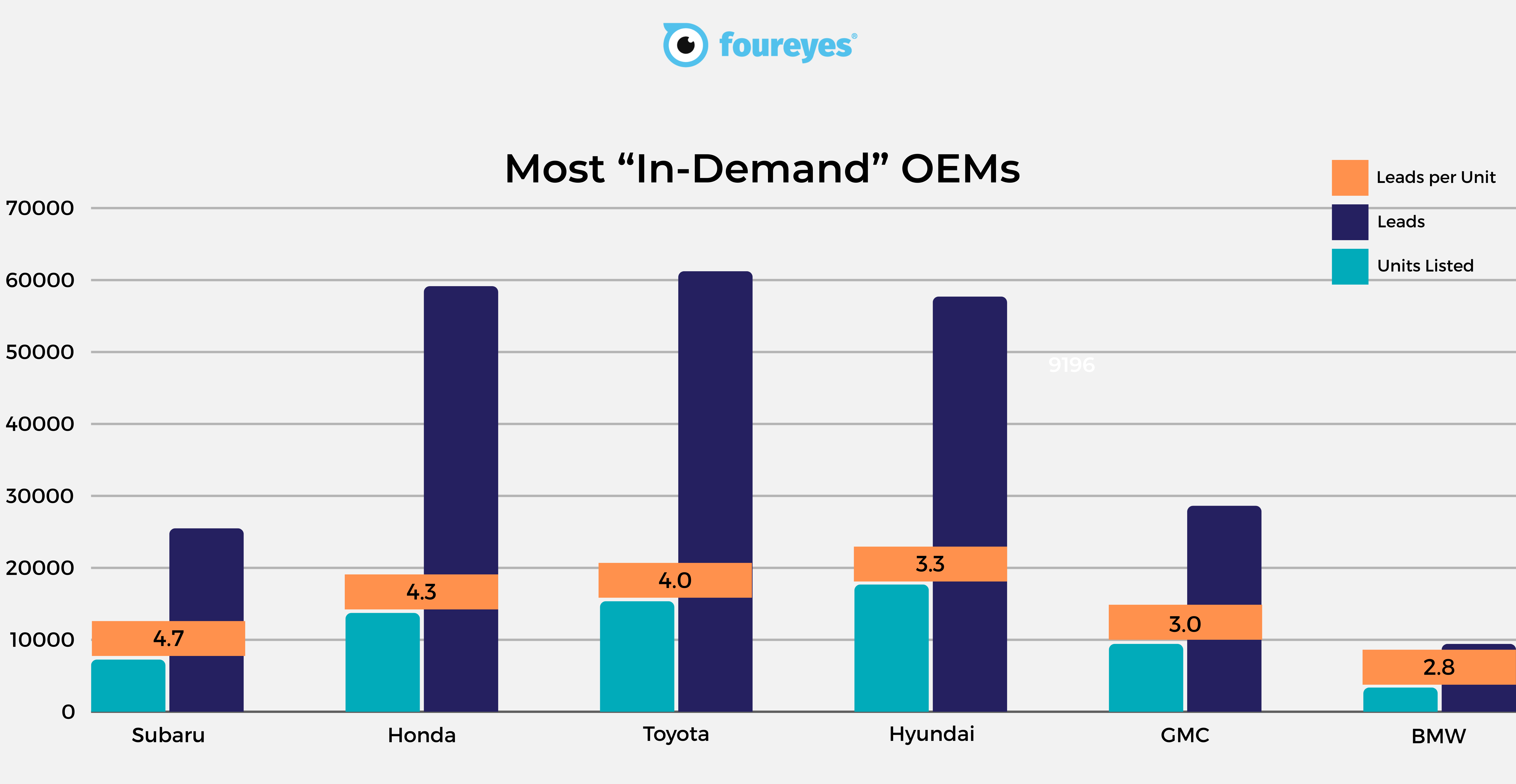 Most In-demand YMMs (2023 & 2024)
We dove into a pool of approximately 700 dealerships to scope out the most sought-after 2023 and 2024 YMMs and their OEMs over the past 3 months (min. 100 units per YMM)






 2022 Automotive Dealer Benchmarks Report
As automotive dealerships continue to adjust their strategies, tactics, and other process operations during this ongoing vehicle inventory shortage, we at Foureyes are sharing – for the fourth consecutive year – new auto industry benchmarks intended to help dealers understand the market, track trends in how leads behave, and drive sales success in 2022.


 2021 Automotive Dealer Benchmarks Report
For the third year in a row, we’re sharing auto industry benchmarks to help dealers and OEMs understand the market, track changes in customer behavior, and drive sales success in 2021.
 The 2020 Automotive Dealer Benchmarks Report
Start the new year off strong by reviewing your sales performance and creating 2020 goals. See how your dealership stacks up against the competition and use these auto industry benchmarks to develop a marketing and sales strategy for the new year.

